Meet the Maker: An Introduction to Valtellina’s Mountain Nebbiolo and Wines

After our post about Tenuta San Guido (the Bolgheri estate where Sassicaia is made) and our interview of Tenuta San Guido’s owner, Marchese Nicolo’ Incisa della Rocchetta, here come three new posts in our “Meet the Maker” series.

This time around we move from Bolgheri, Tuscany, all the way north to the Valtellina district in Lombardia to:

  1. Provide an overview of this very special area and its wines;
  2. Present one of the finest Valtellina producers, Ar.Pe.Pe., and taste certain of their wines; and
  3. Interview Isabella Pellizzatti Perego, Ar.Pe.Pe.’s enologist and co-owner.

Map of Valtellina

Map of Valtellina, Courtesy of Wikimedia Commons

About the Territory and History

The Valtellina district is an area in the northernest part of Italy’s Lombardia region, close to the border with Switzerland, that comprises two mountain ranges stretching from west to east (known, from north to south, as Alpi Retiche and Alpi Orobiche) and a narrow valley in between, where the town of Sondrio lies.

Due to the geography of this area, viticulture in Valtellina has always been challenging, since most of the vineyards grow at an altitude of about 1,300 to 2,300 feet (400 to 700 meters) above sea level on narrow stone-walled terraces carved from the steep southern slopes of the northern mountain range (Alpi Retiche), so as to maximize the grapevines’ sun exposure. The rocks of the Alpi Retiche mountain range are prevalently granite-based, which means that the soil where the Valtellina grapevines grow is a sand-limestone mix and a very shallow one, as it is often less than 3 feet/1 meter deep.

Valtellina’s harsh geography means that vineyard mechanization is virtually nonexistent, with grapevine treatments, pruning and harvesting being made exclusively by hand, thus significantly increasing the average production cost.


Valtellina mountain vineyards

Historically, the first evidence of viticulture in Valtellina dates back to the IX century (specifically, to year 837 of the Common Era). We have to wait until the XVI century, however, to have the first documented information about the size of the Valtellina vineyards, which back then were about 3,500 HA. As a result of the spread of the grapevine pathogen Uncinula necator (a fungus that causes powdery mildew of grapes) and the Grape phylloxera (an aphid-like pest that attacks the roots of Vitis vinifera grapevines and that almost completely destroyed the vineyards throughout Europe in the late XIX century), the overall size of the Valtellina vineyards dropped to less than 1,200 HA in the XX century.

The relevance of Valtellina as a wine grape landscape of significant cultural value is underscored by the fact that Italy put forward Valtellina’s candidacy (together with that of the Langhe/Roero/Monferrato area in Piemonte) to be nominated as a UNESCO World Heritage SiteValtellina’s candidacy is currently still pending and is part of UNESCO’s Tentative List.

About the Appellations

The Valtellina district comprises two DOCG, one DOC and one IGT appellations, as follows:

  • Valtellina Superiore DOCG
  • Sforzato di Valtellina DOCG
  • Valtellina Rosso DOC
  • Terrazze Retiche di Sondrio IGT

The Valtellina Superiore DOCG appellation, which we are going to focus on for the purpose of this post, encompasses a territory of approximately 430 HA in the vicinities of the town of Sondrio. The appellation is further divided into five subzones, as follows:

  1. Grumello (about 78 HA)
  2. Inferno (about 55 HA)
  3. Maroggia (about 25 HA)
  4. Sassella (about 130 HA)
  5. Valgella (about 137 HA)

The appellation regulations require that wines be made from 90% or more Nebbiolo grapes and that they be aged (i) for a minimum of 24 months, at least 12 of which in wood barrels for the base version of Valtellina Superiore or (ii) for a minimum of 36 months, at least 12 of which in wood barrels for the “Riserva” version.

Ar.Pe.Pe.'s fermenting barrels

About the Grape Variety

As mentioned above, in Valtellina Nebbiolo (which is locally known as Chiavennasca – pronounced “key-avennasca”) is king.

The regulations of both of Valtellina’s DOCG appellations and the Valtellina Rosso DOC appellation all require that wines be made from 90% or more Nebbiolo grapes.

You can find several cool facts and much information about Nebbiolo on our Grape Variety Archive page (which has been compiled based on Information taken from the excellent volume Wine Grapes, by Robinson-Harding-Vouillamoz, Allen Lane 2012) – here is just a short abstract:

Nebbiolo is without a doubt Piemonte’s most world-famous black-berried grape variety. Researchers have recently been able to trace back the origins of (or at least the first documented reference to) Nebbiolo to 1266, at which time the grape was called Nibiol. This makes Nebbiolo one of the oldest grape varieties in Piemonte. While Nebbiolo is definitely an Italian indigenous variety, doubts still remain as to whether it originated from Piemonte or Valtellina (a mountainous district in the neighboring region of Lombardia, where Nebbiolo is still grown nowadays and locally known as Chiavennasca).


Ar.Pe.Pe.'s 5.5 HL wood tonneau aging casks

About the Wines

The wines of Valtellina are not very well known to the general public, but they resonate with Italian wine connoisseurs because those wines that are made by serious producers are fabulous Nebbiolo-based reds, that pack tons of quality and structure, are suitable for long-term aging and still can be had for significantly less expensive prices than their better-known counterparts from Piemonte.

Interestingly enough, 2013 marked the first year in which a wine from one of Valtellina’s top producers (Mamete PrevostiniValtellina Superiore Sassella “Sommarovina” DOCG 2009made it into Wine Spectator’s Top 100 Wines of 2013 (in 82nd position – congratulations!): perhaps this will contribute bringing the wines of Valtellina more into the limelight with wine aficionados.

On the next post, we will focus on one among my absolute favorite Valtellina producers: Ar.Pe.Pe. and on a tasting of certain of their wines. On the last post of this mini-series, we will then publish an interview of Ar.Pe.Pe.’s enologist and co-owner, Isabella Pellizzatti Perego. Stay tuned! 🙂


Ar.Pe.Pe.'s enologist and co-owner with her brother Emanuele in their tasting room

Posted in Meet the Maker, Wine, Wine Education, Wine Regions | Tagged , , , , , , , , , , , , , , | 9 Comments

When knowledge turns into style: Encyclopedia of the Exquisite

Encyclopedia of the Exquisite

With Thanksgiving come and gone and the countdown to Christmas already started, it’s time to finalize our wish and gift lists. Well, let me help you with your gift list by suggesting an idea that, hopefully, will make one or more of the people receiving your presents very, very happy.

There are some people whose sense of style and sophistication are so classy and unique that buying a gift for them can turn into being quite a challenge. If one of these people happen to be in your life as a parent, sibling, significant other or friend, the “Encyclopedia of the Exquisite” is the book for them.

Stuff We Like!Written by Jessica Kerwin Jenkins (she was the European editor of W in Paris and she has written for Vogue), the “Encyclopedia of the Exquisite” is an eclectic compendium of historical facts and curiosities about a variety of objects, concepts and expressions that are part of our daily language and use. The book is designed to satisfy the thirst for knowledge of any person of any age and taste, no matter what their interests and hobbies are.

If cooking and drinking are their life passions, the readers will learn about ingredients and dishes such as saffron, truffles, the bon chrétien pear (generally known as the Williams or the Bartlett pear), the omelette (including Julia Child’s suggestions as to how to make the perfect omelet) as well as the history of two of the most beloved drinks: champagne and tea (including tea-making tips). The readers will even find a few lovely recipes to try out and amuse themselves with.

If fashion and beauty are the readers’ kind of poison, they will fall in love with the sections about the sequin, the frilly lingerie, the gloves, the heels, the faux jewels, the kimono, the color black, the bob haircut and the pouf hairstyle, the perfume and the red lipstick.

Encyclopedia of the Exquisite

But that’s not all! Once upon the time there was a little girl whose favorite animal was the unicorn? Well, look under the letter “U”! That section has been written for that dreaming grown-up girl. And forget Stefano when he says that he would be curious to hear what our friend and brilliant psychologist, symbologist and writer Klausbernd V. (please check his wonderful blog out, if you do not follow him already) would have to say about that! 😉

How about the expression “Shabby Chic”? I would challenge most of the people I know who like to use that expression to explain its origin to me!!! 😉 Well, a quick look under the letter “S” will unravel the mystery…

There is so much more in this book! The illustrations are simply exquisite and every page exudes elegance. Going through the Encyclopedia, readers will surely appreciate the effort that the author put into researching the topics and writing in such a way that keeps them always interested and amused.

What do they say about style? You either got it or you don’t.

Well, I think that’s true! Style cannot be taught. But, in my opinion, just “having it” is not enough. In order to blossom, the sense of style must be constantly educated and reading is one of the best ways to achieve the result.

Encyclopedia of the Exquisite

I was a lucky girl in many respects. One of these was to have a very classy mother. Anyone who knows her can vouch for that. I wish I had half the style she has! Anyway, since I was a little girl, she has been teaching me good manners, what to wear for every single occasion, which utensils to use for every dish, how to pick flowers and set a table, what should be expected of a gracious hostess and how to thank for hospitality. Still, the Encyclopedia of the Exquisite has unveiled to me countless facts and secrets about things and lifestyles that I thought I knew everything about… but didn’t! 

I’ll finish this post with a quote by the author: “beauty can be found in the most unlikely places […] and […] luxury doesn’t mean spending lots of money.” Very true, if you ask me.

If you give this book as a present to that special someone, that’s exactly what you are giving her or him for Christmas: beauty and luxury at just the price of a book.

P.S.: Needless to say, my mother bought me the Encyclopedia of the Exquisite! 🙂

Posted in Stuff We Like | Tagged , , , , | 48 Comments

Product Review: Elertus Wine Protection System

I have recently been approached by a representative of Utah-based consumer electronics company Elertus who loaned me for a few weeks a sample of a newly released product of theirs targeting the wine market for me to test and consider for a review.

The product is called Elertus Wine Protection System and basically revolves around a small (3.1×2.6×1.05″ and 2.5 oz), battery-powered, wireless sensor that monitors and alerts users if anyone opens their wine cellar, wine cooler, or liquor cabinet door. So, the main purpose of the system is to notify users of potential theft or unauthorized access to their wine storage facility.

The system also continuously monitors light levels, temperature (-30 to 150 F) and humidity (0% to 100%) conditions, ensuring wine collections are stored in an optimal environment. It also notifies users if the sensor is moved from its current position.

The system is compatible with any wine or liquor cabinet with or without a locking mechanism. The sensor is designed for simple installation without special tools or permanent cabinet modifications and it connects to your Wi-Fi system.

Elertus AdThe Elertus system comes in a small box complete with the required batteries and visual, simple, easy to follow, step-by-step instructions for connecting the sensor to your local Wi-Fi network. I have to commend Elertus for providing a set of clear and simple instructions that really makes it easy for you to install the sensor, configure it and connect it to your Wi-Fi network in a breeze: I think I got my system up and running in about five minutes.

Once the system is operational, it immediately starts tracking the environmental conditions the sensor is in. Also, through the control panel of the system app, you can configure acceptable ranges of values both for temperature and humidity and then what you want to be notified of (such as temperature and humidity outside of the user-defined ranges of acceptable values, door open, light turned on or off, movement of the unit) and the way you want to be notified in (such as any or a combination of email, text message and smartphone notification alerts).

So, once it is customized, the Elertus app can notify you if any conditions change, such as the cellar door is opened, the light is turned on or the temperature or humidity gets too high or too low. In addition, you receive a weekly system-generated email that provides a snapshot of the conditions recorded by the sensor at the specific date and time the email is generated (i.e., no weekly average, just a read out of the current conditions). The Elertus system can be monitored and configured through a computer or smartphone app (iPhone®, iPad®, iPod touch®, and Android™).

The Elertus Wine Protection System is available at www.elertus.com for $199, inclusive of monitoring, alerts and smartphone app.

In a nutshell, these are my conclusions about the Elertus system after using it for a couple of weeks:

PROS:

  • Super easy, quick and trouble-free installation and configuration
  • Nice, clean and user-friendly user interface app
  • Works as advertised (monitors temperature, humidity, light level, movement and door open and notifies you in the way you set the system up for)

CONS:

  • Expensive for personal use, that is other than in a commercial establishment
  • I could not find a way to remotely trigger an instant read out of the current conditions (in the absence of a status notification) through the user interface app
  • Light level sensor is not very sensitive (requires a fairly bright light to be triggered)

Rating: Good to Very Good

Posted in Product Reviews, Wine, WiNews | Tagged , , , , , , , , , , , , , , , | 6 Comments

Happy Thanksgiving!

Thanksgiving table

Just a quick one to wish all our North American readers Happy Thanksgiving!

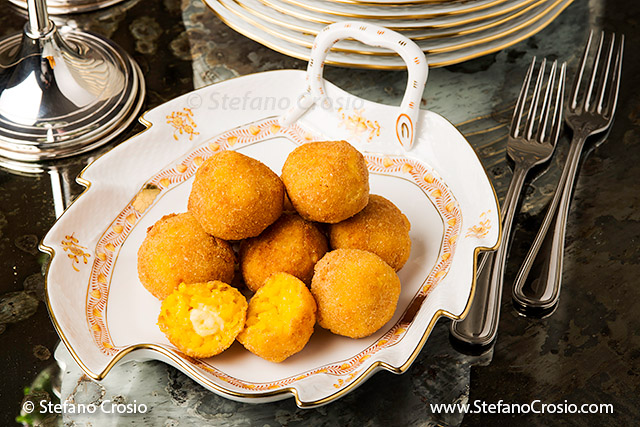
Saffron rice croquettes (Arancini di riso)Saffron Rice Croquettes (AKA Arancini di Riso)

Here you can take a peek at our Thanksgiving table and a few of the appetizers and sweet treats that Francesca is making as this very time.

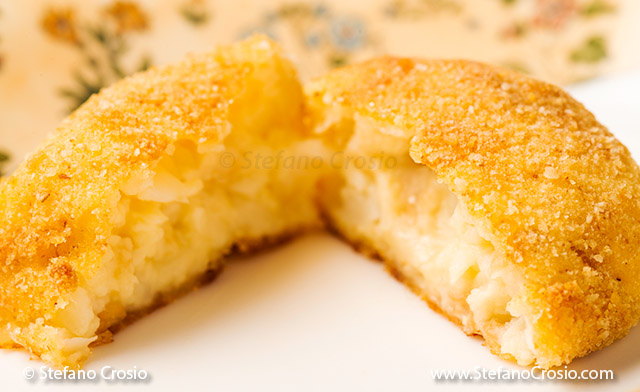
Cauliflower croquettesCauliflower and Ricotta Cheese Croquette

Enjoy the holiday and, quoting our 7-year-old daughter, “be thankful for all good things in life!” 🙂

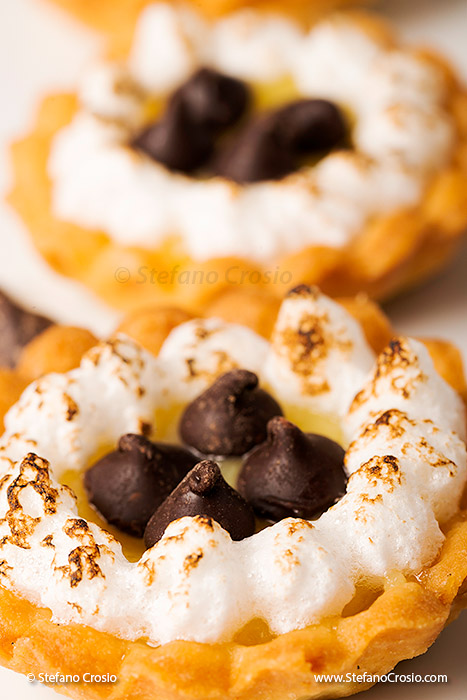
Mini Key lime piesRevisited Mini Key Lime Pies

PS: if you enjoy Stefano’s photographs, head over to Clicks & Corks for a sweet Thanksgiving promotion! 🙂

Posted in F'sT Home, Uncategorized | Tagged , , , , , , | 21 Comments

Wine Review: Three First Drop Shiraz from Down Under

As most of you know, the wine-related part of this blog mainly focuses on Italian wine, although non exclusively as now and then I post about non-Italian wines that I have tasted and enjoyed: so far, I have posted about FrenchPortuguese and New Zealand wines: it is now time to talk about Australian wines.

Australia is one of the largest wine making countries of the New World, coming right after the USA and Argentina. A few official data: in 2012 in Australia there were 91,000 HA of red wine vines (almost 50% of which were Shiraz/Syrah, followed by Cabernet Sauvignon and Merlot) and the South Australia region accounted for almost 60% of the entire red wine production. In terms of white wines, in 2012 Australia had 57,000 HA of white wine vines (almost 50% of which were Chardonnay, followed by Sauvignon Blanc and Semillon) and the South Australia and New South Wales regions combined accounted for over 70% of the entire white wine production. The overall Australian wine production in 2012 was about 1.2 billion liters (Source: Australian Bureau of Statistics)

One of the obvious consequences of so large a production is that out there you may find some excellent Australian wines but also some… less than stellar ones. So, not wanting to go through a potentially long trial and error process, I decided to ask Laura, an Australian wine expert, accomplished cook and last but not least author of the food blog Laura’s Mess, if she would be willing to help me in my quest for quality Australian wineries whose wines I could taste and review, by giving me a few pointers (by the way, should you not be familiar with Laura’s blog already, do pay her a visit because it is a food blog that is definitely worthwhile following, both for the great content and for the beautiful food photography).

Well, Laura went above and beyond what could be considered “fellow blogger courtesy” as she went to great lengths to provide me an overview of Australia’s main wine regions and a detailed description of her favorite producers and wines in each of them. Laura, thank you so much once again for your invaluable guidance in helping me learn more about the Australian wine world.

Anyway, after going through Laura’s terrific survey and cross-referencing the producers that impressed me the most with the reality of what is available in the US market (and the awful lot of good stuff that unfortunately is not), I decided to start my Aussie tasting experience from First Drop, a young winery based in Australia’s prime wine region of the Barossa. This is because they came highly recommended from Laura, they focus on a variety that I like a lot (Shiraz/Syrah), their vineyards are in one of the premium Australian wine regions (the Barossa Valley, in South Australia) and last but not least I managed to find a US online retailer who carries most of their lineup. So I went ahead and placed a sampler order, buying four of their red wines, from entry-level to top of the line, which would hopefully give me a nice overview of the First Drop range.

These are the four bottles that I bought:

  1. First Drop, Shiraz “Fat of the Land” Greenock Cru, Barossa 2009
  2. First Drop, “Two Percent“, Barossa 2009 (a 98% Shiraz, 2% Tempranillo blend)
  3. First Drop, Shiraz “Mother’s Milk“, Barossa 2011
  4. First Drop, “Half & Half“, Barossa 2010 (a 50% Shiraz, 50% Monastrell blend)

Today I will publish my tasting notes of wines number 2, 3 and 4. The Fat of the Land will have to wait both because of my impressions about the three wines that I have tasted (keep reading if you want to know how I liked them!) and because wine number 1 is one First Drop’s top of the line single-vineyard crus, which in the US retails for a not inexpensive $72 price tag and therefore I want to give it a few years of cellar time before enjoying it since it is still pretty young. Now, of course, were First Drop’s US importer to ever send me a sample to try out right away, I would be very happy to oblige… 😉

But let’s now cut to the chase and see how those three First Drop wines that I tasted performed.

As always, for my review I will use a simplified version of the ISA wine tasting protocol that we described in a previous post: should you have doubts as to any of the terms used below please refer to that post for a refresher.

1. First Drop, “Half & Half”, Barossa 2010 ($18)

First Drop, Half & HalfAs mentioned, this is an unusual 50% Shiraz, 50% Monastrell blend. The must ferments for 6 days on the skins, then the wine goes through malolactic fermentation and ages for 15 months in French oak. In the US, it retails for about $18.

In the glass, Half & Half poured ruby red and viscous when swirled.

On the nose, its bouquet was moderately intensemoderately complex and of fair quality, with aromas of cherry, red berries, coffee, black pepper, and hints of animal fur and tobacco.

In the mouth, the wine was dry, with high ABV and smooth; it was acidicmoderately tannic and moderately tasty. It was medium-bodied and balanced, with intense and fair mouth flavors of cherry, red berries, red fruit candy, and dark chocolate. It had a medium finish and the evolutionary state was ready (i.e., fine to drink right away, probably better if you let it rest for a couple more years in your cellar).

Overall, Half & Half was a pretty good, entry-level red in the First Drop range, a wine with no frills: smooth, with medium tannins, easy to drink and quite pleasant in the mouth. One might wish that its bouquet were a bit more intense and complex (maybe some decanting/aeration could have helped, despite the wine’s young age?), but all in all it is a solid, every day wine, given especially its reasonable price point.

Rating: Good Good – $

(Explanation of our Rating and Pricing Systems)

2. First Drop, Shiraz “Mother’s Milk”, Barossa 2011 ($18)

First Drop, Mother's MilkThis varietal Shiraz is fermented for 8 days on the skins, then goes through malolactic fermentation and is aged for 18 months in French oak barrels. In the US it retails for about $18.

In the glass, Mother’s Milk poured ruby red and viscous when swirled.

On the nose, its bouquet was intensemoderately complex and fine, with nice aromas of plum, blackberry, sweet tobacco, leather, cocoa and black pepper.

In the mouth, the wine was dry, with high ABV and smooth; it was acidictannic and moderately tasty. It was full-bodied and balanced, with intense and fine mouth flavors of plum, blackberry, tobacco, dark chocolate and black pepper. It had a medium finish and the evolutionary state was ready (i.e., fine to drink right away, probably even better if you let it rest for a couple more years in your cellar).

Overall, I very much enjoyed my bottle of Mother’s Milk (sounds kind of creepy, I know, but that’s the name they picked!) Considering its appealing price point and how young the bottle I had was, Mother’s Milk was a good to very good performer, with intense and pleasant aromas and mouth flavors and a high ABV that was however well integrated into the wine’s structure and counterbalanced by already smooth tannins. Allowed to mature for two or three more years in bottle, I think the wine’s already pleasant aromas and mouth flavors would further evolve into an even more compelling, cohesive red that will be an even better value for money.

Rating: Good to Very Good and definitely Recommended Good to Very Good – $

(Explanation of our Rating and Pricing Systems)

3. First Drop, “Two Percent”, Barossa 2009 ($35)

First Drop, Two PercentThis is a 98% Shiraz, 2% Tempranillo blend that ferments for 8 days on its skins, goes through malolactic fermentation and then is aged for 24 months in French oak barrels. In the US it retails for about $35.

In the glass, the Two Percent poured ruby red and viscous when swirled.

On the nose, its bouquet was intensecomplex and fine, with pleasant aromas of cherry, plum, raspberry, cigar box, vanilla, coffee, black pepper and rhubarb.

In the mouth, the wine was dry, with high ABV and smooth; it was acidictannic and tasty. It was full-bodied and balanced, with intense and fine mouth flavors of cherry, raspberry, vanilla, dark chocolate and black pepper. It had a long finish and its evolutionary state was ready (i.e., fine to drink right away, but certainly even better if you let it rest for a few more years in your cellar).

Overall, I loved Two Percent! Considering how young it was, it already performed as a show stopper: a big wine with an elegant, complex bouquet and lush, chewy mouth flavors, a silky smooth texture and perfectly integrated tannins, plus a long, lingering finish that just makes you want more. Definitely excellent value for money. Wow.

Rating: Very Good and definitely Recommended Very Good – $$

(Explanation of our Rating and Pricing Systems)

Now I can hardly wait to try that Fat of the Land bottle… 😉

Posted in Red Wines, Wine, Wine Reviews | Tagged , , , , , , , , , , , , , , , | 15 Comments

Dartstrip | It’s Magnetic!

Our dear friend Azita is promoting a new business initiative that has just been launched by some of her family members. It is a cool way to display photographs on your wall: check it out!!! 🙂

Fig & Quince's avatarFig & Quince

1 b dartstrip fig quince photo2 b dartstrip fig quince photo 3 b dartstrip fig quince photo

The photo series above shows my dear father snapping off a one inch piece of Dartstrip to put up a cute pic of the grandkids on the wall. What is Dartstrip, you ask? Why, it’s a wonderful, patented product (a cross between a scotch tape and a bulletin board, made of snappable steel backed with removable adhesive) that solves the dilemma of displaying artwork and photographs without having to worry about putting a hole in the wall or peeling the paint.

On the one hand, I’m interrupting our regularly scheduled programming and begging your indulgence to blog about this product because my sister, my bro-in-law (remember his no-knead-bread?) & their biz partner are the team behind Dartstrip, and thus I am beaming with pride and I want to support their Kickstarter campaign to raise funds to bring Dartstrip to the market.

On the other hand (the…

View original post 132 more words

Posted in Stuff We Like | 18 Comments

Wine Spectator’s Top 100 Wines of 2013

StefanoA few days ago, Wine Spectator magazine has published the entire list of their Top 100 Wines of 2013… according to them, of course! :-)

Like last year, these are in a nutshell a few comments about their 2013 top 10 wines:

  • CVNE‘s Rioja Imperial Gran Reserva 2004 is Wine Spectator’s Wine of the Year 2013 (rated 95 points) as well as the first Spanish wine to date to earn top ranking in Wine Spectator’s Top 100 list: congratulations!
  • Five U.S. wines made it to the Top 10 (3 from California, 1 from Oregon and 1 from Washington State), up from three last year
  • Only one Italian wine made it to the Top 10 scoring sixth place and 95 points (Giuseppe Mascarello‘s Barolo “Monprivato” 2008 DOCG), same number as last year but better placement, up three spots
  • France put three of their wines in the Top 10, down from four last year
  • A wine from Bordeaux’s Right Bank was awarded second place (and 96 points) in the Top 10: Chateau Canon-La Gaffeliere 2010, a Saint Emilion Premier Grand Cru Classé B (for more information and a photograph of the Chateau, check out our previous post on the Saint Emilion appellations and wine classification)
  • For the presumable happiness of The Drunken Cyclist 😉 a Pinot Noir from Oregon scored third place in the Top 10: Domaine Serene‘s Pinot Noir Willamette Valley, Evenstad Reserve, 2010 (rated 95 points)
  • Just like in 2011 and 2012, 9 of the top 10 wines are red and only one is white, Kongsgaard‘s Chardonnay Napa Valley 2010 (fifth place, rated 95 points)
  • Four out of the top five wines are below the $100 price mark, with the Wine of the Year 2013 being the least expensive at $63 and confirming how much good value for money can be found in a Rioja, even a top of the line one like CVNE’s; on the other hand, all wines in sixth to tenth place are above $100

For more detailed information and access to the full Top 100 list, please refer to Wine Spectator’s Website.

Posted in Wine, WiNews | Tagged , , , , , , , , , , , , , , , , , , , , | 7 Comments

Saint Emilion Chronicles #5: Saint Emilion and its Wine Appellations

Saint Emilion: 
Clos La Madeleine and its vineyards

Now, on previous posts we have talked about the town of Saint Emilion; one of its churchesSaint Emilion sweet treats (macarons and cannelés); and the place we stayed at during our Saint Emilion visit – it is about time that we start talking about wine. This post will provide a general overview of the area from a wine standpoint, while future posts will focus on a few chateaux.

Saint Emilion: old grape press and vineyards of Chateau Canon

As we said in the introductory post of this series, Saint Emilion is a town that is located in the Libournais area, on the right bank of the Dordogne River, not far from Bordeaux. From a wine standpoint, the area surrounding the town of Saint Emilion is divided into several different appellations (known as “AOC” – in French, “Appelation d’Origine Controléè“).

One slightly confusing thing to bear in mind is that Saint Emilion AOC and Saint Emilion Grand Cru AOC are two different appellations that for the most part comprise the same territory. However, the regulations of the latter are stricter than the former as they require lower production yields and a 12-month minimum aging period.

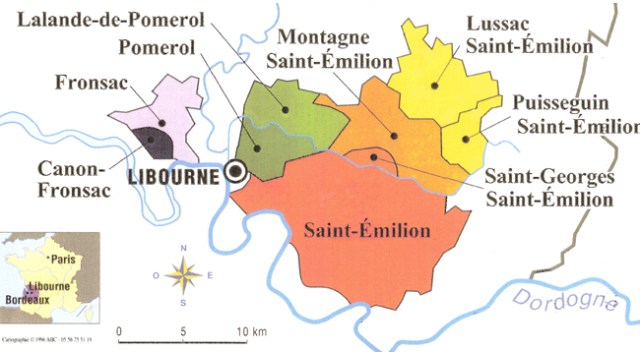
Map of the Libournais Area and Main Appellations - Courtesy of Janoueix Clos du Roy (click on map to visit website)

Map of the Libournais Area and Main Appellations – Courtesy of Janoueix Clos du Roy (click on map to visit website)

So, a bottle that is labeled “Saint Emilion Grand Cru” only indicates that it has been produced under the rules of that AOC, but not necessarily that it is one of the Grands Crus that are part of the Saint Emilion wine classification (more on this later), which instead are identified as Grands Crus Classés or Premiers Grands Crus Classés, depending on their ranking.

Saint Emilion: Chateau La Gaffeliere and its vineyards

The two largely overlapping appellations of Saint Emilion AOC and Saint Emilion Grand Cru AOC encompass a territory of, respectively, 5,600 and over 4,000 HA where the dominating grape variety is Merlot, beside Cabernet Franc and Cabernet Sauvignon. The average annual production is in the ballpark of 235,000 HL for Saint Emilion AOC and 150,000 HL for Saint Emilion Grand Cru AOC.

Saint Emilion
: Chateau Lassegue and its vineyards

As we alluded to above, in 1954 the  Winemaking Syndicate of Saint Emilion decided to compile a classification of the best estates (or Chateaux) in the Saint Emilion Grand Cru AOC based on criteria such as quality, sales and renown: this classification was published in 1955 (which is why it is often referred to as the “1955 Classification“) and is supposed to be revised and updated every 10 years, although in fact the updates have been more frequent (since inception, it has been updated in 1959, 1969, 1986, 1996 and 2012).

Saint Emilion: 
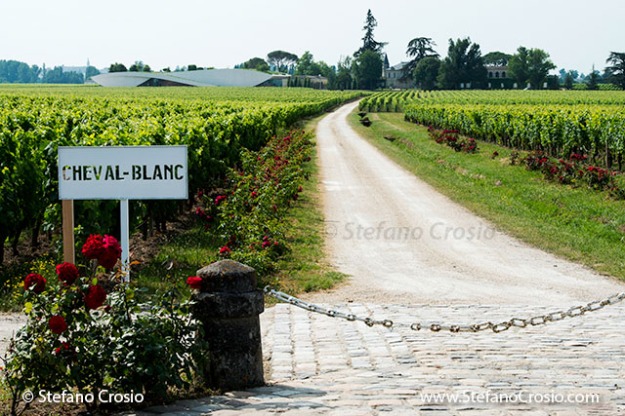
Chateau Cheval Blanc and its vineyards

The 1955 Classification divided the estates that made the cut into the following three tiers (in parentheses you can find the number of chateaux in each tier, based on the 2012 revision of the 1955 Classification):

  1. Premier Grand Cru Classé A (4)
  2. Premier Grand Cru Classé B (14)
  3. Grand Cru Classé (64)

Originally, there were only two Chateaux in the first tier of the 1955 Classification: Chateau Ausone and Chateau Cheval Blanc, while two more estates have been promoted to the Olympus of the Saint Emilion wines in the context of the 2012 revision of the 1955 Classification: Chateau Angelus and Chateau Pavie.

Saint Emilion: Chateau Pavie and its vineyards

If you are interested in finding out more about the 1955 Classification, on this Website you can find the complete list of the estates comprised in each of the three tiers of the classification.

For completeness, bear in mind that in the Saint Emilion area there are also four satellite appellations, as follows: Saint-Georges-Saint-Emilion AOCMontagne-Saint-Emilion AOCPuisseguin-Saint-Emilion AOC and Lussac-Saint-Emilion AOC.

Saint Emilion: church emerging from the vineyards in Pomerol

Another famous appellation in the greater Saint Emilion area is the adjacent Pomerol AOC, a small 770 HA Merlot-centric appellation which is home (among other premium estates) of the world-famous, super-exclusive, very rare and über-pricey Petrus. The estates in the Pomerol AOC were not considered for the purposes of the 1955 Classification (which, as we said, was limited to those in the Saint Emilion Grand Cru AOC): this explains why Petrus is not part of it.

Chateau de Ferrand (Grand Cru Classé)

Posted in Wine, Wine Education, Wine Regions | Tagged , , , , , , , , , , , , , , , | 8 Comments

Warming up: Broccoli soup

Broccoli soup

2 Servings 

Here we are again! Thanksgiving is just a couple of weeks away and there are so many things to do if you have the blessing/curse to wear the hostess’s apron! 😉

As most of you may know, Thanksgiving is not a holiday in Italy, so we do not have a traditional menu. All our Thanksgiving “knowledge” comes from reading books and magazines as well as partaking in a few Thanksgiving dinners we have been invited to over the past years.

This year, Stefano and I will have a good number of guests over and nobody in the party, but her majesty and the daughter of another couple, was born in this country. Needless to say, each of us is trying to bring to the table their own ideas of what an American Thanksgiving dinner should look like with, of course, a twist from their own country. 😉 So far, all we have been able to agree upon is that there will be the gobble, gobble bird, some mashed potatoes and some Brussels sprouts. 🙂

Broccoli soupSince I’m the hostess, I have already announced to the guests that the appetizers will be 100% Italian (sorry, but I had to draw the line somewhere… unless any of you tells me that there is a must-have American appetizer that can’t be missed 🙂 ) and the appetizers will be followed by a soup.

The broccoli soup I’m sharing with you today might just do the trick. This soup is a no-brainer and anyone can make it. It’s good, healthy and is the perfect candidate for every night of the cold and long winter we have ahead of us! We’ll see if this soup makes it all the way to our Thanksgiving table – it is facing competition from the pumpkin soup, the recipe for which I published a while ago (if you are interested, you can check it out on this post)… 🙂

Ingredients:

12 oz, broccoli florets
4 potatoes
1/3 cup, chopped onion
1 ½ Tbsp, butter
1 ½ Tbsp, flour
3 cups, beef stock
1/4 cup, grated Parmigiano cheese
1 Tbsp, extravirgin olive oil
Salt
Ground black pepper

Directions:

Cut the potatoes off into bits.

In a non-stick large pot, put the butter and the onion and cook until the onion softens.

Add the broccoli florets, the potato bits, some salt and pepper (to taste) and toss to coat.

Add the flour and toss to coat.

Add the stock and keep cooking, stirring often, for about 30 minutes. Eventually, the broccoli and the potatoes will turn mushy and the stock will almost completely evaporate.

Transfer the soup to a food processor and blend until it is smooth and creamy.

Return the soup to the pot and, on low heat, cook for a few minutes, stirring often.

Pour the soup into two servings, pour some olive oil on top of each, season with black pepper and finish it up by dusting the plate with some grated parmigiano.

Broccoli soup

PS: We like everything about Thanksgiving: its meaning, the fact that it is a family holiday, its traditions. Of course, we cannot say that it brings up childhood memories for me or Stefano, but her majesty has been blessed with being a citizen of two wonderful countries and we are trying to raise her according to both traditions. So, we have decided to go the whole nine yards with this year’s Thanksgiving celebration. Therefore, if you feel like suggesting a decoration, a dish or a drink that should definitely be on our table that day, we are all ears! 🙂

Posted in Recipes | Tagged , , , , , , , , , | 51 Comments

Wine Review: Two Chardonnays from Piemonte – Coppo, Chardonnay “Monteriolo” Piemonte DOC 2007 & Chardonnay “Costebianche” Piemonte DOC 2010

Disclaimer: this review is of samples that I received from the producer’s US importer. My review has been conducted in compliance with my Samples Policy and the ISA wine tasting protocol and the opinions I am going to share on the wines are my own.

Today we are going to review two Chardonnays from the northern Italian region of Piemonte, made by Italian producer Coppo.

About the Grape

A few notions about Chardonnay as a grape variety, that you can also find on our Grape Variety Archive page, along with several other varieties that we have previously reviewed.

Chardonnay is a white-berried variety that is indigenous to the French area between Lyon and Dijon, encompassing Burgundy and Champagne. The earliest documented mention of Chardonnay dates back to the late XVII century in the village of Saint Sorlin (today known as La Roche Vineuse) under the name “Chardonnet“, although the variety takes its name from the village of Chardonnay near the town of Uchizy in southern Burgundy.

DNA analysis showed that Chardonnay is a natural cross between Pinot and Gouais Blanc.

Chardonnay Rose is a color mutation of Chardonnay, while Chardonnay Musque’ is a mutation with Muscat-like aromas.

Chardonnay is one of the most versatile and adaptable white grape varieties, which explains in part why it has been so extensively grown all over the world. Chardonnay grapes are generally high in sugar levels and do not have a dominant flavor of their own, so the wines made out of them tend to take on a variety of aromas depending on where the grapes are grown and how the wines are made. Thus Chardonnays run the gamut from subtle and savory to rich and spicy still wines as well as being one of the base wines for Champagne and other Classic Method sparkling wines.

Chardonnay is a typical international variety given how widely it is cultivated on a worldwide basis, from native France, to Italy, North and South America and Australia.

As always, this grape variety information is taken from the excellent guide Wine Grapes, by Robinson-Harding-Vouillamoz, Allen Lane 2012.

About the Producer and the Estate

You may find information regarding the producer, Coppo, and the estate in the first post of this series of reviews of the Coppo lineup.

Our Reviews

The Coppo lineup comprises three Chardonnays: beside the top of the line Riserva della Famiglia (which is currently not available in the US), Coppo makes the mid-range Monteriolo and the entry-level Costebianche, both of which we are going to review today.

As usual, for my reviews I will use a simplified version of the ISA wine tasting protocol that we described in a previous post: should you have doubts as to any of the terms used below please refer to that post for a refresher.

1. Coppo, Chardonnay “Monteriolo” ($60)

Coppo, Chardonnay "Monteriolo"The first wine that we are going to review is CoppoChardonnay “Monteriolo” Piemonte DOC 2007.

1.1 The Bottom Line

Overall, the Monteriolo was a good, solid “gently-oaked” Chardonnay. Both its bouquet and mouth flavors are pleasant and “clean”, if just a tad subdued, presenting a nice balance between secondary and tertiary aromas. In my view, however, the $60 suggested retail price is pretty steep and makes the Monteriolo face tough competition in the premium Chardonnay market segment.

Rating: Good to Very Good Good to Very Good – $$$

(Explanation of our Rating and Pricing Systems)

1.2 Detailed Information

The 2007 Monteriolo was 12.5% ABV and was made out of 100% Chardonnay grapes harvested from Coppo’s vineyards near the town of Canelli, Piemonte.

The must fermented for about 12/15 days at 59F/15C in stainless steel vessels. The wine then rested for nine months in 50% new and 50% previously used French oak barrique casks, plus eight additional months in bottle before becoming available for sale. The Monteriolo has a suggested retail price in the US of $60, but can be found for retail prices in the neighborhood of $50.

Let’s now see how the Monteriolo performed in our tasting.

In the glass, the wine poured golden yellow and quite thick when swirled.

On the nose, the bouquet was quite intensequite complex and fine, with aromas of citrus, apple, herbs, and hints of butter, vanilla and roasted hazelnut.

In the mouth, the wine was dryquite warmsmoothfresh and quite tasty. It was balanced and medium-bodied, with quite intense and fine mouth flavors of citrus, apple, butter, and hints of vanilla and roasted hazelnut. The finish was quite long and the evolutionary state was ready (meaning, fine to drink now, but may improve with one or two years of cellaring).

2. Coppo, Chardonnay “Costebianche” ($20)

Coppo, Chardonnay "Costebianche"The second wine that we are going to review is CoppoChardonnay “Costebianche” Piemonte DOC 2010.

2.1 The Bottom Line

Overall, the Costebianche was a pretty good Chardonnay. Its bouquet is pleasant, although a bit narrow and veered toward tertiary aromas, those that develop with oak aging, that in this case tended to be dominant over the fruity aromas. Also, I found the Costebianche a little “thin” in the mouth – I wished it had a little more body (this feeling is confirmed by its quite low ABV and glycerol levels, which both contribute to determine the structure of a wine). All in all, a fairly good, if a bit “soulless”, wine.

Rating: Fairly Good Fairly Good – $

(Explanation of our Rating and Pricing Systems)

2.2 Detailed Information

The 2010 Costebianche was 12% ABV and was made out of 100% Chardonnay grapes harvested from Coppo’s vineyards near the towns of Canelli and Aglianico.

The wine underwent partial malolactic fermentation and then six months of aging, during which 70% of the wine rested in French oak barrique casks and the remaining 30% in steel vats, plus six additional months in bottle before becoming available for sale. In the US the Costebianche has a suggested retail price of about $20.

Let’s see how the Costebianche did in our tasting.

In the glass, the wine poured straw yellow with greenish hints and quite thick when swirled.

On the nose, the bouquet was intensefairly narrow and quite fine, with aromas of Granny Smith apple, roasted hazelnut, and butter.

In the mouth, the wine was dryquite warmquite smoothfresh and tasty. It was balanced and light-bodied, with intense and fine mouth flavors of citrus, Granny Smith apple, roasted hazelnut, butter, and wild herbs. The finish was quite long and the evolutionary state was ready.

Posted in White Wines, Wine, Wine Reviews | Tagged , , , , , , , , , , , | 6 Comments