#OperaWine 2015: The Event and My Wine Tasting Notes for Italy’s Northwest

On March 21 I had the opportunity to attend OperaWine 2015, an exclusive wine tasting event that serves as the preamble to the Vinitaly event in Verona, Italy. OperaWine is jointly organized by Wine Spectator and Vinitaly and it aims at showcasing 100 of the greatest Italian wine producers selected by Wine Spectator, thus recognizing excellence in Italian wine.

OperaWine 2015 - Palazzo della Gran Guardia

OperaWine 2015 – Palazzo della Gran Guardia

The event is reserved to media and trade and is much more compact than Vinitaly. OperaWine took place in the beautiful context of Verona’s Palazzo della Gran Guardia and the organization was excellent: registration was straight forward and the booths of the 100 selected producers were laid out in a logical order.

One thing the organizers deserve particular praise for is their decision to encourage selected producers to bring to the event (where appropriate depending on the wine they were showcasing) not the latest released vintage but an older one which would showcase the wine at or near peak conditions. This resulted in some pretty spectacular tastings, as you will see from my tasting notes below and the following posts in my OperaWine series.

Since no event is perfect and even the best organized ones could have a few aspects that could be improved, here are a few minor suggestions I have for the organizers for next year’s edition:

1. It would be real nice if the booklet that gets handed out on registration for taking tasting notes had the names of the showcased producers and wines pre-printed at the top of its pages, one wine per page: this would considerably cut down on time to take notes

2. I found that two and a half hours for a 100 producer event is not much: even a mere half hour more would make a significant difference – please extend it to at least three whole hours

3. It would be nice if there could be a few cheese, fruit and cracker tables here and there, pretty much as in all professional wine tasting events.
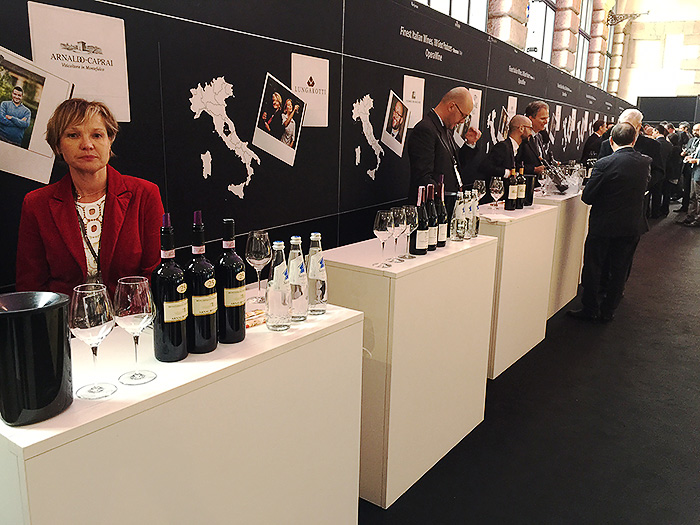
OperaWine 2015 - The Layout

OperaWine 2015 – The Layout

Having said that, let’s move on to my tasting notes from the event. I have organized my notes by region, in geographical order from north to south and within each region starting from my top rated wine down. This first installment of my OperaWine series will focus on the north-western part of Italy:

1. Valle d’Aosta

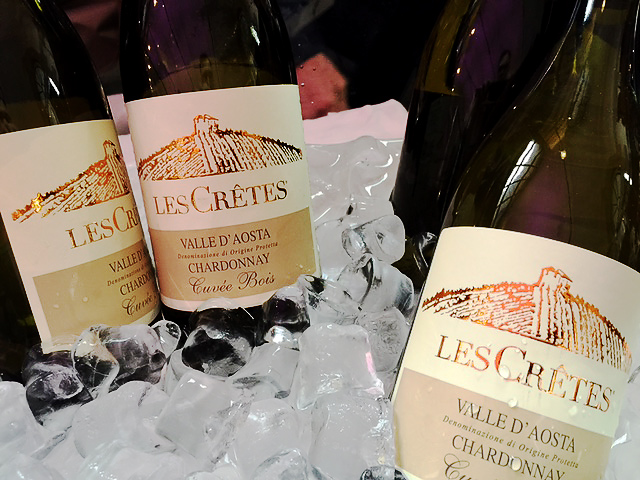
Les Crêtes, VDA Chardonnay “Cuvée Bois” 2012 ($50/€35): this mountain Chardonnay never disappoints those who appreciate an oaky style that is not over the top. This one has an elegant nose of apple, toast, roast hazelnut, butter and vanilla, as well as a silky smooth and tasty mouthfeel with good structure and nicely matching flavors of apple, butter and roast hazelnut. Long finish. Very Good  Very Good

Les Crêtes, VDA Chardonnay Cuvée Bois 2012

Les Crêtes, VDA Chardonnay Cuvée Bois 2012

Maison Anselmet, VDA Chardonnay “Élevé en Fût de Chêne” 2012 ($N/A/€30): another good mountain Chardonnay, although this time just a little too oaky for my taste. Nose of fresh toast, roast hazelnut, honey and pineapple followed by a structured mouthfeel of noticeable sapidity where the oaky notes tend to prevail. Good to Very Good Good to Very Good

2. Piemonte

Bruno Giacosa, Barolo “Le Rocche del Falletto” Riserva 2004 ($190/€190): an elegant nose of cherry, wild strawberries, licorice, rosemary, soil and dried roses is the prelude to an inviting, full-bodied sip which is silky smooth and has completely integrated the wine’s alcohol and its fully tamed tannins. Flavors of ripe cherry, wild strawberries, licorice, vanilla and aromatic herbs. Long finish. Spectacular Spectacular

Bruno Giacosa, Barolo Le Rocche del Falletto Riserva 2004

Bruno Giacosa, Barolo Le Rocche del Falletto Riserva 2004

Massolino, Barolo “Vigna Rionda” Riserva 2000 ($120/€65): a captivating nose of violet, rose, vanilla, tobacco, licorice, soil, cherry and raspberry complements a deliciously smooth mouthfeel with substantial but well integrated alcohol and gentle tannins as well as intriguing flavors of cherry, raspberry, licorice, herbs and soil. Long finish. Spectacular Spectacular 

Massolino, Barolo Vigna Rionda Riserva 2000

Massolino, Barolo Vigna Rionda Riserva 2000

Ceretto, Barolo “Bricco Rocche” 2006 ($150/€145): a great nose of black cherry, blackberry, soil, roots, forest floor and ground coffee coupled with a structured and smooth mouthfeel with well integrated alcohol and slightly astringent tannins underpinning flavors of black cherry, blackberry, roots and mineral notes. Long finish. Outstanding Outstanding

Ceretto, Barolo Bricco Rocche 2006

Ceretto, Barolo Bricco Rocche 2006

Paolo Scavino, Barolo “Bricco Ambrogio” 2011 ($57/€55): the youngest of the showcased Barolo’s was a surprisingly very good performer already. An enticing nose of dried roses, cherry, raspberry, herbs, rhubarb and cocoa introduces a structured sip which is already coherent with nice acidity, muscular but well controlled tannins and pleasant flavors of ripe cherries, raspberries, chocolate and coffee. Very Good  Very Good

Poderi Aldo Conterno, Barolo Bussia “Romirasco” 2006 ($170/€ 120): a pleasing nose of violet, rose, cherry, ripe strawberries, tobacco and cocoa, as well as a full-bodied sip with slightly astringent tannins and flavors of cherry, dark chocolate and coffee. Long finish. Still needs time to fully evolve. Good to Very Good Good to Very Good

Cavallotto, Barolo “Bricco Boschis” Riserva 2006 ($60/€49): an elegant nose of dried rose, cherry, licorice, tobacco, soil and forest floor complements a structured and smooth mouthfeel with flavors of cherry, cocoa, coffee and tobacco, and a high alcohol note, just a little too evident. Good Good

Sandrone, Barolo Cannubi “Boschis” 2003 ($120/€85): pretty faint nose of tart cherry, wild berries, licorice and structured, smooth mouthfeel with moderate acidity and supple tannins along with cherry and licorice flavors. Good Good

3. Lombardia

Ca’ del Bosco, Franciacorta “Cuvée Annamaria Clementi” 2004 ($90/€75): as always this Italian Classic Method sparkling wine sits right there, at the pinnacle of the Italian Classic Method production. It was disgorged in 2012 after spending a whopping 84 months maturing on its lees. The nose is almost aphrodisiac, with a kaleidoscope of intense aromas reminiscent of freshly baked sugar cookies (like old-fashioned Italian canestrelli), ripe golden apple, yellow peach, honey, fresh toast, almonds, face powder and mineral notes. The mouthfeel is just as seductive, with still plenty of fresh acidity and lively sapidity balanced out by its creamy smoothness and intense flavors that impressively replicate its aromatic palette. Spectacular Spectacular 

Ca' del Bosco, Franciacorta Cuvée Annamaria Clementi 2004

Ca’ del Bosco, Franciacorta Cuvée Annamaria Clementi 2004

Mamete Prevostini, Sforzato di Valtellina “Albareda” 2011 ($60/€35): a totally wow nose for this raisin mountain Nebbiolo, with an intense bouquet of cherry jam, laurel, aromatic herbs, wet soil and cocoa opens the door to a delicious sip, where the imposing structure and high alcohol are perfectly kept under control, with no hard edges: the mouthfeel is smooth with already silky tannins and enticing flavors of ultra ripe cherries, aromatic herbs and dark chocolate. Outstanding Outstanding

Mamete Prevostini, Sforzato di Valtellina Albareda 2011

Mamete Prevostini, Sforzato di Valtellina Albareda 2011

Nino Negri, Sforzato di Valtellina “5 Stelle Sfursat” 2010 ($75/€50): a wonderful nose of aromatic herbs, spirited cherries, chocolate, vanilla and face powder. The sip is just as exciting with flavors of ripe cherries, black pepper, aromatic herbs and dark chocolate supported by plenty of structure that is however delivered in an elegant fashion, with a smooth mouthfeel, perfectly integrated alcohol and already supple tannins. The 5 Stelle never disappoints. Outstanding Outstanding

5. Liguria

Cantine Lunae Bosoni, Colli di Luni Vermentino “Etichetta Nera” 2013 ($30/€15): a great, intense nose of mint, aromatic herbs, lime, nectarine and sage introduces a pleasant sip where the wine’s acidity and mineral notes are nicely balanced by its smoothness. Very Good  Very Good

Cantine Lunae Bosoni, CDL Vermentino Etichetta Nera 2013

Cantine Lunae Bosoni, CDL Vermentino Etichetta Nera 2013

Terre Bianche, Rossese di Dolceacqua “Bricco Arcagna” 2010 ($35/€20): this varietal Rossese (a black-berried variety indigenous to Liguria) introduces itself with an intense and pleasing nose of wild strawberries and red currant, red flowers, licorice, herbs and soil followed by a youthful, round and medium-bodied sip dominated by wild berries. Perfect red to grace a Spring night. Good to Very Good Good to Very Good

Posted in Red Wines, Sparkling Wines, White Wines, Wine, Wine Reviews, Winevents | Tagged , , , , , , , , , , , , , , , , , , , , , , , , , , , , , , , , , , , , , | 26 Comments

When conversations get surreal: potato and saffron soup with pancetta croutons

Potato, saffron and pancetta soup

A couple of days ago Stefano was getting ready to go to work and he told me that I must have done something wrong with the laundry because his pants felt tighter.

Now, you can tell me anything (because any human being is entitled to their opinion!), you can even offend me but you cannot, and I underline “cannot”, tell me that I did something wrong with my laundry!!!

I modestly like to think of myself as the “Pavlova of the Laundry”! 😉 Let’s not even talk about the time it took me to find just the right detergents that would satisfy me. I can spend hours in the detergent and cleaners aisle and every time I see a new product I get pretty much as excited as when I see a designer’s new collection!

Let’s talk about the process: every stain is pre-treated, loads are divided by fabric and color, every washer cycle is carefully selected, the dryer is reluctantly used (we do not use dryers in Italy and I wouldn’t dream of putting an item that I bought in my country in the dryer – it simply wouldn’t survive) and everything gets ironed. Yes! Everything including sheets, towels, underwear and socks. That’s how Italian houses roll (or should roll) and mine is no exception. 😉

Potato, saffron and pancetta soup

Now you see what I mean when I say that there can’t possibly be anything wrong with my laundry? The ugly truth? Stefano has put some weight on and he is in total denial!

And what do you do when someone is in denial? Desperate times call for desperate measures! I cut all the fatty dishes out and I declared soup season open! Soups are fantastic and when you want to lose some weight, they really can do magic. They are low on calories yet healthy, very satisfying to your stomach and, above all, delicious!

Last night Stefano was particularly famished, so I decided to make some potato soup with a twist. I played with some saffron and the result was fantastic. The saffron really complements the potatoes and the pancetta croutons are really the cherry on the cake! 🙂

So that’s how I did it! 😉

Ingredients:

6 Potatoes, cut into cubes
1/4 Cup, extra Virgin Olive Oil
1/3 Cup, chopped pancetta
1/3 Cup, finely chopped spring onion
2 Cups, vegetable stock
1 and 1/2 Sachet, powdered saffron
2 Tbsp, Mascarpone cheese
1 Cup, Milk
Salt
Ground white pepper

Directions:

Potato, saffron and pancetta soupIn a non-stick medium/large pot, heat 1/3 cup of olive oil, add the pancetta and fry, stirring occasionally, until the pancetta gets golden and crispy.
Remove the pancetta from the pot and place it on some paper towel so it can lose the excess oil.

In the same olive oil where you fried the pancetta, place the spring onion and cook until it softens. Add the potatoes, the stock, some salt and white pepper (to taste) and toss to coat. Cook, stirring often, for about 20 minutes. Eventually, the potatoes will turn kind of mushy and the stock will almost completely evaporate. Add 1 sachet of saffron and toss to coat until the mixture gets a vibrant yellow color.

Transfer the soup to a food processor or a blender. Add the mascarpone, the rest of the olive oil and the milk and blend until it is smooth and creamy.

Return the soup to the pot and, on low heat, cook for a few minutes, stirring often.

Pour the soup into two serving bowls or plates, add some fried pancetta on top and garnish with some powdered saffron.

Will Stefano manage to lose some weight? Only time will tell! 😉

Posted in Recipes | Tagged , , , , , , , , , | 43 Comments

Wine Review: Domaine Chante Cigale, Châteauneuf-du-Pape AOC, 2009

Domaine Chante Cigale, Châteauneuf-du-Pape AOCOur previous post provided a general overview of Châteauneuf-du-Pape, the territory, the appellation and the main winemaking practices, so if you missed that you may want to go back and take a look at that before reading this post, which instead revolves around my review of a Châteauneuf-du-Pape wine that I really like: Domaine Chante Cigale, Châteauneuf-du-Pape AOC, 2009 ($35).

The Bottom Line

Overall, the Chante Cigale CDP 2009 that I had was a very good to outstanding wine: I was impressed both by its broad and intense bouquet of aromas (tart cherry, black currant, wild berries, violet,  cocoa, wet soil, leather, sweet tobacco, rosemary, vanilla, licorice, black pepper, forest floor and a barnyard note) and by its delicious mouthfeel, which combined fruity and spicy flavors with a smooth, balanced sip. All in all, an extremely pleasant and ready to drink wine which delivers good bang for the buck.

Rating: Very Good and Recommended Very Good – $$

(Explanation of our Rating and Pricing Systems)

About the Appellation and the Grapes

For plenty of information about the Châteauneuf-du-Pape appellation and the “GSM” grape blend, please refer to our previous post about Châteauneuf-du-Pape.

Regarding Cinsaut, a grape that is part of the Chante Cigale blend beside the GSM trio, this is a black-berried grape variety originating from southern France, probably from the Languedoc-Roussillon area. Its earliest documented mention dates back to 1600 under its old synonym “Marroquin“; later on (1829) it was referred to as “Sinsâou” and finally by 1888 it took its current name of Cinsaut.

Cinsaut has also been known and cultivated in Italy since the XVII century (both in Sicily under the name “Grecaù” and in Puglia under the name “Ottavianello“) and in Spain under the name “Sinsó“.

Notably, Cinsaut was also used in South Africa to breed the Pinotage variety (a cross between Pinot Noir and Cinsaut, the latter erroneously referred to as “Hermitage” in South Africa).

Cinsaut finds optimal conditions in southern Frances’s warm and dry soils, where it produces red wines that are generally smooth, fruity and aromatic and it often serves as a blending partner. Cinsaut also makes pleasantly fresh and perfumed rosé wines.

In 2009, total plantings of Cinsaut in France were 20,800 HA, mainly in the Languedoc-Roussillon and Provence-Côte d’Azur districts, as well as in Châteauneuf-du-Pape, where it may serve as a minority blending partner in the local red.

The country with the second largest Cinsaut plantings after France is South Africa, with 2,241 HA in 2008.

In Italy, total plantings in 2000 were a mere 288 HA, mostly in the Puglia region (particularly in the Ostuni DOC territory) under the synonym Ottavianello.

Cinsaut is also cultivated in Morocco and Lebanon, as well as in California that in 2008 had just 47 HA.

(Information on the grape variety taken from Wine Grapes, by Robinson-Harding-Vouillamoz, Allen Lane 2012 – for more information about this and more grape varieties, check out our Grape Variety Archive)

About the Producer and the Estate

The history of Domaine Chante Cigale starts in 1874, when the then owner Mr Hyppolite Jourdan named his 28 HA estate “Clos Chante Cigale” (meaning, “vineyard of the singing cricket”). The name of the estate was then changed to the current “Domaine Chante Cigale” in 1936, when its wines earned the AOC appellation.

Currently, the wine is made from a blend of 65% Grenache, 20% Syrah, 10% Mourvedre and 5% Cinsaut grapes that grow in 33 HA of vineyards on a soil that is a mix of limestone, sand and pebbles. Grapevine density ranges from 2,500 to 4,500 vines/HA and the average age of the vines is 45 years. Total production is 120,000 bottles per year.

Our Detailed Review

The wine that we are going to review today is Domaine Chante Cigale, Châteauneuf-du-Pape AOC, 2009.

The wine was a whopping 15% ABV and the proportions of the blend were 65% Grenache, 20% Syrah, 10% Mourvédre and 5% Cinsaut (for more information about those grape varieties, check out our Grape Variety Archive). In the U.S. it retails for about $35.

The grapes underwent a 5-day prefermentative cold maceration phase at 50F/10C, followed by a 28 to 35 day fermentation and maceration phase with punch-downs and pump-overs. The wine then aged for 15 to 18 months 70% in concrete vats and 30% in new oak barrels.

As always, for my review I will use a simplified version of the ISA wine tasting protocol that we described in a previous post: should you have doubts as to any of the terms used below please refer to that post for a refresher. For your own structured wine tastings, consider downloading our FsT Wine Tasting Chart!

In the glass, the wine was ruby red and viscous.

On the nose, its bouquet was intense, complex and fine, presenting an impressive kaleidoscope of aromas: tart cherry, black currant, wild berries, violet,  cocoa, wet soil, leather, sweet tobacco, rosemary, vanilla, licorice, black pepper, forest floor and a barnyard note.

In the mouth, the wine was dry, had high ABV, and was smooth; it was still moderately acidic, moderately tannic and tasty. It was full bodied and balanced, with intense and fine mouth flavors of tart cherry, wild berries, dark chocolate, licorice, rosemary and a peppery note. It had a medium finish and its evolutionary state was ready approaching maturity, meaning great to be enjoyed now but suitable to be kept in the cellar for not more than a couple more years.

Posted in Red Wines, Wine, Wine Reviews | Tagged , , , , , , , , , , , , | 11 Comments

An Overview of the Châteauneuf-du-Pape Appellation and Its Wines

As a prelude to our next post in which we will temporarily leave Italy and review a French Châteauneuf-du-Pape wine, in this post we will provide a brief overview of the southern French wine region that goes by the same name, including its history, terroir, permitted grape varieties and winemaking practices.

In General

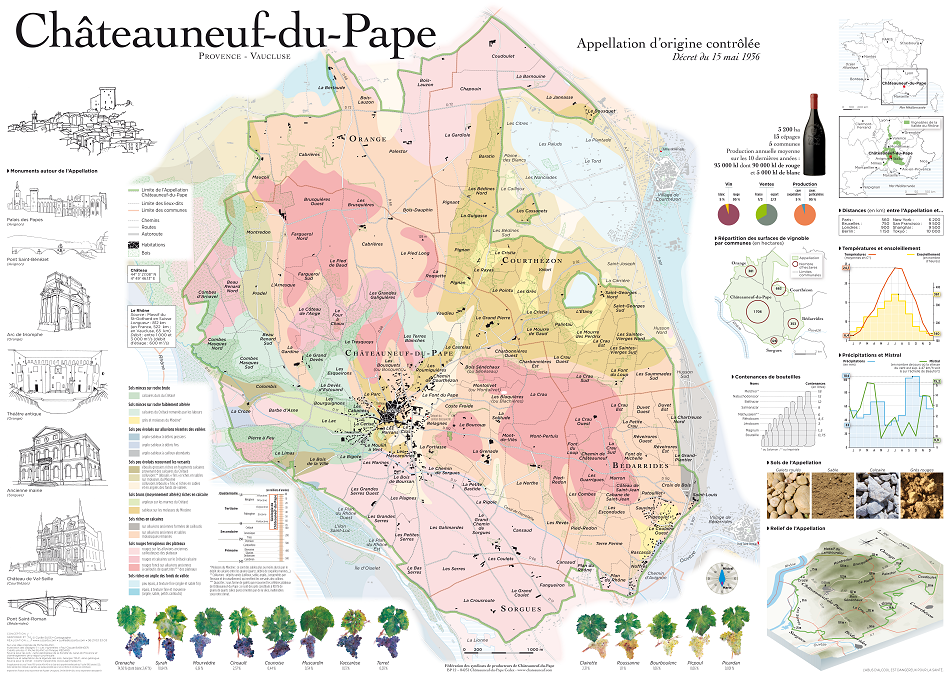
Châteauneuf-du-Pape is an area encompassing 3,200 HA of vineyards that is located in the southern part of the Rhône Valley, in France, between the towns of Orange (to the north) and Avignon (to the south).

Châteauneuf-du-Pape Appellation Map

Châteauneuf-du-Pape Appellation Map – Courtesy of Fédération des syndicats des producteurs de Châteauneuf-du-Pape

Thirteen different grape varieties were originally authorized in the Châteauneuf-du-Pape vineyards (now they have been increased to 18), with Grenache, Syrah and Mourvèdre (the so-called “GSM“) being the dominating varieties, as well as the traditional core grapes in the Châteauneuf-du-Pape blend (see below for more information about these grape varieties). Other permitted varieties include Cinsaut, Clairette, Roussanne, Muscardin and Picpoul.

Total production in the Châteauneuf-du-Pape appellation is approximately 14 million bottles per year. Although the Châteauneuf-du-Pape AOC regulations permit the production of both red and white wines, reds largely dominate (on average, 94% red versus 6% white). About 60% of all Châteauneuf-du-Pape wine is exported, with Switzerland, Belgium and Germany being the main importing countries.

Châteauneuf-du-Pape History

In 1309, distressed by factionalism in Rome, pope Clement V decided to move the papal capital from Rome to southern France and, as a result, the popes took temporary residence in Avignon, France. The so-called “Avignon papacy” period ended in 1377, when pope Gregory XI moved the papal capital back to Rome.

During the Avignon papacy, under pope John XXII, the village of Châteauneuf-du-Pape became the summer residence of the popes. Pope John XXII granted the local wine the rank of “Vin du Pape” (meaning, “pope’s wine”), thus opening Châteauneuf-du-Pape wines the doors to the European nobility’s courts.

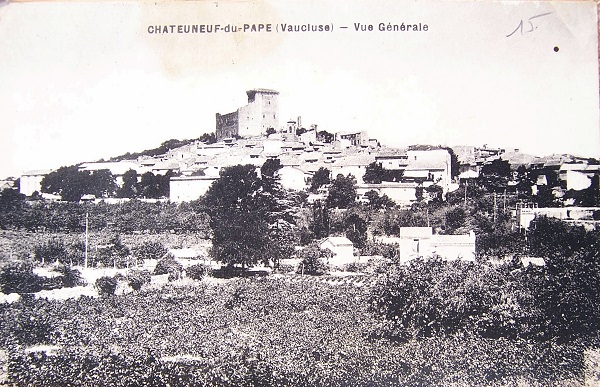
Chateauneuf-du-Pape: The Village and the Vineyards - Courtesy of Fédération des syndicats des producteurs de Châteauneuf-du-Pape

Chateauneuf-du-Pape: The Village and the Vineyards – Courtesy of Fédération des syndicats des producteurs de Châteauneuf-du-Pape

Châteauneuf-du-Pape later became one of the first French AOC wines, in 1936.

In 1937, the estate owners in the Châteauneuf-du-Pape appellation territory created the famous bottle that is still used nowadays for their wines, with the embossed logo symbolizing a papal tiara placed above the keys of St. Peter with the inscription: “Châteauneuf-du-Pape contrôlé” written in Gothic letters around this emblem.

Châteauneuf-du-Pape Terroir

Soil in the Châteauneuf-du-Pape area can be very diverse: generally speaking, the western part is mostly limestone, while sand and clay soil with large stones occur on the plateaus; mixed sand, limestone and red and grey clay dominate in the northern part, while shallow sand and clay soil on a well-drained layer of gravel is typical of the south. The large pebbles that are typical of the area contribute to the quality of the vines and grapes by storing heat during the day and holding water.

The Harvest at Chateauneuf-du-Pape - Courtesy of Fédération des syndicats des producteurs de Châteauneuf-du-Pape

The Harvest at Chateauneuf-du-Pape – Courtesy of Fédération des syndicats des producteurs de Châteauneuf-du-Pape

The Main Châteauneuf-du-Pape Permitted Varieties – The “GSM”

1. Grenache (or “Garnacha” or “Cannonau“)

Garnacha is an old variety that has undergone several color mutations (there are a black-berried variety, a grey-berried one and a white-berried one) and whose origins are uncertain: it may be Spanish (most probably from the Aragón region) or it may be Italian (from the island of Sardinia, where it is locally known as “Cannonau“).

The earliest documented mention of Garnacha in Spain dates back to 1513, when it was referred to as “Aragones“, while its first mention under the name “Garnacha” occurred in 1678.

On the other hand, in Italy’s Sardinia island, the earliest mention of Garnacha, under the old local name “Canonat“, was in 1549.

If historical data make both hypotheses plausible in terms of where the variety originated, DNA data seem to indicate a Spanish origin.

Garnacha is also known in France under the local name “Grenache“.

Garnacha Tinta (Garnacha’s black-berried color mutation) is one of the world’s most planted varieties. It is prevalently used in the context of blends, notably in the one typical of Châteauneuf-du-Pape wines, which is generally referred to as “GSM“, standing for Grenache, Syrah and Mourvèdre.

In France, where it is known under the name “Grenache Noir“, it is the second most planted variety after Merlot, with a total of 94,240 HA of vineyards in 2009, almost exclusively in southern France and particularly in the southern Rhône district, where it is the prevailing blending partner in Châteauneuf-du-Pape wines. These tend to be deep-colored, high in ABV and often tannic, with herby and spicy notes.

2. Syrah (or “Shiraz“)

Syrah is a black-berried grape variety that is indigenous to the northern Rhône region of France, where it was first mentioned in a document dating back to 1781 under the name “Sira de l’Hermitage“.

DNA analysis proved that Syrah is a natural cross between Mondeuse Blanche (a Savoie variety) and Dureza (an Ardeche variety) that probably took place in the Rhône-Alps region.

Syrah has historically been mostly grown in the Rhône Valley in France and in Australia under the name Shiraz, although recently its planting has become more widespread as a result of an increasing popularity of its wines.

3. Mourvèdre (or “Monastrell“)

Monastrell is a black-berried grape variety that originates from the Valencia region, in eastern Spain. The name derives from Latin and is a diminutive of the word “monastery”, suggesting that the variety was first cultivated by monks. The earliest documented use of the name Monastrell dates back to 1381 in the Catalunya region of Spain.

Monastrell later made it into France (probably in the XVI century) from the Spanish port-town of Sagunto near Valencia, which in Catalan was known as Morvedre, so in France the grape took the name of Mourvèdre.

Monastrell wines are typically high in alcohol and tannins and may have intense aromas of blackberry. Monastrell/Mourvèdre is widely grown in Spain and in France, and it is also cultivated in the USA (especially in California), Australia and South Africa, where it is sometimes known under the name of “Mataro“, which was the name of a Spanish town on the Mediterranean.

(Information on the grape varieties taken from Wine Grapes, by Robinson-Harding-Vouillamoz, Allen Lane 2012 – for more information about these and more grape varieties, check out our Grape Variety Archive)

Chateauneuf-du-Pape Wine Aging Cellar - Courtesy of Fédération des syndicats des producteurs de Châteauneuf-du-Pape

Chateauneuf-du-Pape Wine Aging Cellar – Courtesy of Fédération des syndicats des producteurs de Châteauneuf-du-Pape

Châteauneuf-du-Pape Winemaking

Traditionally, in Châteauneuf-du-Pape wine has been fermented in concrete tanks. Since the 1980’s, however, many winemakers have switched to stainless steel vats, as they are more hygienic, are easier to clean and allow a more precise temperature control. Recently there has been a trend to go back to fermenting the grapes in newer, coated versions of the traditional concrete tanks, which have made them more efficient and acceptable by today’s winemaking quality standards.

Since Châteauneuf-du-Pape wines are blends, winemakers can choose between two different fermentation techniques. One is known as co-fermentation and calls for mixing all the varieties in the blend within the same tank and fermenting them all together. The other technique instead calls for separate fermentation of the different grape varieties (so as to keep their main characteristics intact) with the resulting wines being later assembled in the final blend.

Alcoholic fermentation of red Châteauneuf-du-Pape wines usually lasts between one and four weeks and is generally followed by malolactic fermentation. The wines are then aged in stainless steel, epoxy or concrete vats and/or in oak barrels for 10 to 18 months. During this period, racking may take place one or more times.

(Main sources: Châteauneuf-du-Pape; Rhône Wines. For more in-depth information about Châteauneuf-du-Pape, refer to this excellent article on the Wine Cellar Insider)

Posted in Red Wines, Wine, Wine Education, Wine Regions | Tagged , , , , , , , , , , , , , , , | 26 Comments

When celebrity chefs feel the need to reinvent the wheel: Carlo Cracco and his infamous garlicky Amatriciana

Spaghetti all'Amatriciana

Spaghetti all’Amatriciana

Last month, the Italian culinary world has been shocked by the Amatriciana recipe suggested by one of our superstar chefs: Carlo Cracco.

While attending an Italian TV show, the famous chef listed a garlic clover as one of the ingredients of the worldwide known pasta dish!  Anyone who is only vaguely familiar with (authentic) Italian cuisine knows that garlic does not belong in the Amatriciana (for reference, check out our recipe for an authentic Amatriciana)!

As if the first slap in the face of Italian culinary tradition wasn’t enough, during an episode of the Italian edition of Masterchef, first Joe Bastianich and then Cracco himself suggested that one of the contestants use some onion when making “pasta alla Gricia”, the famous ancestor of the Amatriciana which doesn’t call for tomatoes and… most certainly does not call for onions either!!!

Enough was enough, so much so that specialized media, social networks, restaurant owners and even the Mayor of Amatrice “took the field” ready to crucify Cracco and his garlicky dish in defense of the one and only recipe. The Amatrice Culinary School went as far as to publicly invite Cracco to visit them so he can finally taste the real thing! Ouch!

I think one of the commentators hit the nail on the head: nobody can dispute that you can get creative in the kitchen and experiment as much as you like, but when you decide to add garlic to the Amatriciana, don’t call it that – because it’s not! As good as it may be with the addition of the extra ingredient, it’s simply another dish!

Spaghetti all'Amatriciana

Spaghetti all’Amatriciana

My reaction to all this fuss? One of kind of sadness and disappointment. Both Italian and non-Italian gourmands who happen not to be experts in my country’s cuisine often look up at celebrity chefs like Cracco to learn the Italian food gospel. I think that people who enjoy all that notoriety have the moral responsibility to… spread the word, and spread it right. How can I go on happily complaining about the oh so many restaurants in my adopted country that serve me Amatriciana with garlic and/or onion when one of our star chefs is teaching exactly that? 😉

Anyone who knows me a bit is well aware of my aversion toward social networks. However, in this case, I truly hope their popularity will help to set the record straight!

Curious about a third slap in the already bruised face of Italian culinary tradition? Another Italian hugely popular chef, Davide Oldani, recently declared that butter can be used in making pesto!!! I mean, butter. Seriously? I believe people from Genoa (including Stefano!) and the Liguria region in general must be incessantly calling the food police! Such an affront.

I’m telling you: if another Italian celebrity chef comes along suggesting that heavy cream can be used in making Carbonara, I’ll consider giving up my Italian citizenship!!!

Hope you enjoyed this little foodgate!

F. Xx

Posted in Stuff We Like | Tagged , , , , , , , , , , , , , , , , , , | 24 Comments

Variety Show: Spotlight on Primitivo… Or Zinfandel?… Or Tribidrag?

StefanoToday’s grape in the limelight of our Variety Show is Primitivo, a black-berried grape variety that has sparked a long-lasting controversy as to whether it is the same variety as Zinfandel or a different one.

With the help of the precious and up-to-date scientific data from the brilliant tome Wine Grapes, by Robinson-Harding-Vouillamoz, Allen Lane 2012, this post intends to shed some light on this debate and provide an overview of the scientific evidence that settled it.

1. A Brief History of Primitivo

The earliest documented mention of Primitivo in Italy dates back to 1799 and can be found in a note of an amateur botanist from Puglia who called “Primativo” (from the Latin “primativus“, meaning “first to ripen”) a particularly early ripening grapevine that he found in his own vineyard.

2. How Zinfandel Made It To The USA

The introduction of Zinfandel to the United States has recently been proven to take place in the 1820’s when Long Island grape grower George Gibbs brought this variety to his nursery from the Schönbrunn imperial collection in Vienna, Austria. At the time of its introduction to the United States, it was an unnamed grape variety, but by 1829 it appeared in the catalog of another Long Island nursery under the name “Zinfardel” and was later referred to under several variations of that original name until 1860, when it was agreed that the variety should be officially called “Zinfandel”.

3. In Search of Truth: Are Primitivo and Zinfandel One and The Same?

In 1967 a plant pathologist from the US Department of Agriculture visited Bari, in Italy’s Puglia region, and he was struck by the similarities between Zinfandel and Italy’s Primitivo wines and grapevines, so much so that he brought Primitivo cuttings to the University of California at Davis for them to be analyzed and compared to Zinfandel. In 1975 Wade Wolfe, a PhD candidate at Davis, established that Primitivo and Zinfandel were one and the same variety.

This immediately prompted the “battle over Zinfandel“, with several Primitivo producers from Puglia who started selling their wines in the United States labeling them “Zinfandel”. This practice triggered a reaction by most Californian Zinfandel producers to defend their investment in the variety and resulted in a 1985 ruling by the US Bureau of Alcohol, Tobacco and Firearms (“BATF”) that Zinfandel could not be used as a synonym of Primitivo.

Nonetheless, the identity between Zinfandel and Primitivo was later confirmed, in 1994, by DNA profiling conducted by Carole Meredith at UC Davis. As a result, in 1999 the European Union granted Italian Primitivo producers the right to use the name Zinfandel. BATF filed a complaint with the European Union against such ruling, but it proved unsuccessful. To date, no agreement between the US and the EU on this matter has been reached despite the scientific evidence.

4. The “Zinquest”: Where Did The Primitivo/Zinfandel Originate From?

Soon after proving the identity between Primitivo and Zinfandel, Carole Meredith at UC Davis connected in 1998 with Croatian scholars at the University of Zagreb (Croatia) to start what was referred to as the “Zinquest“, that is the quest to determine the origins of Primitivo/Zinfandel. After much research, the quest finally came to a successful end in 2001 when DNA profiling established that Zinfandel was identical to a Dalmatian grape variety locally known as Crljenak Kaštelanski (meaning “the red from Kaštela”).

Later on (in 2011), DNA analysis proved that Crljenak Kaštelanski was the same variety as a very old Croatian variety indigenous to the Dalmatia region and known as Tribidrag, whose first documented mentions date back to the XV century. As an interesting side note, the Croatian word Tribidrag has Greek origins and means “early ripening”, which perfectly matches the etymology of the word “Primitivo” in Puglia.

According to the rule of anteriority (whereby the oldest name used for a same grape variety takes precedence), Tribidrag should be considered as the prime name for the Crljenak Kaštelanski/Primitivo/Zinfandel variety.

(Information on the grape variety taken from Wine Grapes, by Robinson-Harding-Vouillamoz, Allen Lane 2012 – for more information about grape varieties, check out our Grape Variety Archive)

5. Geographical Distribution of the Tribidrag/Crljenak Kaštelanski/Primitivo/Zinfandel Grape Variety

In terms of geographical distribution, Primitivo plantings in Italy in 2000 amounted to 7,951 HA, mostly in the Puglia region and particularly in its Salento district. Wines are generally fruity, structured and high in ABV. Notable appellations for Primitivo wines in the Puglia region include:

  • Primitivo di Manduria Dolce Naturale DOCG (an appellation reserved to sweet, raisin wines made from 100% Primitivo grapes grown in a territory adjacent to the towns of Taranto and Brindisi)
  • Gioia del Colle Primitivo DOC (an appellation reserved to wines made from 100% Primitivo grapes grown in a territory adjacent to the town of Bari)
  • Primitivo di Manduria DOC (an appellation reserved to wines made from 85% or more Primitivo grapes grown in a territory adjacent to the towns of Taranto and Brindisi)

Crljenak Kaštelanski and Tribidrag are fairly popular, respectively, in Croatia and Montenegro.

California is by far the place with the most Tribidrag/Zinfandel plantings, with 20,377 HA in 2008 (making it the second most planted red variety in California, after Cabernet Sauvignon). Zinfandel quality in California is uneven, although recently there has been an effort on the part of several producers to make quality wines, which tend to be big, bold and fruity.

Tribidrag/Zinfandel has also gained some popularity in Australia.

6. Recommended Primitivo/Zinfandel Producers

(1) Recommended producers of outstanding Italian Primitivo wines include, among others of course:

Feudi di San Marzano, Primitivo di Manduria “Sessantanni” DOC ($50)

Feudi di San Marzano, Primitivo di Manduria Dolce Naturale “11 Filari” DOCG (€15 for a 500 ml bottle – not yet available in the US)

Gianfranco Fino, Primitivo di Manduria “Es” DOC ($90)

Masseria Li Veli, “Montecoco” Puglia IGT ($21)

Pietraventosa, Gioia del Colle Primitivo Riserva DOC (€25 – not yet available in the US)

(2) Recommended producers of outstanding US Zinfandel wines include, among others of course:

Carlisle, Zinfandel Russian River Valley “Papera Ranch” ($46)

Ravenswood, Zinfandel Napa Valley “Dickerson” Single Vineyard ($37)

Robert Biale, Zinfandel Napa Valley “Stagecoach Vineyards – Biale Block” ($50)

Seghesio, Zinfandel Alexander Valley “Home Ranch” ($58)

Turley, Zinfandel Paso Robles “Dusi Vineyard” ($42)

Posted in Variety Show, Wine, Wine Education | Tagged , , , , , , , , , , , | 18 Comments

Those little “goodfellas”: Brussels Sprouts and Hot Sausage Tortiglioni…

Brussel sprout and hot sausage tortiglioni

2 Servings

Brussels sprouts are not very popular in my country and they certainly weren’t on my family’s table. I don’t think I can recollect one time that I ate them in my house or anywhere else in Italy.

Things started changing a couple of years ago when I decided to host my first Thanksgiving’s dinner. During my “due diligence” period, in my quest for dishes traditionally served in the US for that holiday, I found out that Brussels sprouts were a must as a side dish, stir-fried or roasted, preferably with bacon or pancetta and even with raisins.

Little by little my acquaintance with these little guys turned into a beautiful friendship and now I’m totally in love with them for several different reasons.

Brussel sprout and hot sausage tortiglioni

First, their appearance – because no matter what they say, appearances still count! 🙂 Their vibrant green has the magical power to put me in a good mood and their shape reminds me of a mini peony bud, one of my favorite flowers. I wouldn’t mind arranging them in a vase. I’m sure they would look lovely on any table! 😉

Second, they are really good for our health: they are an excellent source of vitamins, essential minerals and fiber. Since I’m on a perennial diet, they are a winner in my book!

Third, these buds are super versatile. They complement meat or fish wonderfully, they can been thrown in any salad and they go beautifully with pasta.

Needless to say, pasta is always one of my first picks 🙂 especially on weeknights! “Dressing up” some pasta with healthy vegetables and a little flavor is very easy and requires very little time, with the additional benefit that your conscience is virtually clean because, after all, you are eating your veggies!

For this recipe, I decide to use some hot sausage to go with the Brussels sprouts. If you decide to cook it for your kids, you may replace it with some non-spicy sausage. Her Majesty is not into spicy food and your kid may not be either…

Brussel sprout and hot sausage tortiglioni

Ingredients:

1/2 Cup, Extravirgin olive oil
1 Carrot, finely chopped
1 Celery, finely chopped
1/3 Cup, finely chopped onion
2 Hot sausages (about 7 ounces), loose
About 10 ounces, small Brussels sprouts, rinsed and cut in halves
1/2 Cup, beef or vegetable stock
About 7 ounces, Tortiglioni
2Tbsp, grated Parmigiano cheese
Salt

Directions:

In a non-stick medium pot, pour the olive oil and add the carrot, the celery and the onion (in Italian, we called this mixture “soffritto“) and cook until the onion softens and becomes translucent.

Add the sausage and some salt (to taste) and cook over moderate heat, stirring occasionally, until browned and crisp. Using a strainer, transfer the sausage mixture to a bowl to drain. Put the sausage mixture aside, and return the drained olive oil to the pot.

Add the Brussels sprouts, some salt (to taste) and cook over moderate heat, stirring occasionally for about 10 minutes. Add the stock and bring to boil, then reduce the heat to low. Simmer, stirring occasionally, until the stock is almost completely evaporated. Transfer the sausage mixture back to the pot, toss to coat and let the rest of the stock completely evaporate.

In the meanwhile, put a large pot of salted water on the stove to boil. When the water is boiling, add the pasta and cook it until al dente, stirring occasionally. Drain the pasta and put it in the pot with the Brussels sprouts and the sausage and toss to coat.

Put the pasta into the serving plates/bowls and dust the top of each plate with some Parmigiano cheese.

I dedicate these little green buds to all the people who celebrate St. Patrick’s Day! Hopefully the leprechaun will love them! 😉

Talk to you soon!

F. Xx

Glass statuette and flower composition with Brussel sprout backdrop

Posted in Recipes | Tagged , , , , , , , , , | 52 Comments

Variety Show: Spotlight on Aglianico

StefanoToday’s grape variety in the spotlight is… Aglianico, together with its clone Aglianico del Vulture.

1. Aglianico’s Origins And History

Aglianico is a black-berried grape variety that is indigenous to Southern Italy. The earliest written evidence of this variety dates back to 1520 referring to the grapes as “Aglianiche”.

Although it is widely believed that the name “Aglianico” comes from a variant of the word “hellenic”, hinting at a Greek origin of the variety, this theory is confuted by others (including the authors of Wine Grapes) who contend that the word actually comes from the Spanish word “llano” (meaning “plain”), thus referring to Aglianico as the “grapes of the plain”.

2. Aglianico’s DNA Profiling

DNA analysis supports the authors’ theory as Aglianico’s DNA profile does not resemble that of any of the modern Greek grape varieties, while it is similar to Aglianicone’s, a Campanian variety which could be an offspring of Aglianico.

(Information on the grape variety taken from Wine Grapes, by Robinson-Harding-Vouillamoz, Allen Lane 2012 – for more information about grape varieties, check out our Grape Variety Archive)

3. Aglianico’s Geographical Distribution

Aglianico wines tend to be structured and tannic, with good acidity which gives them great aging potential. Aglianico is almost exclusively grown in Southern Italy, where it achieves its best results in the regions of Campania and Basilicata (where it is present with its separate clone Aglianico del Vulture), particularly in the following appellations:

  • Taurasi DOCG (in the Campania region, encompassing a territory near the town of Avellino and requiring the use of a minimum of 85% Aglianico grapes as well as 36 months of aging for base Taurasi wines and 48 months for Taurasi Riserva wines)
  • Aglianico del Taburno DOCG (in the Campania region, encompassing a territory near the town of Benevento and requiring the use of a minimum of 85% Aglianico grapes as well as 24 months of aging for the base wine and 36 months for the Riserva)
  • Aglianico del Vulture Superiore DOCG (in the Basilicata region, encompassing the volcanic territory near the town of Atella and requiring the use of 100% Aglianico del Vulture grapes as well as 24 months of aging for the base wine and 36 months for the Riserva)
  • Aglianico del Vulture DOC (in the Basilicata region, encompassing a slightly larger territory than the “Superiore” appellation and requiring the use of 100% Aglianico del Vulture grapes)

Outside Italy, limited plantings of Aglianico may be found in Australia and in California.

4. Recommended Aglianico Producers

Recommended producers of outstanding Aglianico wines include:

(1) Campania

Cantine Antonio Caggiano, Taurasi “Vigna Macchia dei Goti” DOCG ($30)

Feudi di San Gregorio, Taurasi “Piano di Montevergine” Riserva DOCG ($55)

Galardi, Terra di Lavoro Roccamonfina IGT (80% Aglianico, 20% Piedirosso) ($60)

Mastroberardino, Taurasi “Radici” Riserva DOCG ($65)

(2) Basilicata

Basilisco, Aglianico del Vulture “Basilisco” DOC ($40)

Cantine del Notaio, Aglianico del Vulture “Il Sigillo” DOC ($38)

Elena Fucci, Aglianico del Vulture “Titolo” DOC ($40)

Paternoster, Aglianico del Vulture “Don Anselmo” DOC ($60)

Posted in Variety Show, Wine, Wine Education | Tagged , , , , , , , , , , , | 7 Comments

Lately… Inside Chanel

Assortment of Chanel items

When I really like something, I tend to get obsessed with it. One of my latest obsessions? The latest CHANEL N°5 commercial – The One That I Want.

It’s a short film once again directed by the super-talented Baz Luhrmaan, starring Gisele Bundchen and Michiel Huisman. Needless to say, Gisele is insanely gorgeous and looks like a goddess even without any make-up on. However, the one who really struck me was Michiel Huisman. Beside being too handsome to be true (have you seen him in season 4 of Game of Thrones? No? You don’t know what you have missed – check out this YouTube clip!), he is very expressive and can really act! Kind of important for an actor, don’t you think? 😜

Coco Chanel perfume bottle

I adore everything about this film: the cast, the clothing (including his light blue suit – of course only someone that beautiful can wear a light blue suit and look divine. Any other man would look ridiculous! Sorry guys!), the soundtrack (the extraordinary adaptation of the Grease song, You’re The One That I Want, so brilliantly interpreted by Lo-Fang), the locations (Fiji, Montauk and New York) and the story of the powerful and independent Chanel N°5 woman that in the end chooses love, including the utterly unrealistic detail that she opens the letter that the love of her life left for her before walking out on her only after the photo shoot. There is no woman on earth that would have waited that long!

Anyway, I read every article and watched every video that I could find about the making of this precious film and, following my little obsession, I stumbled upon Inside Chanel, 12 online chapters that tell the story of Mademoiselle Chanel and her iconic creations in a way that simply blew me away.

Chanel tag

The charming and unbelievably chic voice of Madame Hélène Famin brings you on a wonderful fairy tale journey through the House of Chanel, from the creation of her magical perfume and its hidden symbolism to her revolutionary and one-of-a-kind 1932 Bijoux de Diamantscollection, from the creation of her timeless and iconic jacket inspired by mensware to the meaning behind the recurrent presence of the king of the animal kingdom (it was her zodiac sign and constellation) and the use of five emblematic colors.

The Chanel log

Chapters 5, 6 and 7 focus on Mademoiselle Chanel’s life, from her humble origins and childhood to the encouter of Boy Capel, the love of her life, who inspired her but tragically died in a car accident, from the way she revolutionized the fashion world and became one of the most famous couturière of her times to her stay in Venice and the meeting of friends and lovers whose different styles and cultures influenced her sense of fashion. The chapters go on to tell about her temporary retirement to Switzerland during WWII and her return to fashion when she was in her early seventies, to be first humiliated and then praised as a genius by the whole world for creating the legendary Chanel suit. The series then comes to an end focusing on her latest creations until her death that happened at the Ritz in Paris on a Sunday of 1971, the only day of the week when Mademoiselle Chanel never worked.

I enjoyed these short films immensely. There is no other way to describe it. I truly hope you will love them as much as I did because after all… “Once upon a time, there was Chanel”.

F. Xx

Assortment of Chanel items

Posted in Stuff We Like | Tagged , , , , , , , , , , , | 26 Comments

Wine Review: A Special Tasting – Gaja, Barbaresco DOC 1967

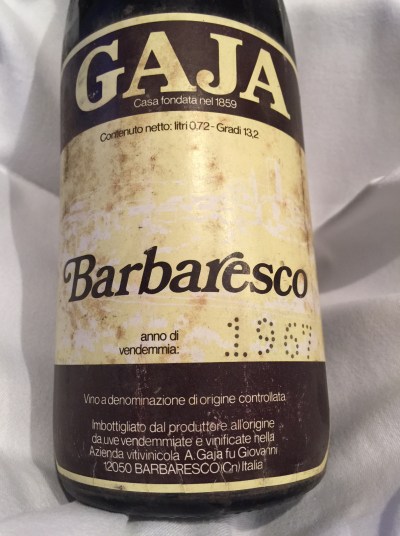
Gaja, Barbaresco DOC 1967The wine we are going to review today was certainly quite a treat: last month, my good friend Anatoli (who pens the Talk-A-Vino wine blog) and other friends came over for dinner and I decided time was right to open a bottle that had been sitting around for a while: Gaja, Barbaresco DOC 1967.

This post tells the story of that experience. For a different take on it (plus other wines we had that night), check out Anatoli’s post on his blog.

But let’s get to it.

The Bottom Line

Overall, Gaja’s 1967 Barbaresco was a spectacular treat to taste after 48 years of aging: a true testament to the longevity and age-worthiness of a wonderful, albeit difficult, grape variety such as Nebbiolo. Even after so many years spent in the bottle, the wine was still an outstanding performer and still retained much of its fruity aromas and flavors and enough acidity to keep it alive and kicking. It was wonderfully evolved, with a complex aromatic profile (ripe cherry, dried roses, sweet tobacco, cigar box, cocoa, soil, forest floor and mineral hints), great flavors and sapidity and a long, lingering finish: an amazing experience.

Rating: Outstanding  Outstanding – $$$$$

(Explanation of our Rating and Pricing Systems)

About the Grape

Nebbiolo is without a doubt Piemonte’s most world-famous black-berried grape variety. Researchers have recently been able to trace back the origins of (or at least the first documented reference to) Nebbiolo to 1266, at which time the grape was called Nibiol. This makes Nebbiolo one of the oldest grape varieties in Piemonte. While Nebbiolo is definitely an Italian indigenous variety, doubts still remain as to whether it originated from Piemonte or Valtellina (a mountainous district in the neighboring region of Lombardia, where Nebbiolo is still grown nowadays and locally known as Chiavennasca – pronounced “key-a-vennasca“).

The name Nebbiolo comes from the Italian word “nebbia” (fog) – some say because of the fog that in late Fall generally enshrines Piemonte’s hills where Nebbiolo is grown. Nowadays, three main different Nebbiolo clones have been identified: (i) Nebbiolo Lampia; (ii) Nebbiolo Michet; and (iii) Nebbiolo Rosé. Interestingly enough, however, DNA profiling has shown that, while Lampia and Michet have identical DNA profiles, Rosé does not share the same profile, which has recently led to consider Nebbiolo Rosé a different grape variety altogether rather than a clone of Nebbiolo.

Nebbiolo is a late-ripening, very finicky variety in terms of the terroir it requires to produce quality wine, which means that Nebbiolo successfully grows only in very few places on the face of the earth – Piemonte and Valtellina sure being two of them, along with certain of California’s AVA’s.

Nebbiolo grapes generally have robust tannins and high acidity, which make it a variety that is very suitable for long-term aging.

In Italy, Nebbiolo’s best expressions occur in the northern regions of Piemonte and Lombardia.

More specifically, in Piemonte these include outstanding varietal wines such as those produced in the well-known Barolo DOCG and Barbaresco DOCG appellations (which encompass different territories adjacent to the town of Cuneo) as well as non-varietal wines in the lesser known but also solid appellations Gattinara DOCG, (which requires for its wines 90% or more Nebbiolo grapes), Ghemme DOCG (which requires for its wines 85% or more Nebbiolo grapes) and Boca DOC (which requires for its wines 70% to 90% Nebbiolo grapes), which all encompass different areas adjacent to the town of Novara, where Nebbiolo is locally known as “Spanna“.

In Lombardia, outstanding varietal Nebbiolo wines can be found in the Valtellina Superiore DOCG and Sforzato della Valtellina DOCG appellations in Lombardia’s mountainous Valtellina district (where Nebbiolo is locally known as “Chiavennasca“).

(Information on the grape variety taken from Wine Grapes, by Robinson-Harding-Vouillamoz, Allen Lane 2012 – for more information about grape varieties, check out our Grape Variety Archive)

About the Appellation

Piemonte’s Barbaresco appellation was created as a DOC in 1966 (just one year before the vintage of the Gaja bottle that we are reviewing) and was promoted to DOCG status in 1980.

The Barbaresco appellation is reserved to red wines made from 100% Nebbiolo grapes grown in the territory adjacent to the towns of Barbaresco, Neive, Treiso and the village of San Rocco Senodelvio, all in the Cuneo district.

The Barbaresco DOCG regulations require that Barbaresco base wines be aged for at least 26 months, at least 9 months of which in wooden barrels, whilst Barbaresco Riserva wines be aged for at least 50 months, at least 9 months of which in wooden barrels.

About the Producer and the Estate

Gaja is one of the heavyweights in the high-end segment of Italian wine, so much so that Angelo Gaja (the man that has been running this powerhouse winery since 1961) has been described by the LA Times as “the undisputed King of Barbaresco“.

He is best known for certain of Gaja’s signature labels, most of which revolve around the Nebbiolo variety, from the 100% Nebbiolo “Barbaresco DOCG” (such as the one that we are reviewing) to certain experimental Nebbiolo-Barbera blends that Angelo Gaja created under the looser rules of the “Langhe Nebbiolo DOC” appelation, which for its wines only requires the use of 85% or more of Nebbiolo grapes (unlike the Barbaresco DOCG appellation which requires 100%). These blends include the single-vineyard “Langhe Nebbiolo Sorì Tildin DOC” (95% Nebbiolo, 5% Barbera), “Langhe Nebbiolo Sorì San Lorenzo DOC” (95% Nebbiolo, 5% Barbera), “Langhe Nebbiolo Costa Russi DOC” (95% Nebbiolo, 5% Barbera), and “Langhe Nebbiolo Sperss DOC” (94% Nebbiolo, 6% Barbera). Retail prices for Gaja reds range from about $150 to $400 and more.

The Gaja lineup also comprises a few white wines made from international varieties, such as coveted “Langhe Chardonnay Gaia & Rey DOC” (100% Chardonnay) and “Langhe Sauvignon Alteni di Brassica DOC” (100% Sauvignon Blanc).

The Gaja estate was founded in 1859 by Angelo Gaja’s great-grandfather Giovanni Gaja and has stayed within the Gaja family ever since. Nowadays, it encompasses 92 HA of vineyards in the areas adjacent to the town of Barbaresco in Piemonte’s Cuneo district. Total annual production is about 350,000 bottles.

Our Detailed Review

Those bottles of the wine that we are going to review, Gaja, Barbaresco DOC 1967, that are still available in the US retail for about $300.

Gaja’s 1967 Barbaresco was 13.2% ABV and was made from 100% Nebbiolo grapes.

As usual, for my reviews I will use a simplified version of the ISA wine tasting protocol that we described in a previous post: should you have doubts as to any of the terms used below please refer to that post for a refresher. For your own structured wine tastings, consider downloading our FsT Wine Tasting Chart!

In the glass, the wine was rusty red and viscous.

On the nose, it was intense, complex and fine with aromas of ripe cherry, dried roses, sweet tobacco, cigar box, cocoa, soil, forest floor and mineral hints.

In the mouth, the wine was dry, with high ABV and smooth; it was moderately acidic, tannic, tasty. It was full-bodied and balanced, with intense and fine flavors of spirited tart cherry, rhubarb, and hints of blood orange. It had a long finish and its evolutionary state was mature.

Posted in Red Wines, Wine, Wine Reviews | Tagged , , , , , , , , , , , , , , | 16 Comments