Sulfites and Wine: an Inseparable Couple?

Today I came across an interesting post that appeared yesterday on Dr. Vino (Tyler Colman’s excellent wine blog) regarding the legend “contains sulfites” that is required to be affixed to most bottles of wine that are sold in the U.S.

This gives me the opportunity to share some information regarding which sulfite disclosure requirements are in force in the European Union and more in general why wines contain sulfites.
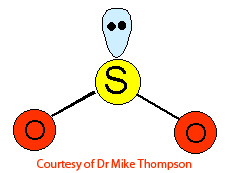
Not unlike in the U.S., EU regulations (see, Article 51 of Commission Regulation (EC) 607/2009 and Article 6 of Directive 2000/13/EC) require that wine labels indicate a “contains sulfites” legend whenever a wine contains “sulphur dioxide and sulfites at concentrations of more than 10 mg/kg or 10 mg/liter expressed as SO2.

Which now leads us to briefly discuss the reasons why the addition of sulfites is an oenological practice that is generally used in the winemaking process.

Technically, sulfites are chemical compounds (anions) formed by the reaction of a sulfur dioxide molecule (SO2, which is acidic) with basic oxides or an aqueous base.

Sulfur dioxide (or SO2) is a gas that is the product of the burning of sulfur and is broadly used in winemaking as one of the main treatments of must. The purpose it serves is essentially threefold:

  • It is an antiseptic agent that fights germs and inhibits undesirable microorganisms (however, its use in the fermentation phase must be controlled because, if certain limits are exceeded, it also inhibits the yeast action);
  • It is an antioxidant which helps stabilize the original color of a wine and fights oxidation, thus helping to preserve the organoleptic characteristics of a wine;
  • In the maceration phase of the red wine making process, it facilitates the dissolution of anthocyanin pigments from the grape berry skins, which are responsible for the color of red wine.

EU legislation (see, Article 3 of Commission Regulation (EC) 606/2009) sets limits to the maximum SO2 content of wines, which shall not exceed, subject to certain exceptions:

  • 150 mg/lt for red wines; and
  • 200 mg/lt for white or rosé wines.

As such two different thresholds show, generally speaking white wines contain more SO2 than red wines. This is because in the winemaking process of the former, grape skins and seeds are removed right after pressing and before fermentation, while these are retained in the fermentation and maceration of red wines. This means that polyphenols (i.e., tannins and natural pigments such as anthocyanins) that are found in grape skins and seeds and that naturally act as antioxidants only get extracted in the red wine fermentation process: hence the need to use more sulfur dioxide in the white wine fermentation process to compensate for such absence.

One thing to be aware of is that, among the exceptions to the maximum SO2 limits indicated above, sweet raisin wines (including Sauternes, Barsac, Tokaji, Trockenbeerenauslese, Albana di Romagna Passito, and ice wines) are permitted to contain up to 400 mg/lt of sulfur dioxide, double the maximum amount permitted for white/rosé wines: this leniency is justified by the high sugar content of such wines, which could trigger natural re-fermentation processes were these not inhibited by SO2. So, be aware that, when you drink that kind of wines, you will likely be assuming more SO2 than with “regular” wines.

One last remark: recently certain producers and organic wine makers have started marketing “no added sulfite” wines. Regardless of how you feel about this emerging trend, one should note that this does not mean that “no added sulfite” wines do not contain sulfites: it only means that none were added to the wine. All wines, in fact, contain some extent of sulfites because these are a natural byproduct of the yeasts that cause the alcoholic fermentation.

Hope you found this informative: feel free to share your opinion by leaving a comment below!

Posted in Wine, Wine Education | Tagged , , , , , , , , | 2 Comments

Winevent – October 20-22, 2012: Tuscany Wine Fair, Arezzo (Italy)

If you happen to be in or around Tuscany next week, you should consider stopping by Arezzo any day between the 20th and the 22nd of October to visit not only that beautiful Tuscan town but also and especially Tuscany Wine, a fair that has been organized in coordination with VinItaly (the most important Italian wine fair) to showcase and promote the best Tuscan wines.

Tuscany Wine will be at Arezzo Fiere e Congressi, Via Spallanzani 23, Arezzo and will be open daily from 10:00am to 8:00pm, tickets are EUR 10 each.

If you go, you will have the opportunity to taste wines made by the more than 200 Tuscan producers who will be present at the fair. In addition, Sunday October 21 will be entirely focused on biodynamic wines. The fair will also include a Cooking Show where chefs from the Italian Chef Federation and the Regional Union of Tuscan Chefs will present traditional Tuscan dishes spiced up with a modern twist which will be paired with Tuscan wines selected by the Italian Sommelier Association.

For more information please check out the full program of Tuscany Wine on the fair’s Website: unfortunately, it is only in Italian, but if you have any questions feel free to email me and I will be happy to help you out.

And if you happen to go visit Tuscany Wine, please make sure to let us all know how you liked it by leaving a comment below!
Posted in Wine, Winevents, WiNews | Tagged , , , , , , , | Leave a comment

Prosciutto and Fennel Salad: Recommended Wine Pairing

I would suggest that with Francesca’s intriguing prosciutto and fennel salad you pair a white wine from Italy’s Northeastern region Friuli Venezia Giulia, particularly a Friulano or a Malvasia Istriana. Below are a few recommendations of some of the best that the winemakers of that region can offer, all with a very interesting price point for their excellent quality.

Friulano is a varietal white wine made from Friulano grapes: these are the same grapes that up until 2007 used to be called Tocai or Tocai Friulano, but now cannot be called like that any more because of the outcome of a dispute before the European Court of Justice between Hungary and Italy as to the right to use the word Tokaj or similar (such as Tocai). Specifically, in 2005 the Court held that, despite Tocai Friulano’s long history, “in consideration of the Hungarian geographical denomination ‘Tokaj’, the appellation of the Italian grape variety ‘Tocai Friulano’ [could] not be used anymore for the designation and identification of some Italian wines” starting from 2007.

Genetic testing showed that there are two different clones of Friulano grape: one is the Sauvignon Vert grape and the other one originated from a French grape called Sauvignonasse that has not been planted in France since the XIX century but is still grown in Chile. Friulano has no relation to and is not to be confused with Hungarian Tokaji wine, an extraordinary botrytized raisin sweet white wine made of Furmint grapes in the Hungarian region of Tokaj.

An excellent example of Friulano wine is Borgo San Daniele’s Friuli Isonzo Friulano DOC, a varietal dry white wine made of 100% Friulano grapes, with pleasant aromas of white peach, almond, wildflowers, and a slight smoky touch.

A quality alternative would be Blason’s Friuli Isonzo Friulano “Casa in Bruma” DOC, another white wine made of 100% Friulano grapes, with scents of white peach, pear and almond.

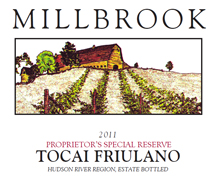
In the U.S., a commendable attempt to grow and make wine out of Friulano grapes is that of the Millbrook winery in NY State, whose Tocai Friulano, Hudson River Region, has pear, lemon, grapefruit and slight smoky aromas and is worth a try if you come across a bottle.

Instead of a Friulano, you could opt to pair Francesca’s prosciutto and fennel salad with a Malvasia Istriana, another traditional varietal white wine made in Friuli from Malvasia Istriana grapes. Malvasia Istriana is one of the many varieties of Malvasia (in Italian), Malvoisie (in French) or Malmsey (in English) grapes that exist in various parts of the world and centuries ago originated from the name of the Greek town of Monembasia.

A phenomenal example of Malvasia Istriana is Doro Princic’s Collio Malvasia Istriana DOC, a varietal dry white wine made of 100% Malvasia Istriana, which displays a complex bouquet of scents, including honey, peach, almond and magnolia and linden blossoms, coupled with delicate smoky hints and a long aftertaste.

An equally satisfying alternative would be Dario Raccaro’s Collio Malvasia DOC, another white wine made of 100% Malvasia Istriana, with aromas of magnolia and broom blossoms, white peach, citrus and pineapple as well as a slightly smoky finish.

Unfortunately, as of October 2012, neither of the two preceding wineries have a Website, in spite of the excellent quality of their wines. Should you wish to visit or reach out to them, feel free to drop me an email.

And if you have already tried out any of the wines mentioned above or wish to recommend another one that you think would go well with a dish like the prosciutto and fennel salad, please let us all know by leaving a comment to this post.

Enjoy!

Posted in Wine, Wine Pairings | Tagged , , , , , , , , , , , , , , | Leave a comment

Prosciutto and Fennel Salad

2 Servings

Prosciutto… just thinking about it makes my mouth water.

During my non-cooking, crazy-working days, I used to come home from the office, late at night, and I was so tired that the last thought on my mind was making dinner. I used to open the refrigerator and, to my relief, my lifesaving dinner option was always there waiting for me: some prosciutto, a buffalo mozzarella, some ripe red tomatoes and a
chilled bottle of white wine. I was as happy as a kid opening her presents on Christmas day!

Even nowadays that my lifestyle is quite different from what it used to be, I make sure that some prosciutto is always in my refrigerator, like some sort of Linus’ security blanket, and no day goes by without me eating at least a slice of it. What can I say? I’m addicted to prosciutto.

That’s why I came up with a number of recipes that include prosciutto as one of the key ingredients.

Here is a recipe for a delicious prosciutto and fennel based salad, that can be made in a short time, looks great and can be served as an appetizer.

So, with my mouth watering, shall we?

Ingredients:

4 cups of baby romaine or baby lettuces
10 thin slices of prosciutto
1 bulb of fennel
24 pitted seasoned kalamata olives
1 egg yolk
3 spoons balsamic vinegar
¼ cup extravirgin olive oil
salt
pepper

Directions:

Put two plates on your kitchen counter and place the salad on each of them.

Rinse the bulb of fennel with water, dry it and, on a chopping board, cut the stalks and fronds off the bulb. Discard the outer layer. Cut the bulb in half from top to bottom and place each half with the flat side facing down on the chopping board. Slice the fennel thinly and evenly with your knife and place the slices over the salad.

For each plate, put 10 pitted olives on the fennel slices, spreading them out evenly.

In a small bowl, whisk together the egg yolk with the balsamic vinegar. Add the olive oil, season with salt and pepper (to taste) and keep whisking for one minute.

Pour one spoon of dressing on the salad, spreading it out evenly.

Add the prosciutto slices so that the salad is covered by them. Cut the remaining four olives in half and put two of them on top of each plate to garnish. Add the rest of the dressing, spreading it out evenly.

Posted in Recipes | Tagged , , , , , , , | 9 Comments

In Homage to Christopher Columbus: An Overview of the Best Wines from Liguria, Italy

On October 12, 1492, precisely 520 years ago, Italian world-known explorer and sailor Christopher Columbus and his expedition set foot in the Americas (on the island of San Salvador in the Bahamas) in Columbus’s first voyage to the New World.

Since Columbus was born in Genoa, Italy (which, coincidentally, is also where I was born, “just” a few centuries later!) I think it makes sense that I honor the memory of that event by providing our readers a quick overview of the best wines from the Italian region of Liguria (of which Genoa is the capital).

Liguria is a narrow strip of mostly mountainous land in the Northwest of Italy facing the Ligurian Sea. Because of its geography and its relatively small size (about 2,100 sqm/5,420 km, which makes it the third smallest region in Italy), agriculture in general and viticulture in particular have traditionally been challenging for its residents – so much so that in the coastal areas of Liguria vines are grown on artificial terracing, a typical method of cultivation. Nowadays, Ligurian wine grape acreage is about 3,645 acres (1,475 HA), approximately 50% of which are part of the eight DOC appellations of Liguria, and total production of wine stands at about 2.64 million gallons (100,000 HL).

On average, quality of Ligurian wines has not been outstanding. However, over the last decade or so there has been a serious effort on the part of select producers to invest the required energy and resources to produce top quality wines and, as a result, there are now a limited number of commendable wine makers who attained excellence in at least one of their wines. Let’s take a quick look at a sample of just a few of the top wines that are part of these “best of the crop” wineries (incidentally, all of the wines in our overview earned the prestigious “5 bunches of grapes” top rating in the 2,000 Wines Guide made by the Italian Sommelier Association).

Two of the best grapes that have traditionally been grown in Liguria to make white wine are Pigato and Vermentino, the former being cultivated exclusively in Liguria and the latter being the most planted white-berried grape in such region. Vermentino originated in the Middle East, was brought to Spain and from there made its way to Italy where, among other places, it was widely planted in Liguria and Sardinia.

A producer of excellent Pigato wine is Bio Vio, whose top wine is the Riviera Ligure di Ponente Pigato “Bon in da Bon” DOC. This is a dry white varietal wine made of 100% Pigato grapes, with good acidity and pleasant scents of peach, sage, mint and minerals.

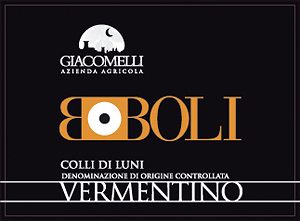
One outstanding Vermentino is the Colli di Luni Vermentino “Boboli” DOC from wine maker Giacomelli. The Boboli is a dry white wine made of 95% Vermentino and 5% Malvasia di Candia grapes, with delicate aromas of citrus, grapefruit, algae, honey and pine resin, as well as good acidity.

In the best Ligurian tradition, both the Pigato and the Vermentino are wonderful pairings for fish/seafood dishes, typical cheese focaccia or trofie or trenette pasta with pesto, potato and string beans. Also, both wines that we just recommended have a very good price/quality ratio.

Probably, the best Ligurian black-berried grape is Rossese, whose origins date back to at least the XV century, but other than that remain fairly obscure.

A very good Rossese that is certainly worth a try should you come across a bottle, is the Rossese di Dolceacqua Superiore “Poggio Pini” DOC from producer Tenuta Anfosso. This is a dry varietal red wine made of 100% Rossese grapes with fairly noticeable tannins and nice scents of rose, blackberry, strawberry jam, pepper and cinnamon. It pairs well with meats, such as lamb chops or goat dishes, and for a quality wine it is surprisingly quite affordable.

Finally, in the Ligurian appellation Cinque Terre DOC one can find one of the least known and most delicious sweet white raisin wines in Italy, the Sciacchetrà (this is pronounced something like “Shackaytra”).

One of the best Sciacchetrà you can have the delight to enjoy is the Cinque Terre Sciacchetrà Riserva DOC of the Capellini winery. This sweet, golden raisin wine is made out of 80% Bosco, 10% Vermentino and 10% Albarola white-berried grapes and gives out pleasant scents of honey, dried apricot, citrus, rosemary and dates. It can be enjoyed by itself, as a meditation wine, or coupled with a traditional Ligurian dessert, such as pandolce (the Ligurian take of panettone) or canestrelli (a kind of flower-shaped cookies). Given the very limited yield of this wine, its price is pretty steep, but if you can afford it, you will not regret paying it once you have a sip of Sciacchetrà in your mouth!

As usual, any remarks or experiences you want to share with all of us on the wines of Liguria are very welcome: just leave a comment below!

Posted in Wine, Wine Reviews | Tagged , , , , , , , , , | Leave a comment

An Unusual Italian Red Wine: Tintilia del Molise DOC

What a pleasant surprise! Yesterday night I was in Milan, Italy, and went to a restaurant with a friend. While I was browsing their wine list, a very peculiar wine caught my eye: they had a bottle of Tintilia in the cellar!

Now, unless you are REALLY into Italian wine, you will most likely be like, what the heck is Tintilia? Which is a fair question as it is one of the least known wines in the vast Italian repertoire, but it also gives me the opportunity to tell you something about it – so, if you are interested, read on!

Tintilia is the name of a red grape variety that is indigenous to the small region of Molise, in Southern Italy. Tintilia is often mistakenly believed to be the pseudonym in Molise of the Sardinian “Bovale Grande” grape variety. This is a red grape which is widely grown on the island of Sardinia, Italy, and is generally used in blends. Bovale Grande is the same
clone as the Spanish grape Bobal, which had been brought to Sardinia by the Spaniards at the time of their domination back in the XV century.

However, genetic testing performed at the University of Molise on 22 samples of Tintilia coming from 21 vineyards in Molise conclusively proved that Tintilia is actually a grape variety that is genetically different from Bovale Grande and is indigenous to Molise.

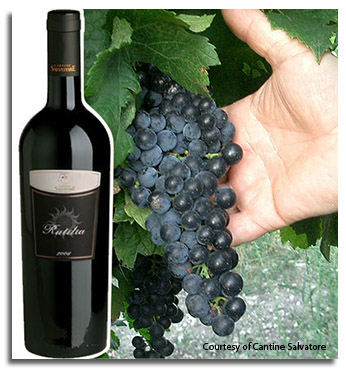
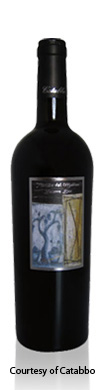
Because of its low productivity, many Tintilia vineyards had been abandoned and this peculiar grape variety risked falling into oblivion, until recently a select number of quality producers from Molise invested in growing Tintilia grapes and in making quality varietal wines from such grapes. Just a few of these commendable producers (with their best Tintilia wines in parentheses) are: Catabbo (Tintilia del Molise Riserva DOC), Cantine Salvatore (Tintilia del Molise Rutilia DOC) and Angelo d’Uva (Tintilia del Molise DOC, the one I got to try yesterday night).

From an appellation viewpoint, Tintilia is one of the red grape varieties allowed for the “Molise DOC” appellation, which was created in 1998 and encompasses an area in Molise surrounding the towns of Campobasso and Isernia.

From a wine tasting perspective, Tintilia wines are generally ruby in color, have fine red fruit (mainly cherries, strawberries, raspberries) and/or black fruit (mainly plums, blackberries, blueberries) aromas and, depending on the aging choices made by the producers, they can give out pleasant spice scents, such as licorice, tobacco and pepper. In the mouth they are pleasantly fruity, with good acidity, defined tannins and a relatively long-lasting aftertaste.

Tintilia is certainly not the king of Italian red wines, but, if you pick a bottle from a quality producer, it is an enjoyable red wine at an affordable price point. Suggested pairings would essentially be meats, from veal to pork to game.

If you want to know more about Tintilia, you may want to read a very interesting and informative article on the Website of Catabbo, a very good producer of Tintilia in Molise, and an article on the genetic testing of Tintilia samples that was published in The Journal of Horticultural Science & Biotechnology.

So, that’s all folks as far as Tintilia is concerned: if you happen to come across a bottle of Tintilia, just give it a shot and let us know how you like it! And by the way, is there anybody out there who has already tried Tintilia out? If so, how did you like it?

Posted in Wine, Wine Reviews | Tagged , , , , , , , , | 10 Comments

Restaurant Mini-Review: Timé, Milan (Italy)

In keeping with the general topic of Flora’s Table (great food and great wine), we will occasionally post mini-reviews of restaurants (mostly Italian) that one or more of us have personally tried out and found truly awesome!

My first mini-review will be of Timé, one of my absolute favorite Italian restaurants in Milan, Italy. Timé has a minimalist-trendy look and yet a cozy feel and is located at Via San Marco, 5, in the hip Brera district in Milan. You can get their full contact information and more from Timé’s website.

The restaurant is impeccably run by courteous manager/hostess Patrizia and commendably varies the dishes on its menu on a monthly basis, adapting to the season changes and showcasing the latest creations of their talented chef. The cuisine that he proposes is traditional Italian dishes which he inventively revisits by adding an unexpected twist. Dishes are incredibly flavorful and composed with eye-pleasing aesthetics. Although you can’t go wrong with anything you pick from their menu, their risotto creations are always worth trying out and so are their creamy chickpea soup with shrimp tartare, duck ragout fettuccine or rabbit-based dishes.

Service is quick and courteous and prices are reasonable, at least for Milan standards. The only area that, in my view, has room for improvement is their wine list, which offers just a few options for both whites and reds (although these include some noteworthy bottles) and could therefore benefit from some more variety.

If you happen to be in Milan, make sure to stop by Timé for lunch or dinner as I am certain you will not be disappointed. Oh, and if you do, please make sure to share your experience with us all by leaving a comment here!

Disclaimer: All our restaurant reviews are independently made without the owners or managers of the restaurants knowing about it before they get published and we do not have any interest in nor do we derive any benefit from any of the restaurants we review. We just want to share with our readers our experience at certain specific restaurants that just left us in awe.

Posted in Restaurant Reviews | Tagged , , , , , , , , , | Leave a comment

Asparagus Baked Pasta: Recommended Wine Pairing – by Stefano

I say bubbles! Pair the asparagus baked pasta with a dry sparkling wine with good acidity and intensity, such as a fine Italian spumante Methode Champenoise, like a Berlucchi Franciacorta Brut ’61 DOCG (90% Chardonnay, 10% Pinot Noir; 18 months of aging on the yeast) or the simply delightful, although more expensive, Berlucchi Cellarius Brut DOCG (70% Chardonnay, 30% Pinot Noir; 30 months of aging on the yeast).

Other excellent alternatives are a Ferghettina Franciacorta Brut DOCG (95% Chardonnay, 5% Pinot Noir; 24 months of aging on the yeast) or the magnificent and more expensive Ferghettina Franciacorta Pas Dosé Riserva 33 DOCG (100% Chardonnay; 80 months of aging on the yeast) or finally a Ca’ del Bosco Franciacorta Brut Cuvée Prestige DOCG (75% Chardonnay, 15% Pinot Noir, 10% Pinot Blanc; 28 months of aging on the yeast), just to name a few with a very good quality/price ratio, most of which can be found in the United States.

A few bits of “technical” information, if you are into wine: (1) “spumante” (pronounced “spoomantay”) is the Italian name for sparkling wine; (2) “Methode Champenoise” (AKA “Classic Method”) are French words indicating that a certain sparkling wine which is not Champagne has been produced using the same process as the king of all sparkling wines (i.e., Champagne); (3) Franciacorta is a region in the surroundings of the Italian city of Brescia, Lombardia, where the Italian Classic Method spumante that is probably most sought-after by wine connoisseurs is produced.

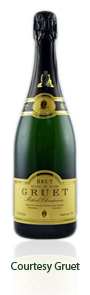
If you prefer to go USA, you may want to give a good New Mexico (yes, New Mexico!) Methode Champenoise sparkling wine a try: pick up a bottle of Gruet Blanc de Noirs (90 points, Wine Spectator) and enjoy its structure! Oh, in case you were wondering, Blanc de Noirs means a white sparkling wine that comes mostly, or exclusively, from the black grapes that are used to make Champagne or Classic Method sparkling wines (essentially, Pinot Noir and/or Pinot Meunier). This is the opposite of a Blanc de Blancs which, as in the case of the Ferghettina Franciacorta Pas Dosé Riserva 33 DOCG, is a white sparkling wine that comes mostly, or exclusively, from the white grapes that are used to make Champagne or Classic Method sparkling wines (essentially, Chardonnay).

If you really insist on pairing a red wine instead, an option would be to carefully pick a good quality bottle of sparkling dry Lambrusco from Emilia Romagna, such as a Cleto Chiarli Lambrusco Grasparossa di Castelvetro Enrico Cialdini DOC or a Cavicchioli Lambrusco Grasparossa di Castelvetro Col Sassoso DOC and enjoy them at about 14-16° C / 57-61° F.

If anyone wishes to share their views on any of the above wines or on any other wine they think would go well with a dish like the asparagus baked pasta, just leave a comment and let us all know.

Salute!  🙂

Posted in Wine, Wine Pairings | Tagged , , , , , , , , , , , , , | Leave a comment

Asparagus Baked Pasta


8 Servings

If you have had an exhausting day at work and you are looking for a quick meal to make for your family for dinner, this is definitely not the dish for that day! 😉

But if you have some time to spend in the kitchen, let’s say on a lazy Sunday afternoon, and you want to treat your family that night or you want to impress your guests or the host of a party you have been invited to, this is the perfect dish for you! 😉

This pasta can be “dressed up” the way you want. I picked asparagus and pancetta, but you can go with the vegetables and the cured meats you like the most.

I also suggest that you use a couple of different cheeses instead of just one, because they make the sauce even richer – and this pasta is all about richness. 🙂 Just make sure that the cheeses you pick melt evenly and easily, such as emmental, fontina, gouda, cheddar or gruyere.

Let me know what you think if you have the chance and the time to make it! 🙂

Ingredients:

2 lb asparagus
¼ cup extravirgin olive oil
¼ cup beef stock
1 lb of ¼ inch thick pancetta
7 cups of Bechamel sauce
2 cups each of two shredded cheeses of your choice (4 cups total)
1.6 lb dried ziti pasta (1 ½ packs)
1 cup grated Parmigiano cheese
Salt
Ground black pepper

Directions:

Wash the asparagus spears and cut off the woody ends. In a large pot, heat some water until it boils, add the asparagus and keep boiling for 3-4 minutes. Strain the asparagus, rinse with cold water and cut into ¾ inch pieces. In a large skillet, heat the oil over medium heat, add the asparagus, season with salt and pepper (to taste) and toss to coat. Add the beef stock and stir occasionally until the stock evaporates. Set aside.

Cut up the pancetta into small pieces and cook in a non-stick skillet until crispy. Wait for the pancetta to cool down and get rid of the grease. Set aside.

Preheat oven to 400 degrees F.

Bring a large pot of salted water to a boil, add the pasta and cook until al dente, stirring occasionally.

While the pasta is cooking, put the shredded cheeses into the pot with the hot Béchamel Sauce and, over very low heat, stir until the cheeses are completely melted.

Drain the pasta and put it again into the pot.

In a 9×13 inch casserole, spread some of the sauce to keep the pasta from sticking. Save 2 cups of the sauce for later and add the rest along with the asparagus and the pancetta to the pasta and toss to coat. Put the pasta in the casserole, ladle the rest of the sauce that you had previously set aside over the pasta, spreading it evenly, and scatter the grated Parmigiano over it. Bake for about 20 minutes covering the pasta with aluminum foil for the first 10 minutes.

Posted in Recipes | Tagged , , , , , , , , , | 16 Comments

Bechamel Sauce

Béchamel Sauce

Béchamel Sauce

Just the name was totally intimidating to me! It shouldn’t have though!

I have watched my mom making her own béchamel sauce since I can remember. And yet, up to five years ago, I had never made it. Then, one day, I went to a cooking class expecting that some magical ritual would finally be revealed to me so that I would be enabled to recreate so creamy a beauty myself… only to find out that it’s just a question of process and practice… as is the case for many things in life. 🙂

Let me pass on to you a couple of helpful tips that I retained from that cooking class: (1) keep whisking for at least 20 minutes otherwise the flour stays raw and (2) a good non-stick pot is the key to a successful sauce. I know that pots can be very expensive but, as one
of my teachers used to say, “Ladies, less shoes more kitchen tools!” – I have learned from experience that he was right, and so will you. 😉

Ingredients:

4 3/4 Tbsp, butter
½ Cup, flour
7 Cups, whole milk
Salt
Ground black pepper
Nutmeg

Directions:

In a large non-stick pot, pour the milk, season with salt, pepper and nutmeg (to taste) and heat until the milk is just about to boil.

Meanwhile, in a separate non-stick pan and on a very low heat, melt the butter. Once the butter has melted, add the flour and stir until you obtain a golden mixture (the professionals call this mixture a “roux” – a French word that is pronounced “roo”).

Add the roux to the milk and cook on low heat, whisking continuously, until very smooth.

Posted in Recipes | Tagged , , , , , , , | 4 Comments