The fourth Thursday of November

Thanksgiving is one of the uniquely American holidays and one totally devoted to food.  Ok, to food and to giving thanks.  I have had more than my share of sit-com worthy Thanksgiving dinners since I have been married.

The first was on my honeymoon while visiting my brother-in-law in San Francisco where four people who couldn’t boil water prepared the meal and the two people who could cook (my new husband and I) were relegated to washing dishes, while boiling water on the stove because the hot water heater broke.  More recently, we have spent major holidays with another of my husbands brothers and his family, in large gathering that includes relatives, friends, and even the occasional enemy.   On more than one of those Thanksgivings the very fancy oven has ceased working an hour into cooking with no one noticing.  I literally walked in one year five hours after the 26 pound turkey went into the oven and asked why I couldn’t smell the turkey and was met with confused stares.  Yep, raw turkey. No one noticed because they subscribed to the turn the light on and check the tin foil covered bird rather than opening the oven door every once in a while and basting.  Saved by the turkey fryer!

The thing I have learned in 24 years of married Thanksgivings is that what you expect out of Thanksgiving dinner is deeply personal and probably relates to what you grew up with.  If you attend a Thanksgiving dinner hosted by people who grew up eating differently from you, different things will appear on your plate.  You may or may not like that.  You may or may not feel compelled to cook your own Thanksgiving dinner on the day following just so you have it your way, and with the requisite leftovers for sandwich making. (Enjoy it people – this may be your last Post-Thanksgiving with your Wonder Bread!)

So, keep an open mind if you are not hosting, cook one for yourself if  you want to, and be sure to appreciate all that you have.  I know I do.

Posted in Uncategorized | 6 Comments

Veal Skewers – Recommended Wine Pairing

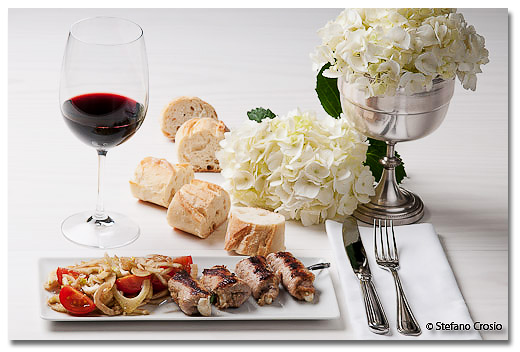
As a good pairing to Francesca’s tempting veal skewers, I suggest going for a full-bodied red wine with defined (but not aggressive) tannins, good acidity and smoothness – I would pick either a Montepulciano d’Abruzzo or a Nero d’Avola (the latter in homage to the Sicilian roots of Francesca’s recipe). Let’s take a closer look to each of them.
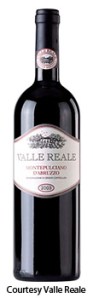
Montepulciano is a grape that is indigenous to Central Italy and that is extensively cultivated in several Central Italy regions, such as Abruzzo, Marche, Umbria and Lazio to name a few. The presence of Montepulciano vines in the Abruzzo region has been documented since the XVIII century and nowadays it accounts for almost 50% of the vines that are grown in Abruzzo (Montepulciano is also the fourth most cultivated grape variety in Italy). Due to the ample supply of Montepulciano grapes, the quality levels of the wines that are made out of it unfortunately vary quite significantly (although it must be recognized that, in the last fifteen years or so, there has been a conscious effort on the part of most producers to raise the average quality of the wines made out of Montepulciano grapes), so buyer beware: you have to do your homework first and pick the best producers if you don’t want to be disappointed.

In Abruzzo, the use of Montepulciano grapes is permitted both in the only local DOCG appellation (Montepulciano d’Abruzzo Colline Teramane DOCG, which requires the use of 90% or more Montepulciano grapes, in addition to a maximum of 10% of Sangiovese grapes) and in all of the Abruzzo DOC appellation except only Trebbiano d’Abruzzo DOC which is reserved to white wines mostly made out of Trebbiano d’Abruzzo (also known as Bombino Bianco) grapes. All of the wines which we are about to recommend fall within the Montepulciano d’Abruzzo DOC appellation, which encompasses an area surrounding the towns of Chieti, L’Aquila, Pescara and Teramo and which requires the use of 85% or more Montepulciano grapes in the winemaking process.
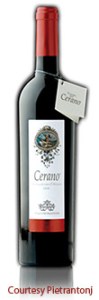
Among the best Montepulciano d’Abruzzo with a solid quality/price ratio are Valle Reale, Montepulciano d’Abruzzo DOC (with aromas of violet, plums, blueberries, blackberries licorice); Masciarelli, Montepulciano d’Abruzzo “S. Martino Rosso Marina Cvetic” DOC (with scents of violet, rose, blackberries, cherries, cocoa, vanilla, pepper, nutmeg); Pietrantonj, Montepulciano d’Abruzzo “Cerano” Riserva DOC (with aromas of cherries, wild berries, vanilla, tobacco, cocoa); Dino Illuminati, Montepulciano d’Abruzzo “Ilico” DOC (with scents of blackberries, cherries, tobacco, leather, licorice, soil, slightly oaky); Torre dei Beati, Montepulciano d’Abruzzo “Cocciapazza” DOC (with aromas of rose, violet, cherries, plums, blueberries, redcurrants, licorice, cocoa): unfortunately, Torre dei Beati does not have a Web site as at November 2012: as usual, should you be interested in reaching out to them, just drop me an email. All of the above wines are varietal, that is made out of 100% Montepulciano grapes.

Nero d’Avola is a black-berried grape variety that is widely grown in Sicily and that, apparently, was first brought there by Greek migrants during the Greek colonization of Southern Italy (so-called “Magna Graecia”) in the VI century BC. This makes Nero d’Avola essentially an indigenous grape variety to the region of Sicily, where it has been cultivated for centuries and where it is also known as “Calabrese” – not because it came from Calabria, but because that name is thought to be a contraction of two words (“Calea” and “Aulisi”) which, in the Sicilian dialect, mean “grape from Avola” (Avola is the name of a Sicilian town).

The use of Nero d’Avola grapes is permitted both in the only DOCG appellation of Sicily (Cerasuolo di Vittoria DOCG, a blend in which Nero d’Avola can be used between 50 and 70% in combination with Frappato grapes) and in several of the Sicilian DOC appellations, but many among the best products are marketed under the more loosely regulated Sicilia IGT appellation, which affords serious producers more flexibility in experimenting and creating excellent wines out of Nero d’Avola grapes, especially by blending them with international grape varieties such as Cabernet Sauvignon, Merlot or Syrah to tame certain aggressive traits that varietal Nero d’Avola wines sometimes exhibit.
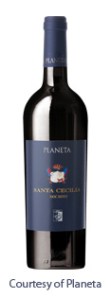
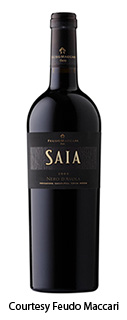
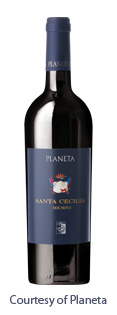
These are among the best Nero d’Avola-based wines around for their quality/price ratios: Feudo Maccari, “Saia” Sicilia IGT (100% Nero d’Avola, with scents of violets, herbs, wild cherry, pepper, juniper berries and leather, slightly toasty – a special note of commendation to the owners who invested the energy and the resources to achieve an excellent density of over 5,500 vines/HA); Morgante, “Don Antonio” Sicilia IGT (100% Nero d’Avola, with aromas of potpourri, ripe red fruit, licorice, leather, chocolate and minerals); Cusumano, “Noa'” Sicilia IGT (a blend of 40% Nero d’Avola, 30% Merlot, 30% Cabernet Sauvignon, with complex scents of violets, red fruit, sandalwood, leather, chocolate) or also very good “Sagana” Sicilia IGT (100% Nero d’Avola, with scents of wild cherry, anise, chocolate, leather, tobacco), even in this case, we want to acknowledge a producer who attained a commendable density of 5,000 vines/HA; Planeta, Noto Nero d’Avola “Santa Cecilia” DOC (100% Nero d’Avola, with aromas of wild cherries, plums, blackberries, licorice, cocoa, graphite – once again, kudos to the owners who obtained a very good density of 5,000 vines/HA); Donnafugata, “Tancredi” Sicilia IGT (a blend of Nero d’Avola, Cabernet Sauvignon, Tannat and other grape varieties, with scents of roses, cherries, leather, tobacco, chocolate – a density of 4,500 to 6,000 vines/HA is another very good feature worth pointing out).

Enjoy, and as usual let us know by leaving a comment below if you happened to try out any of the wines mentioned above or should you wish to suggest a different pairing!

Posted in Wine, Wine Pairings | Tagged , , , , , , , , , | 2 Comments

Veal Skewers

2 Servings (2 Skewers Each)

I guess by now you know that Rome is my hometown. However, it’s not my father’s. He was born and raised in Messina, a town in Sicily, and moved to Rome in his late twenties. Every summer, we used to go to my grandparents’ beach house in Sicily and spend some time with them. Oh, I know what you are thinking: here we go – another story about Italian happy families and fairy-tale memories. Well, I’m sorry to disappoint you – or is that a sigh of relief? The simple truth is… my mother and my grandmother hated each other. Have you ever read a novel called “The Two Mrs. Grenvilles”? Not an intellectual masterpiece but very entertaining: the feud between the mother-in-law and the daughter-in-law in the book reminds me a little the one that was going on in that Sicilian beach house. I say a little because, luckily, my story (as opposed to the one in the book) did not end with a murder 😉 Ah, I know once again what you are thinking: what has this got to do with food? Bear with me just a tad longer, will you?

So, my grandmother happened to be a very good cook and… no, she didn’t teach me how to cook. Growing up, I was a bitchy, moody, ambitious, career-focused girl who couldn’t care less about learning how to cook. The good food kept coming and that was more than enough for me. No questions asked. When my grandmother died, the only thing that I was able to make on the stove was… boiling water.

But then, time went by and my priorities changed. One day, while I was cooking, I suddenly realized that I could not recreate any of my grandmother’s tasty dishes.I felt such a deep sadness, you know, the same you feel when you lose something precious that cannot be replaced. What to do? Not ask my mom. Even now, after all these years, when my grandmother’s name is mentioned, her face turns blue. I knew she was not going to be of any help. Much to my surprise, my father was the one who came to the rescue. I say that because we are talking about an old-fashioned man who thinks that little elves live in his house and take care of cleaning it, cooking his meals and ironing his clothes. He is so spoiled and used to being “attended to” that he doesn’t even make the effort to put his dirty plate in the sink. Well, not only did he remember my grandmother’s recipes, but he even knew the right quantities for the various ingredients and the directions to make them. Who would have thought!

So to make a long story short, the following recipe (as well as all other Sicilian recipes that are yet to come) derive from my father.

Ingredients:

1 lb veal cutlets
½ cup plain bread crumbs
3 Tbsp grated Parmigiano cheese
½ cup parsley leaves
½ white scamorza cheese or plastic-wrapped mozzarella cheese
⅓ cup extra virgin olive oil
1 big garlic clove, finely minced (optional)
salt
ground black pepper

Directions:

On a cutting board, place one cutlet between two pieces of parchment paper. With the smooth side of a tenderizer, start pounding the meat until it gets thin and the meat fibers have softened (be careful not to break the meat). Remove the parchment paper from the meat. Make sure that the cutlet has been evenly flattened and, if some part of it is still too thick, pound it more with the tenderizer. Cut the cutlet into strips, about 3-inch wide and 5-inch long. Repeat the same procedure for the other cutlets.

Rinse the parsley leaves with water, dry them with a paper towel and chop them roughly.

The original recipe requires the use of white scamorza cheese. However, if you cannot find it, you can use mozzarella instead – just choose the type that comes in plastic wrap, not the moister type that sits in water. Cut off the scamorza cheese or the mozzarella into cubes (between ½ and ¾ of 1 inch thick). In case you are using moist mozzarella, put the cubes into a strainer, place the strainer above a large bowl and let the mozzarella cubes drain fully.

In a large plate, place the bread crumbs, the parmigiano cheese, the parsley, a pinch of salt, the pepper (to taste), the garlic (if you choose to go for it) and mix thoroughly.

Pour the olive oil into another plate.

Spread a veal strip out onto a cutting board. Season only one side of the strip with a pinch of salt (not too much, because you put some salt in the crumb mixture already).

Dip only the salted side of the strip into the olive oil and hold it over the oil to let any excess fall back into the plate. Next, dip the same side of the strip into the crumb mixture to evenly coat it.

Return the strip to the cutting board with the breaded side facing up. Take a cheese cube and place it on one of the short sides of the strip. Roll the strip into a small roll (pardon the pun).

Repeat the same procedure for the other strips.

Using 8-inch metal skewers, spear 4 veal rolls onto each skewer being careful not to place them too close to each other, otherwise the rolls will not cook evenly.

Brush the rolls with extra virgin olive oil and cook them over a preheated grill or a non-stick grill pan. Cook the rolls until tender and golden brown on both sides.

The original recipe calls for a fennel salad with a vinaigrette dressing as a side dish.

Enjoy and let me know how it turned out if you give it a go!

Posted in Recipes | Tagged , , , , , , , , , | 15 Comments

Just Out: Wine Spectator’s Top 10 Wines of 2012

So, it’s that time of the year once again: today venerable Wine Spectator magazine published their Top 10 Wines of 2012… according to them, of course! 🙂

In a nutshell, these are the comments I would like to share with you about this year’s top rankings:

  • Shafer Vineyard‘s Relentless Napa Valley 2008 (a blend of Syrah and Petite Sirah grapes) is Wine Spectator’s Wine of the Year 2012
  • Only 3 U.S. wines made it to the top 10 (2 from California and 1 from Oregon), down from 4 last year, although one of them was picked as Wine of the Year 2012
  • Only 1 Italian wine made it to the top 10 scoring the ninth place and 94 points (Ciacci Piccolomini d’Aragona‘s Brunello di Montalcino 2007 DOCG) compared to 2 last year
  • France put 4 of their wines in the top 10, up from 3 last year
  • Just like in 2011, 9 of the top wines are red and only one is white (and, just like last year, the only white wine in the top 10 is a sweet wine)
  • Syrah is present in variable percentages ranging from 100% down to 10% in all of the top 4 wines, with the Wine of the Year being a blend of Syrah and Petite Sirah (note that, despite the name, the latter is a separate grape variety from Syrah, which comes from a cross between Syrah and Peloursin vines) and in the third place there being an Australian Shiraz (100% Syrah grapes)

For more detailed information, please refer to Wine Spectator’s Website. I hope you are fortunate enough to get to enjoy one of the top 10 wines of this year!

Posted in Wine, WiNews | Tagged , , , , , , , , | 2 Comments

Restaurant Mini-Review: Sushi Yasuda, New York, NY

Although Flora’s Table is mostly focused on Italian food, cuisine and wine, sometimes we venture out of our comfort zone to share with you something else that has left us breathless: this is certainly the case for, in my view, one of the very best Sushi Restaurants in Manhattan (and not only Manhattan): Sushi Yasuda.

Sushi Yasuda is a little known gem located at 204 E 43rd Street between Second and Third Avenues that you really have to know because if you don’t chances are that you will just walk past it as it does not have any street sign and its entrance is as inconspicuous as it may get. So, if you have not dined there before, just pay attention to Street numbering and stop at number 204 to be rewarded with a heavenly Japanese culinary experience – if you have made a reservation that is. Yes, because Sushi Yasuda deservedly has a number of faithful aficionados who fill the place up fast, so definitely call them up at 212.972.1001 and secure a table or a seat at the beautiful sushi counter before heading there. One more word of advice: once you have made your reservation, pick up the phone the day of your reservation because they will call you back to confirm and if they cannot reach you they will just go ahead and cancel your reservation. Also, be there on time because they will give your table away if you don’t show up within 10 minutes of your assigned time.

Now that we are done with logistics and reservation etiquette, on to the restaurant. The all-bamboo decor is minimalistic and imbued with Zen simplicity (I want to believe that Steve Jobs would have liked it): sitting at the sushi counter is a treat as you get to watch your sushi maker do his magic and prepare your meal, which is an experience in itself. Executive chef Naomichi Yasuda is (quoting from the restaurant’s Web site) “a true artist — his work is utterly original. His ethic of pure, clean simplicity is evident in every aspect of Sushi Yasuda.” He interprets sushi with what you could call a religious attitude and does all he can to offer you the best possible experience, from selecting only the very best fish and seafood to pre-moistening your sushi with what he considers to be just the perfect quantity of shoyu (soy sauce) so they taste the best. I suggest checking out Sushi Yasuda’s Web site to read more about their recommendations as to how best to enjoy Chef Yasuda’s creations as it is very instructive.

Beside a large a la carte selection, at lunch they offer two types of combo prix fixe menus that I would suggest you give serious consideration to as they combine great value with a nice sample of Yasuda’s talent. In particular, one is a sashimi-slanted menu, where they will pick five varieties of sashimi for you while you can select one maki (sushi roll) from a given set of choices. The other menu focuses on sushi and you get to select five pieces of sushi from a selection that gets updated daily plus two maki rolls. Either way you decide to go, a salad or miso soup is included with your menu.

Everything at Sushi Yasuda is to die for (if you are into Japanese cuisine that is), so relax and dare as you will not be disappointed. Among my personal favorites are king or coho salmon, branzino, squid, orange clams, yellowfin and of course, whenever it is available, delicious toro! Yum, only writing about it makes me want to head over there right away and be delighted one more time by the magic of Sushi Yasuda!

As always, if you happen to go, please leave a comment on this page to let us all know how you liked it!

Disclaimer: All our restaurant reviews are independently made without the owners or managers of the restaurants knowing about it before they get published and we do not have any interest in nor do we derive any benefit from any of the restaurants we review. We just want to share with our readers our experience at certain specific restaurants that just left us in awe.

Posted in Restaurant Reviews | Tagged , , , , , , , , , | 2 Comments

The Liebster Blog Award!!!

As some of you may have noticed, yesterday night I made a little technological mess! Oops! Let’s give it one more try, shall we?

Yesterday, I came out of the shower only to find out that lovely and witty Sarah from Diary of a House Elf had nominated Flora’s Table for the Liebster Blog Award! I was over the moon with excitement and I immediately called Stefano (who was in Milan) and my parents in Rome to share such wonderful news. Thank you so much, Sarah – yours is a great and fun blog and I love the way you write. And thank you to all my Flora’s Table “partners” who worked so hard during the last month: this award would not have been possible without your valuable contributions. And clearly, a big thank you goes out to all of our readers and followers who are making of Flora’s Table a comfy communal table around which to sit for a bite, a glass of (good!) wine and a chat: just the way we had meant it to be when we embarked on this project!

So, the award rules are the following: those who get nominated must answer 11 questions asked by the person who nominated them and tell 11 random facts about themselves.  Then, each of them is supposed to pass on the award by nominating 11 blogs with under 200 followers and ask them 11 questions.

Well, I hope nobody is going to get mad at me, but I’m going to follow Sarah’s example (Sarah, you were not lame at all!) and replace the number 11 with the number 5. I hope you’ll understand… my experience in the blogosphere is still too limited and, given also the requirement that this award be only given to blogs who have less than 200 followers, I cannot possibly come up with a meaningful list of 11 blogs that meet the requirements! 😉 Of course, I am sure my nominees will do a hell of job and, if they so desire, they should by all means go back to the original rules.

Random facts about myself:

1. I never start cooking before lunch time
2. I loathe jealous people
3. I hate cold weather
4. I cannot cross a street unless there is a traffic light
5. I do not think that beauty is subjective …at least to some extent 😉

My answers to the questions asked from Sarah at Diary of a House Elf:

Q1: Who/what do you want to be “when you grow up”?
A1: Any kind of artist: a painter, a writer, a designer, an actress – you name it.

Q2: What one thing would make your life better?
A2: A magic wand.

Q3: What one quote best resonates with you?
A3: Elegance does not consist in putting on a new dress. (Coco Chanel)

Q4: What one living person – that you don’t know personally – inspires you?
A4: Richard Mason, author of “The drowning People” and “Us”.

Q5: If you could spend one entire day how you wanted, what would you do?
A5: I’d spend the day in bed reading and watching old movies.

My questions for the nominees are the following:

1. What’s your favorite book?
2. If you could live in the past, which historical period would you pick?
3. What’s your favorite drink?
4. What’s your addiction?
5. If you were a piece of clothing or an accessory, you would be…

And the nominees are…

1. The Mind’s Cabin

2. Ma Cuisine et Vous (in French)

3. The Backdoor Artist

4. My Life is My Style

5. The Literate Chef

Certain of my nominees do not show the number of their followers on their blogs, so I’m taking a guess here. Congratulations to the five of you on creating wonderful blogs!

Posted in Awards | Tagged , , , , , | 4 Comments

Spaghetti all’Amatriciana – Recommended Wine Pairing

To complement Francesca’s yummy spaghetti all’amatriciana, I suggest that you pick a medium-bodied red wine with good smoothness, acidity and tannins. My ideas are either a Rosso Piceno from Central Italy or a Lagrein from the North East of Italy. Let’s take a closer look at both.

Rosso Piceno is one of the 15 (as at November 2012) DOC appellations of the Marche region in Italy. The regulations of this DOC require that the wine be made out of 35-70% Montepulciano grapes and 30-50% Sangiovese grapes, provided that the use of other black-berried grapes is permitted up to a maximum of 15%. The regulations also prescribe that it be produced in an area surrounding the towns of Ascoli Piceno, Pesaro-Urbino and Ancona, while the territory for the variant “Rosso Piceno Superiore DOC” is a much smaller area near Ascoli Piceno.

As to the main black-berried grapes that make Rosso Piceno, Montepulciano is a grape that is indigenous to Central Italy and that is extensively cultivated in several Central Italy regions, such as Marche, Abruzzo, Umbria and Lazio to name a few. Due to the ample supply of Montepulciano grapes, the quality levels of the wines that are made out of it unfortunately vary significantly, so buyer beware: you have to do your homework first and pick the best producers if you don’t want to be disappointed.

As to Sangiovese, well, everybody knows Sangiovese, right? It is one of the most renowned Italian grape varieties which is used in the making of several signature Italian wines, from Brunello di Montalcino to Chianti and from Vino Nobile di Montepulciano to Morellino di Scansano. It is also indigenous to Central Italy and is one of the most widely cultivated grape varieties in Italy, especially in the regions of Toscana, Umbria and Emilia Romagna. Varietal wines made out of Sangiovese grapes tend to have fairly aggressive tannins when they are still “young” and are generally best enjoyed after a few years of aging, when time takes care of taming them. Even in this case, given the massive quantities of Sangiovese that are produced, quality levels of the wines made out of such grape variety tend to be inconsistent and knowledge of the various appellations that allow its use and of the specific wineries is important to avoid unsatisfactory experiences.

Moving on to the actual recommendations, in my view these are some of the best Rosso Piceno out there in terms of price/quality ratio: Velenosi, Rosso Piceno Superiore “Brecciarolo Gold” DOC (70% Montepulciano, 30% Sangiovese;  with aromas of wild berries, vanilla, pepper, tobacco and nutmeg – as we are used to doing, kudos to the owners of this estate who invested resources and energy to achieve a commendable density of 5,000 vines/HA); De Angelis, Rosso Piceno Superiore DOC (70% Montepulciano, 30% Sangiovese; with scents of cherries, blackberries, plums, blueberries, soil); Bucci, Rosso Piceno “Tenuta Pongelli” DOC (50% Montepulciano, 50% Sangiovese; with aromas of rose, blackberries, raspberries, plums, tobacco and minerals); Le Caniette, Rosso Piceno “Rosso Bello” DOC (45% Montepulciano, 45% Sangiovese, 10% Cabernet Sauvignon; with scents of blueberries, redcurrant and minerals – even in this case, we would like to praise the owners for a very good density of 4,500 vines/HA); and Cantine di Castignano, Rosso Piceno Superiore “Destriero” DOC (70% Montepulciano, 30% Sangiovese;  with aromas of dried flowers, cherries and minerals).

Now, a few words about Lagrein: this is a black-berried grape variety that is indigenous to the Trentino Alto Adige region of Northeastern Italy. Its use is permitted in several of the eight DOC appellations of the region, among which the appellation “Alto Adige DOC”, whose territory encompasses an area surrounding the town of Bolzano and which requires that Lagrein-based wines be made 85% or more out of Lagrein grapes.

Among the best Lagrein’s for their quality and price point are Manincor, Alto Adige Lagrein “Rubatsch” DOC (with scents of wild cherries, plums, licorice, slightly oaky); Erste + Neue, Alto Adige Lagrein “Puntay” Riserva DOC (with aromas of blueberries, cherries, coffee, slightly toasty); Cantina Bolzano, Alto Adige Lagrein “Perl” DOC (with scents of violets, wild berries, ink); Muri-Gries, Alto Adige Lagrein DOC (with aromas of violet, blackberries, blueberries, chocolate, ink); and Kellerei Kaltern Caldaro, Alto Adige Lagrein “Spigel” DOC (with scents of violets, blueberries, blackberries, wild cherries, cocoa). Note that all the above wines are made out of 100% Lagrein grapes.

As always, if you happen to try out any of these wines or would like to suggest a different pairing, feel free to share it with us by leaving a comment below!

Posted in Wine, Wine Pairings | Tagged , , , , , , , , | Leave a comment

Spaghetti all’Amatriciana

I’m Rome born and raised so pasta all’amatriciana is in my DNA. There is no Roman cook that doesn’t make it. There is no Roman trattoria that doesn’t offer it in its menu. There is even a famous restaurant called Il Matriciano… quite expensive though. If you happen to be in Rome, you may want to pay it a visit.

The recipe that I am about to share with you presents a few deviations from the original recipe and this is because some of the ingredients are almost impossible to find in the United States (unless you live in big cities where you can find truly Italian food stores). Therefore, most likely you will have to go for a substitute ingredient which is as close as possible to the original one.

Nonetheless, I think it is important that I give you a little information about the original recipe. The reasons for that are twofold: the first is that when you talk to Italian people about this pasta, you can show them that you really know what you are talking about (without getting that judgmental look!) and the second is that if you are lucky enough to find all of the original ingredients, you know how to handle them.

The recipe originates from Amatrice, a town located in the Lazio region, the same where Rome is. Originally, it did not include the tomatoes, which where added at the end of the 18th century. Some people mistakenly think that the Amatriciana belongs to the Roman cuisine tradition; however, it was the shepherds from Amatrice who brought the recipe to the Capital during their seasonal wanderings across the Roman countryside.

The key ingredient of this recipe is “guanciale”, a cured meat deriving from the pork’s jowl or cheek. Unfortunately, since it is impossible to find it in the place where I live, I have no choice but to go for a substitute which, in this case, would be pancetta (a cured meat deriving from the pork’s belly), hoping that Italians understand my predicament! 😉

The other key ingredient is grated pecorino cheese from Amatrice, which must not be confused with Roman pecorino cheese as the flavor of the former is much more delicate than the latter’s. Finding Amatrice pecorino in the United States would be tantamount to an odyssey and, therefore, the suggested substitute is Parmigiano cheese instead of Roman pecorino whose strong flavor would alter the taste of the sauce.

In terms of cooking fat, the original recipe required the use of “strutto” (i.e., pork lard). However, nowadays its use has drastically diminished and contemporary cooks use much healthier olive oil instead. And since we are at it, the way real Amatriciana is done calls for you to use an iron pan (as opposed to a non-stick one) so that the guanciale or pancetta gets really nice and crisp.

As for which kind of pasta to use, De Cecco Spaghetti no. 12 is the way to go. If you happen to visit Rome, you’ll notice that all the trattoria signs “scream” at you loud and clear: “bucatini all’amatriciana” … just so you know, the use of this type of pasta is a Roman deviation from the original recipe. The only other kind of pasta that some cooks, and I underline some, allow as substitute to spaghetti is rigatoni: that’s because they are a ribbed pasta and, therefore, the sauce adheres to them well.

Last but certainly not least the seasoning. The secret seasoning ingredient of this recipe is… absolutely NOTHING. Not only does the recipe not contemplate the use of any onion, but it even bans the use of garlic. You may want to think of the Amatriciana pretty much as a vampire: you want to kill it? Add garlic. Yeah, yeah I hear you, garlic fan club. I know, I know, you love garlic so much you would put it on your buttered toast in the morning and eat it for breakfast. Plus, we are talking cooking here and what is cooking other than being creative and experiment with ingredients and flavors? Well, let me express my opinion. When it comes to spaghetti all’amatriciana, there is nothing to experiment about: centuries ago, the shepherds did a hell of a job for the sake of the palate of the human species. The shepherds’ recipe was a masterpiece centuries ago, it still is today and it will be for centuries to come! Trust me on this one and just give it a try, will you?  😉

Ingredients:

7 lb fresh tomatoes
10 slices of pancetta, ¼ inch thick
¼ cup extravirgin olive oil
1 fresh chili pepper
½ cup of dry white wine
1 lb De Cecco Spaghetti no. 12
5 Tbsp grated Parmigiano cheese
Salt

Directions:

Wash the tomatoes and make a cut in the shape of an x on the bottom of each of them with a  knife. Bring a large pot of water to boil and put the tomatoes in the water for 30 seconds (be watchful, because you do not want to cook them). Strain the tomatoes and rinse them with very cold water. Pull the skin of the tomatoes away and cut them in half. Remove all the seeds and cut up the tomatoes into 1 inch pieces. Set aside.

Cut up the pancetta into bits (between ½ and ¾ of 1 inch).

In a large iron skillet, heat the oil and add the pancetta and the pepper. After a few minutes, add the wine and cook, stirring occasionally, until the wine evaporates and the pancetta gets golden and crispy.

Add the tomatoes, season with salt (to taste) and cook for about 20 minutes or until the sauce thickens. Remove the pepper from the skillet.

In the meanwhile, bring a large pot of salted water to boil, add the spaghetti and cook until al dente, stirring occasionally. Drain the spaghetti and put them in the skillet with the sauce. Add 3 Tbsp of Parmigiano cheese and toss to coat.

Put the spaghetti into the serving plates and dust the top of each plate with the rest of the Parmigiano cheese.

If you make it, I would love to hear from you how you like it since this is a recipe I am very fond of!

Posted in Recipes | Tagged , , , , , , , , , | 40 Comments

OT: The Mind’s Cabin, An Intellectually Stimulating New Blog

Just like our headline goes, we thought it would be worthwhile briefly veering off topic  to pay homage to and give our readers heads up about a newborn blog by the name of The Mind’s Cabin which we have been following since inception, enjoying every minute we spent on it.

The Mind’s Cabin is the creation of Anonymous Host, a Nemo of the blogosphere (just to make things clear: by that we don’t allude to the Disney fish, but the name that Odysseus gave of himself to the Cyclops Polyphemos in the Odissey) who masterfully combines a little mystery and lots of wit and intellectually stimulating ideas in the cyber outlet that he has chosen to share and express his views on life and the world in general.

We think it’s definitely worth taking a look and participating in the discussion. You can check it out at: http://themindscabin.wordpress.com/

Happy reading!

Posted in Stuff We Like | Tagged , , | 2 Comments

Winevent – November 17-19, 2012: Golosaria, Milan (Italy)

If you happen to be in Milan, Italy, in November, consider stopping by Golosaria Milano 2012, a food and wine fair organized by Club Papillon featuring 100 Italian food producers and 100 Italian winemakers.

With regard to wine, Golosaria will host both a tasting table and individual booths for all the 100 wineries that have been selected by the organizers of the event through their “Top One Hundred Wines” awards. Unsurprisingly, if you browse the list of the wineries that participate in the event, you will note that it includes many excellent winemakers that are definitely worth stopping by if you make it there. Some of my personal favorites, in no particular order, include:

Golosaria Milano 2012 will be at Palazzo del Ghiaccio e Frigoriferi Milanesi, Via G.B. Piranesi, 14, Milan (Italy) on November 17 to 19. Please refer to Golosaria’s Web site for more information and to download an invitation or register for a workshop. Unfortunately, their Web site is only in Italian: should you need help getting the information you need to get there or register, feel free to let us know by leaving a comment below or just drop us an email: we will be glad to help you out.

As always, if you make it there, please leave a comment on this page to let us all know how you liked it!

Posted in Wine, Winevents, WiNews | Tagged , , , , , , , , , | Leave a comment