A Heavenly Cake

I’m NOT a morning person! Never have been and never will be. Anyone who knows me (teachers, bosses, friends) can vouch for me. I think that the last time I got up early was when I was breastfeeding and, let’s be honest, I was not happy. If asked, I don’t even think I would be able to tell you exactly what is the color of the sky in the early morning. In the place where I live, this is such a big no no, but I can’t help it. That’s just who I am.

I no longer work in an office, but I still have a teeny problem: my daughter has to go to school. Every morning, after I manage in a way or another to send my daughter to school, my only neuron awake wanders across my mind begging only for two things: caffeine and something sweet. All the years I spent in the United States have not changed my breakfast habits: my palate loathes cereals and any kind of proteins and craves croissants, pastries, cookies or… a slice of cake.

The recipe I’m sharing with you today is of a cake that was one of Stefano’s favorites in his childhood. Growing up in Genoa, he loved to eat this cake on any occasion he could lay his hands on one. When we happen to be there visiting his family, we always make sure we stop by a pastry store called “Bar Magenta” where they make a version of this cake that is really to die for. So, if you are planning a trip to Genoa, just drop us an email if you need the address and then pay them a visit: you won’t regret it!

By the way, I wish I could take credit for this recipe! Although (please forgive my modesty) I do take credit for a pretty good execution of it 😉 Well, anyway, the recipe comes from lovely Patrizia, the daughter-in-law of the wife of my father-in-law… does this sound too complicated to follow? Yeah, it probably is, but the thing is – we are a pretty complicated family which found its own way to get along… but this is another story 🙂

Too much digression. Back to the recipe.

Ingredients:

1 ½ cup, powdered sugar
¾ of 1 cup, blanched almonds
4 eggs
12 and ½ Tbsp, butter, softened
½ cup, flour
⅓ cup, potato starch flour
1 pinch, salt
1 Tbsp, baking powder
½ Tsp, almond extract
Powdered sugar for dusting

Directions:

Put the almonds in a food processor or a blender and blend them until you obtain a smooth powder.

In the bowl of a stand mixer, place the sugar and the almond powder and mix until they are perfectly blended. Add the eggs and mix until the mixture is creamy and smooth. Add the butter and beat until the butter is completely blended with the egg mixture. Add the flour, the potato starch flour and the salt and mix for a few minutes. Finally, add the almond extract and the baking powder and mix until well blended. Stop and scrape the bowl.

Pour the mixture into a greased and floured 9-inch round baking pan. Do NOT preheat the oven. Bake at 350 F for 30/35 minutes or until a toothpick inserted in the center of the cake comes out clean. Let the cake completely cool and remove it for the pan. Put the cake on a big round serving plate and dust its top with the powdered sugar.

A few more words: I happen to have a sweet tooth only in the mornings. I usually finish my other meals with fruit (that’s what most people do in Italy). That does not mean that you cannot eat or serve this cake at dinner time. If you would like that Stefano suggest you a wine to go with it, just leave a comment below or drop him an email and he’ll be glad to!

Posted in Recipes | Tagged , , , , , , , , | 14 Comments

Flora’s Table Wine Glossary!

We are pretty excited to announce that one of our major projects is now online: an extensive wine glossary accessible through a newly added menu option!

A lot of work and energy went into compiling that resource, with a view to offering our readers a wine glossary that is as comprehensive as possible, with over 110 wine-related terms defined. This glossary is not intended to encompass each conceivable “wine word” nor is it meant to provide an exhaustive explanation of each defined term, but hopefully you will find it useful to get a grasp of the most important or common wine terminology and a whole bunch of French and Italian wine words or, if you are a wine expert already, to test your knowledge!

This glossary is based in the first place on the one and half years of study and hands-on experience that I immensely enjoyed going through to complete the entire sommelier certification course offered by the Milan chapter of the Italian Sommelier Association: we studied a lot, we learned a lot and… we drank (er… actually tasted!) a lot, making good friends in the process and meeting some remarkable people, among whom I would like to acknowledge the man who I think was the best teacher in the entire course, knowledgeable and entertaining Guido Invernizzi. Beside what I learned during the ISA course, this glossary also relies on extensive personal research and experience.

Please check it out and let us know what you think about it: given the effort that we put into it, it would mean a lot to us. Clearly, any comments are welcome, as are any suggestions, requests that a specific term be added or corrections of any inaccuracy. Oh, and by the way, you are welcome to link to our wine glossary page, but please refrain from copying or utilizing our work without first asking for our consent. Thank you!

Posted in Wine, Wine Education | Tagged , , , , , , , , | Leave a comment

It’s Still Halloween After All

This year an unexpected (and definitely unwelcome) guest decided to show up in our neck of the woods: Hurricane Sandy.

Sandy brought wreckage, misery and devastation to coastal New England and more in general to the East Coast of the United States, in which regard our hearts go out to all those who suffered losses, damages or worse as a result.

And yet, we could not let Sandy ruin our daughter’s plans to somehow celebrate Halloween, considering especially that Sandy caused the Halloween Parade to be canceled and made trick or treating tonight highly unlikely due to widespread power losses, dangling electrical wires and plenty of fallen trees. So, I at least made for her my personal take of Halloween treats: peach and apricot crostata with pumpkin decorations and blueberry/blackberry mini tarts! Plus, my daughter wanted to add her personal touch, which she described in her words as “a candy salad”! 🙂

Happy Halloween to all the kids out there from all of us at Flora’s Table!

Posted in Uncategorized | Tagged , , , , , , , | 12 Comments

Green Bean, Olive and Goat Cheese Quiche – Recommended Wine Pairing

Francesca’s delicate green bean, olive and goat cheese quiche can be successfully complemented with a medium-bodied white wine with good acidity and either effervescence or noticeable minerality.

Based on the above, my suggestion is either a quality Prosecco or a Pecorino. Let’s quickly discuss each of these two wines and include some actual recommendations.

Prosecco. Among the average consumers both in Italy and abroad, there is a lot, and I mean A LOT of misinformation about Prosecco. Let’s try to get some facts straight regarding this much talked about wine.

Italy, like other countries, produces several sparkling wines which are made either according to the Classic Method (also known as “Methode Champenoise“, because it is the traditional production process of French Champagne) or according to the quicker and cheaper Italian Method (also known as “Methode Charmat” or “Metodo Martinotti“), which is known to maximize primary (or varietal) aromas although it generally sacrifices the wine structure and the finest perlage. Franciacorta DOCG and Trento DOC are examples of two Italian appellations that are reserved to Classic Method sparkling wines.

Prosecco, instead, is a white wine that can be made either in the still or sparkling version: for the purposes of this quick overview, we will only focus on the sparkling wine variety, which is also the one that generally yields the best results in terms of quality. So, Prosecco sparkling wine is generally made according to the Italian Method (although there are a few exceptions, such as Valdo‘s Prosecco Brut Metodo Classico Numero 10 DOCG, which is a solid 100% Glera sparkling wine made according to the Classic Method) in the three appellations which permit production of such wine: Prosecco DOC (which encompasses a larger territory in the regions of Veneto and Friuli Venezia Giulia), Prosecco di Conegliano Valdobbiadene DOCG and Prosecco di Asolo DOCG (which both encompass a much smaller territory near the town of Treviso, Veneto).

Prosecco is made from 85% or more Glera white-berried grapes, which are also known as Prosecco grapes, although nowadays Prosecco is technically a trademark for the wine, and no longer the name of the grape variety. Prosecco sparkling wine can be made available in in any of the following varieties, as far as residual sugar content is concerned: Brut, Extra Dry, Dry and Demisec. Under no circumstance, should Prosecco be confused with Asti Spumante, which is a totally independent and different sweet sparkling wine made according to the Italian Method within the homonymous DOCG appellation in the region of Piemonte, Italy, out of Moscato Bianco grapes: it simply has nothing to do with Prosecco.

Hoping to have somewhat set the record straight for Prosecco, let’s move on to acknowledge a few among the best Prosecco sparkling wines that are available on the market. This is a particularly important exercise because unfortunately, due to the worldwide notoriety that Prosecco wines have recently attained, there are producers that just tried to seize the opportunity and put out there a lot of really low quality Prosecco at a very cheap price point, which is something that has been tarnishing Prosecco’s reputation in the eyes (but especially in the mouths!) of those consumers who happened to purchase any of such inferior quality labels.

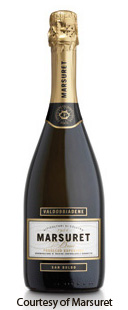
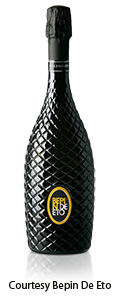
Among the best Prosecco’s on the market are Adami, Prosecco di Valdobbiadene Superiore Brut “Bosco di Gica” DOCG (95-97% Glera grapes/3-5% Chardonnay grapes, with aromas of wisteria, pear, apple, peach, Mirabelle plum and herbs); Bepin De Eto, Prosecco di Conegliano Valdobbiadene Superiore Brut DOCG (100% Glera grapes, with scents of rose, wisteria, apple, pear, peach, bread crust and minerals – commendable is the investment made by the owners to achieve a very good density of 4,000 vines/HA); Marsuret, Prosecco di Valdobbiadene Superiore Brut “San Boldo” DOCG (100% Glera grapes, with aromas of mint, broom, elder blossoms, apple, citrus and minerals); or Montesel, Prosecco di Conegliano Valdobbiadene Superiore “Riva dei Fiori” Brut DOCG (100% Glera grapes, with scents of elder blossoms, wisteria, pear, apple, lime and minerals). One last noteworthy mention is much deserved by the more expensive, exquisite Valdobbiadene Superiore di Cartizze DOCG by Nino Franco: a 100% Glera Italian Method Prosecco made in the finest sub-zone of the appellation (called Cartizze) and displaying fine aromas of jasmine blossoms, passion fruit, citrus, herbs and minerals.

Pecorino is a wine made 85% or more from Pecorino white-berried grapes, a variety that is indigenous to the Marche region in Italy and that had almost completely been abandoned because of the limited productivity of Pecorino vines.  Fortunately for us all 🙂 in the early Eighties Guido Cocci Grifoni, a winemaker in the Marche region, became aware of a minuscule vineyard owned by an old farmer which still had a few Pecorino vines, which he bought and transplanted in his own vineyard thus saving this grape variety from extinction and starting commercial production of Pecorino wine in the Nineties. If you want to know more about Pecorino grapes and their rediscovery, check out this interesting write up on Tenuta Cocci Grifoni’s Web Site (after you open the PDF file, keep scrolling as there is an Italian version first and then one in English).

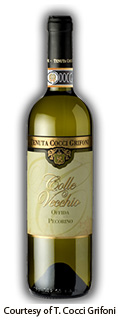
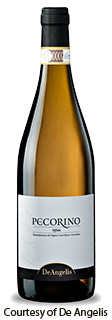
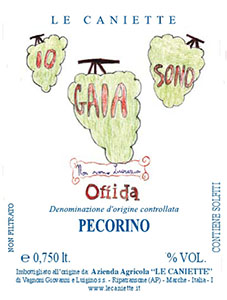
Remarkable Pecorino wines to definitely try out if you come across them include Tenuta Cocci Grifoni, Offida Pecorino “Colle Vecchio” DOCG (100% Pecorino grapes, with aromas of chamomile flowers, acacia and jasmine blossoms, hay, apple, caper and minerals); De Angelis, Offida Pecorino DOCG (100% Pecorino grapes, with scents of chamomile flowers, broom, hay, melon, citrus and minerals); Le Caniette, Offida Pecorino “Io sono Gaia (non sono Lucrezia)” DOCG (100% Pecorino grapes, with aromas of broom, apricot, exotic fruit, wax and minerals – to Le Caniette’s owners credit, they have invested energy and resources to achieve a very good density of 4,000 vines/HA); or Moncaro, Offida Pecorino “Ofithe” DOCG (100% Pecorino grapes, with scents of white flowers, elder blossoms, apple, citrus, almond and minerals).

As usual, enjoy and please share your experience if you decide to try out any of the above wines or if you wish to suggest a different wine that you think would go well with Francesca’s green bean, olive and goat cheese quiche!

Posted in Wine, Wine Pairings | Tagged , , , , , , , , , , | 4 Comments

Green Bean, Olive and Goat Cheese Quiche

6 Servings

I have a confession to make: I’m a party girl and any excuse is good for me to host one! That’s not because I’m this fabulous socialite, quite the opposite to be honest. I’m more on a bear hibernation status, except that mine is kind of perpertual. The reason I like to throw parties is for the inner pleasure of hosting: getting the house ready, picking and arranging the flowers (my mother taught me that the right flowers are one of the key components for a successful party), cooking my signature dishes and… enjoying some alcohol of course!

Stefano makes sure that our guests are offered a captivating selection of wines, often starting off with some bubbles to set the mood of the party. So people wind down, relax and enjoy chatting and eating.

Well, Halloween is around the corner and who said that only kids should have fun? Let’s just say that Halloween is the opening of my party season.

When I throw a party, I like to serve food that my guests don’t cook at home on a regular week day. That’s why a quiche is always appreciated. It’s a casual yet chic dish, it has a wonderful look, it’s very satisfying for the palate and goes beautifully with the right glass of wine.

As for the ingredients, you can put basically whatever you like in a quiche and have fun trying out different combinations. Quoting Chef Gusteau from the Disney movie Ratatouille, “your only limit is your soul”.

The following recipe of a green bean, olive and goat cheese quiche is just meant to be a suggestion to get you started. Oh, and just so you know personally I love single-portion quiches: they are the perfect size for one guest and they look great on the plate. That’s why, for this recipe, I used a 6-tart pan, with each individual well having a diameter of 4 ½ inches.

Ingredients:

1 ½ sheets frozen puff pastry, thawed
8 oz fresh green beans
3 ½ Tbsp of extravirgin olive oil
1 leek
3 eggs
¾ cup whole milk
¾ heavy whipping cream
0.3 lb crumbled goat cheese
24 pitted seasoned kalamata olives
salt
ground black pepper
nutmeg

Directions:

Wash the green beans and cut off both ends. In a medium pot, heat some water until it boils, add the beans and keep boiling for 4 minutes. Strain the beans, rinse with iced water (to stop the cooking process and retain the green color) and cut them into ½ inch pieces. In a medium skillet, heat 2 ½ Tbsp of olive oil over medium heat, add the beans, season with salt and pepper (to taste) and toss to coat. Add 2 Tbsp of water and stir occasionally until the water evaporates. Set aside.

Cut off the green top of the leek and the root. Discard the outer layer. Cut the leek in half lengthwise. Rinse the two halves well under water, being careful to leave them intact. Place each half, with the flat side facing down, on a chopping board.

Slice the leeks thinly and evenly with your knife so that you end up with thin strips. In a medium skillet, heat 1 Tbsp of olive oil over medium heat, add the leek, season with salt and pepper (to taste) and toss to coat. Add ½ cup of water and stir occasionally until the water evaporates. Set aside.

In a bowl, put 3 eggs, the whole milk, the heavy cream, add some salt and season with black pepper and nutmeg (to taste).

Whisk until you obtain a smooth mixture.

Preheat oven to 350 degrees F.

Coat the pan wells with butter.

Lay the sheets of pastry on a floured surface. If there is any crack in the pastry, press together to seal and roll over the sealed part so that you have a smooth sheet.

Cut each pastry sheet into four 5×5″ squares. Place the pastry squares in the tart wells, neatly shaping the pastry into tart shells. Cut off any excess pastry with a sharp knife.

Using a spoon, put some leek into each tart shell, spreading it out evenly. Then, add some beans, spreading them out evenly. Cut 4 olives in half and put them on top of the beans. With a spoon, add some goat cheese and finally pour the egg mixture.

Bake for 40 to 45 minutes, let the quiches cool down a little and serve while they are still warm. Enjoy!  🙂

Posted in Recipes | Tagged , , , , , , , , , | 2 Comments

Pumpkin Soup – Recommended Wine Pairing

To adequately complement Francesca’s elegant pumpkin soup, I suggest you pick a medium-bodied white wine with enough acidity to compensate for the inherent sweetness of the pumpkin. Here are a few solid options to choose from, all of which I have selected (as usual) because they present a very good quality/price ratio.

To offer a little extra variety, I am going to recommend wines from two very different regions in Italy: Piemonte (in the Northwest) and Campania (in the South). The wines I am going to discuss below are all DOCG appellations, are all varietal and they all reflect the territories of their respective regions: those from Piemonte are all made out of Cortese grapes, while those from Campania are made out of either Greco or Fiano grapes.

Cortese is a white-berried grape variety that is indigenous to the Piemonte region. The appellation “Gavi DOCG” requires that wines be made out of 100% Cortese grapes grown in the area surrounding the town of Alessandria. Gavi wines are generally medium-bodies, fairly light dry white wines with good acidity.

Among the best Gavi wines available out there are Batasiolo‘s Gavi Graneé del Comune di Gavi DOCG (with scents of herbs, citrus, peach and Mirabelle plum) or Broglia‘s Gavi del Comune di Gavi “La Meirana” DOCG (with aromas of white flowers, apple, pear and citrus) or the nobler and more expensive old vine “brother” Gavi del Comune di Gavi “Bruno Broglia” DOCG (with scents of jasmine, herbs, pear, citrus and minerals) or La Scolca‘s Gavi dei Gavi DOCG (with aromas of almond, walnut and minerals). A special mention goes to a phenomenal Gavi made by Nicola Bergaglio: the Gavi del Comune di Gavi “Minaia” DOCG, with exquisite aromas of pear, gooseberry, white currant and minerals. Unfortunately, as of October 2012, the producer does not have a Web site: should you be interested in reaching out to them, just drop me an email.
Moving on to Campania, Greco and Fiano are both white-berried grape varieties that are used in two appellations of that region, namely “Greco di Tufo DOCG” and “Fiano di Avellino DOCG.” These both require that wine be made out of at least 85% respectively Greco and Fiano grapes grown in specific areas near the town of Avellino.

Fiano’s history can be traced back to the XIII century, based on evidence of a purchase order of Fiano wine for Emperor Frederick II. The grape origins are still debated, with some believing that it originated in Italy, where it is said to have been called vitis apiana by the Romans (literally, “bee grapevine”) because of the sweetness of the grapes which made them a favorite of bees, and others maintaining that it was instead brought to Italy by Greek migrants during the Greek colonization of Southern Italy (so-called “Magna Graecia”) in the VI century BC. Greco’s history goes even farther back than Fiano’s, with evidence of its cultivation in Campania being found in a mural painting in Pompei dating back to the I century BC, which refers to the wine obtained from that grape as “Greek wine.” This is because Greco is a grape that is said to have been imported into Italy from Thessaly (Greece) by the pre-Hellenic people of Pelasgians as far back as the second millennium BC. So, Fiano and Greco have both roots that go so deep in the documented history of Campania that they can be considered indigenous varieties to that region.

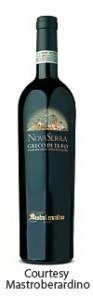
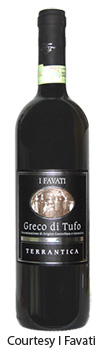
Notable Greco di Tufo wines include A Casa‘s Greco di Tufo “Bussi” DOCG (with scents of acacia blossoms, herbs, melon, pear, citrus and almond; noteworthy and commendable is the important investment made by the owner to achieve an excellent density of 5,000 vines/HA), Cantine I Favati‘s Greco di Tufo “Terrantica” DOCG (with flowery aromas of broom, mimosa, linden blossoms and walnut) or Mastroberardino‘s Greco di Tufo “Novaserra” DOCG (with scents of sage, apricot, peach, pear, apple, citrus and almond). A special mention goes out to the exceptional Pietracupa‘s Greco di Tufo DOCG (with exquisite aromas of fern, sage, nectarine, citrus, ginger and pepper): even in this case, unfortunately as of October 2012 the producer does not have a Web site: should you be interested in reaching out to them, just drop me an email. Note that all wines that we recommended above are entirely varietal, and therefore made out of 100% Greco grapes.

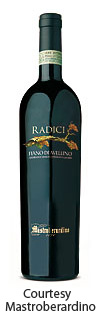
A few Fiano di Avellino wines that are worthy of mention are Le Masciare‘s Fiano di Avellino “Anbra” DOCG (with a bouquet of white flowers, herbs, melon, grapefruit and hazelnut), Cantine Antonio Caggiano‘s Fiano di Avellino “Bechar” DOCG (with aromas of wildflowers, hazelnut, pepper and chalk), Mastroberardino‘s Fiano di Avellino “Radici” DOCG (with scents of acacia blossoms, pear, pineapple, hazelnut, honey and minerals) or Feudi di San Gregorio‘s Fiano di Avellino “Pietracalda” DOCG (with aromas of wildflowers, apple, citrus, hazelnut, chestnut and chalk). Even in this case, note that all wines that we recommended above are entirely varietal, and therefore made out of 100% Fiano grapes.

As always, leave a comment and let me know your impressions if you have enjoyed any of these wines or if you wish to suggest another wine that could pair well with Francesca’s pumpkin soup!

Posted in Wine, Wine Pairings | Tagged , , , , , , , , , , , | 3 Comments

Winevent – October 25-29, 2012: Salone Internazionale del Gusto – Terra Madre, Turin (Italy)

If you happen to be in Turin, Italy, starting today and until October 29, 2012 you may consider stopping by the Salone Internazionale del Gusto – Terra Madre, an international food and wine fair organized by the international Slow Food association showcasing the products of 1000 producers from 100 countries. There is also a Wine Store showcasing 1200 bottles from all over Italy: if you are curious as to which wineries are going to be present, you can check them out by browsing their Wine List.

As far as wine is concerned, on Sunday October 28, 2012 at 3:00 pm at Rampa Nord del Lingotto trade fair complex you may consider buying tickets (at EUR 50 each) to participate in Slow Wine 2013, a wine tasting event with over 1000 wines from 600 wineries reviewed by the Slow Wine 2013 guide (a complimentary guide will be presented to ticketed attendees).

The Salone Internazionale del Gusto – Terra Madre is at the Lingotto Fiere trade fair complex, at Via Nizza 280, Turin, Italy. Free apps for iPhone and Android are also available with the full program of the event, a map and a list of exhibitors.

Finally, if you are interested in the Slow Food association and their activities, this is some general information about them as indicated in the International Slow Food Web Site: “Slow Food is a global, grassroots organization with supporters in 150 countries around the world who are linking the pleasure of good food with a commitment to their community and the environment. A non-profit member-supported association, Slow Food was founded in 1989 to counter the rise of fast food and fast life, the disappearance of local food traditions and people’s dwindling interest in the food they eat, where it comes from, how it tastes and how our food choices affect the rest of the world. Today, we have over 100,000 members joined in 1,300 convivia – our local chapters – worldwide, as well as a network of 2,000 food communities who practice small-scale and sustainable production of quality foods.”

If you are based in the United States and want to know more about Slow Food, you can check out the U.S. Slow Food Web Site and the locations of their several U.S. chapters.

As always, if you make it to Turin and want to share your experience at the Salone Internazionale del Gusto – Terra Madre, go ahead and leave a comment below!

Posted in Wine, Winevents, WiNews | Tagged , , , , , , , , | Leave a comment

Pumpkin Soup

2 Servings

Orange all over the place! Halloween decorations, mums, outdoor wreaths and… leaves. Oh boy!

This morning, they were all over my yard and this thing irks me immensely! I’m a sort of perfectionism freak and all my surroundings (house, office, desks, kitchen counter) must be neat and perfectly organized. Do you remember the cleanliness-obsessed Monica from Friends? I’m exactly like her.

The point is that, in my ideal world, my yard would look as neat as my kitchen floor. If I could, I would vacuum my yard every day! Instead, I go out to rake and pick up countless leaves sweating like a piglet, and for what? The day after, even more leaves are happily lying on my yard telling me loud and clear: mother nature sent us and she is way stronger than all your obsessions!

So, since there is no way I can fight mother nature, I decided to give up and embrace the orange color by making a pumpkin soup.

After all, if you can’t beat them, join them! Or was it bite them?…  🙂

Ingredients:

1 leek
1 Tbsp salted butter
1 ½ Tbsp extravirgin olive oil
18 oz (about 4 cups) freshly diced pumpkin  (about ¾ inch in size)
13 oz (about 2 cups) diced potatoes (about ¾ inch in size)
2 cups vegetable stock
¼ cup grated parmigiano cheese
salt
ground black pepper

Directions:

Cut off the green top of the leek and the roots. Discard the outer layer. Cut the leek in half lengthwise. Rinse the two halves well under water, being careful to leave them intact. Place each half, with the flat side facing down, on a chopping board.

Slice the two halves of the leek thinly and evenly with your knife so that you end up with thin strips.

In a medium/large pot, melt the butter. Add 1 Tbsp of olive oil and the leek strips and toss to coat. Add 1 ladle of vegetable stock and stir often until the strips soften.

Add the pumpkin, the potatoes, some salt (to taste) and the rest of the vegetable stock and toss to coat. Cook, stirring often, for about 25/30 minutes. Eventually, the pumpkin and the potatoes will turn kind of mushy and the stock will almost completely evaporate.

Transfer the soup to a food processor or a blender and blend until it is smooth and creamy.

Return the soup to the pot and, on low heat, cook for a few minutes, stirring often.

Pour the soup into two serving bowls or plates, with a swift circular motion, pour ¾ Tsp of olive oil on top of each, season with black pepper and finish it up by spreading one or two pinches of grated parmigiano.

This soup would be perfect for a Thanksgiving dinner and goes beautifully with croutons. By the way, do you want to know how to make your own croutons? I would be glad to help you! Just let me know by leaving a comment below.

Posted in Recipes | Tagged , , , , , , , , , , | 10 Comments

Mac & Cheese – Recommended Wine Pairing

Go red to complement Nicole’s mouthwatering Mac & Cheese, pick something with medium body, good acidity and gentle but still noticeable tannins.


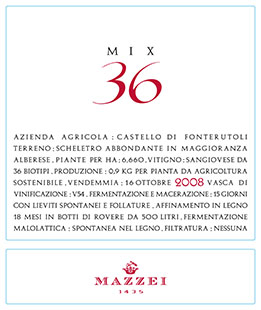
Recommended Italian wines to go with Mac & Cheese include a quality Chianti, such as a Castello di Fonterutoli Chianti Classico Ser Lapo Riserva DOCG, a blend of 90% Sangiovese and 10% Merlot with intriguing aromas of plum, wild berries, graphite and a slight foxy note, or a Geografico Chianti Colli Senesi Riserva Torri DOCG, a blend of 95% Sangiovese and 5% Canaiolo with scents of wild cherry, blackberry, mint, leather and tobacco along with subtle tannins, or even an I Sodi Chianti Classico Riserva DOCG, a blend of 95% Sangiovese and 5% Canaiolo with aromas of violet, wild cherry, blueberry, blackberry jam, licorice, tobacco and soil.

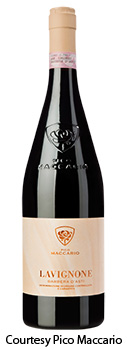
Another very good option would be a Barbera from Piemonte, such as an enjoyable Pico Maccario Barbera d’Asti Lavignone DOCG, made of 100% Barbera grapes and with appealing aromas of rose, violet, raspberry and red currant, or a Batasiolo Barbera d’Alba Sovrana DOC, with pleasant scents of dried flowers, fruit jam and a slight toasty note.

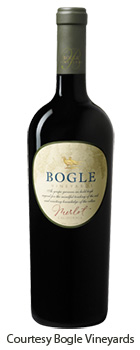
If you prefer to stay in the USA, consider a nice, basic Merlot, such as a Bogle Merlot California 2009 (88 points, Wine Spectator) with cherry, herb and red currant aromas and distinct tannins, or a Kenwood Merlot Sonoma County 2008 (88 points, Wine Spectator), which is a blend of 96% Merlot and 4% Cabernet Sauvignon with scents of cherry, raspberry, plum, tomato leaf and chocolate.

By the way, all of the above options have very interesting quality/price ratios.

And if you want to share your experience or have another wine that you would like to suggest, just leave a comment below!

Cheers!

Posted in Wine, Wine Pairings | Tagged , , , , , , , , , , , , , | 3 Comments

Not my Momma’s Mac & Cheese

Francesca’s first recipe, Asparagus Baked Pasta, is a fabulous dish for a dinner party —special enough to stand on its own as an entrée or to serve as the pasta course of a multi course dinner. It has the added bonus of being able to be assembled ahead of time and popped in to bake as you are pouring the first round of drinks. Add her second recipe, the Prosciutto and Fennel Salad, and you have the whole dinner party. I will post an easy cheesecake recipe to finish off the night.

Let’s face it though…there are nights when all you want to do is crawl into your fuzzy sweater and, yes I’ll admit it, your pajama bottoms and take comfort in a bowl of something delish from your childhood. Something. Something familiar. Something like … Mac and Cheese. Every celebrity chef seems to have a Mac and Cheese recipe. Many are quite upscale and require running around to different stores to find all of the ingredients. There is nothing wrong with that, it just isn’t suited to fuzzy sweaters and pajamas.

This recipe, tried and true, came to me from my friend’s mother, Grandma Barbara, who makes tray upon tray of it and then spends the better part of a day running around town to deliver it to her family, her kids, and sometimes her kid’s very lucky friend – me! The success of this recipe lies in salt, deli cheese and Wondra.

So, salt. You must salt the macaroni water! Salt the water once it comes to a boil, give it a stir and taste it. It should be salty like sea water. If it isn’t, add some more. This is your only chance to impart some flavor into the macaroni itself. A quick digression about the macaroni – to have the cheese sauce adhere to the macaroni, you want to use a ribbed pasta. At the very least use a ribbed elbow. I use cellentani, which is a ribbed, double elbow macaroni that is twisted. It makes for a heartier dish.

Deli cheese. Who’d-a-thunk? Seriously, this is the key to the whole dish. Plain old American deli cheese. Now I am a Land o’ Lakes White America, sliced extra thin cheese girl for everything. Everything except this Mac and Cheese. Land o’ Lakes cheese is made with oil so if you use it in this recipe, the oil and the milk solids separate during baking and you get an oily puddle around the edge. Tastes great but looks less than appealing. I have found that Boar’s Head White American, sliced thickly – like an eight of an inch or so works the best. Yellow or white is up to you. Take the extra thick slices and cut them into strips about a centimeter in width and then cut across the strips to create cubes.

Last, but not least, Wondra. Wondra might well be one of the greatest inventions of modern cookery. Ok, not really one of the greatest, but really, really good. The fine nature of the flour combined with the shaker top make it super easy to gradually add flour to the milk and butter with one hand, and whisk like a madman with the other. Guaranteeing a super smooth white sauce. I can’t give you an exact measurement for the flour. You just shake it in while the milk boils, and stir and eventually you get a thick white sauce (that you need to salt!). I can usually get 3-4 Macs and Cheese from a canister.

In the time it takes to bring the water to a boil, salt it, and cook the macaroni, you can cube and grate the cheeses and make the white sauce. It is ready to throw in the over in under a half an hour OR you can put it in baking dishes and cover with foil and keep in the fridge for a couple of days, OR you can wrap with plastic wrap and foil and freeze to bake later. Just remember to take the plastic wrap off before you bake it.

So onto the good stuff …

Grandma Barbara’s Mac & Cheese

Ingredients:

Salt
1 pound of macaroni – elbows, cellentani or other pasta – cooked tender (not al dente)
1 quart of whole milk
1 stick of butter, cut up
Wondra flour (see note above)
1 ¼ pounds of deli American cheese, sliced thick and cut into cubes
1 cup grated sharp cheddar cheese

Directions:

Preheat oven to 375 degrees.

Butter a 13 x 9” baking dish or multiple smaller dishes.

Bring the macaroni to a boil in salted water and cook past al dente until the macaroni is soft.

In the meantime, bring the milk and butter to a boil over medium heat. While whisking, shake in Wondra and cook until the sauce thickens up. This will take about 10 minutes. If the sauce gets too thick, turn off the heat and whisk in some more milk. Add salt to taste.

Drain the macaroni and shake out excess water. Put in a large bowl and toss with the American cheese cubes. Pour the white sauce over the cheese and macaroni and toss well. Turn out into the baking dish(es). Cover the top of the casserole with the grated cheddar.

Bake at 375 F for 30-45 minutes until the top is a little crusty and the inside is bubbly and hot.

If you are baking a frozen casserole, it will take longer – closer to 45-60 minutes. Just watch it carefully.

Posted in Recipes | Tagged , , , , , , | 1 Comment