Sautéed Prawns and the Seafood Curse

Sauteed prawns

2 Servings

Since I set foot on Italian soil, I have been “chased” by seafood. Now, if you are a regular reader of F’sT, you know that I do not eat fish for the simple reason that I do not like the taste. For me cooking fish is… well, someone else might say “an act of love,” but since I am who I am… I’ll go with “tantamount to martyrdom”! 😉

I keep repeating to myself that seeing and smelling seafood all over is the more natural thing under the circumstances. After all, I’m on an Italian island and fish is the freshest thing you can find around here. Still, every time I go to a restaurant, finding something I can eat is an odyssey (thank goodness no one has come up with some kind of fishy ice cream idea so far!!!) 😉

Things are not getting any better at home. Every single member of my family seems to enjoy seafood and almost every morning when I wake up (let’s be honest here… late morning!) 😉 someone has already gone to the fish market to buy “the seafood of the day”.

Do you know the old saying “if you cannot beat them, join them”? Well, I decided to join my parents in the kitchen and take advantage of this fish invasion to learn something new.

The reason I picked this recipe is twofold.

The first – which is totally unrelated to culinary logic – is the color of the prawns that my dad brought home. The red was so perfectly vibrant that they were doomed to catch my trained eye of aesthete 🙂

Sauteed prawns

The second is that this is a very simple dish and it takes only about 15 minutes to make… a stretch of time my nostrils seem to still find tolerable. 😉

Ingredients:

8 prawns
3 or 4 San Marzano Italian Peeled Tomatoes
1 clover, garlic
1 1/2 Tbsp, extravirgin olive oil
Some parsley leaves, finely chopped
Pepper flakes
Salt

Directions:

Put some salt (to taste), the olive oil and the garlic in a non-stick skillet and brown the garlic. Throw the garlic away and add the tomatoes. After 1 minute, add the prawns, the parsley and some pepper flakes (to taste). Cover the skillet with the lid and let the prawns cook until the liquid in the skillet boils. Take the lid off and cook for 10 more minutes.

Et Voila’, ready to be served! Easy peasy! 🙂

P.S. Not a day goes by without a family member, a friend or an acquaintance telling me how healthy fish is, what I’m missing, bla, bla, bla… I live by a very simple rule: I do not tell people what to do and I do not judge them for what they do, simply because I don’t like to be told what to do and to be judged. Now, why oh why can I not receive the same treatment from others with regard to this fish thing of mine??? 😦

Posted in Recipes | Tagged , , , , , , , | 38 Comments

Wine Review: Muri-Gries, Alto Adige Lagrein “Abtei Muri” Riserva 2007 DOC

Today’s review is about a northern Italian red wine that I particularly love (Muri-GriesAlto Adige Lagrein “Abtei Muri” Riserva DOC 2007 – $38) which is made from an Italian indigenous grape variety that in my view undeservedly gets too little attention in the wine world: Lagrein.

Muri-Gries, Alto Adige Lagrein "Abtei Muri" Riserva DOC

The Bottom Line

Overall, the Abtei Muri was an extremely good, marvelously smooth, fruit-forward wine with supple tannins and good structure, an ideal companion to a red meat dinner. I think that with a couple more years of evolution under its belt, this wine may become truly spectacular: I will have to look for one more bottle from the 2007 vintage, if I can find one!

Rating: Outstanding and definitely Recommended, given its great QPR Outstanding – $$

(Explanation of our Rating and Pricing Systems)

About the Grape

The earliest mention of Lagrein is contained in a 1318 document found (of all places!) in Gries, near Bolzano, and surprisingly it refers to a white wine, that researchers have not been able to identify yet. Instead, the first reference to the red Lagrein that we know dates back to 1526.

Recent DNA analysis proved that Lagrein is a variety that is indigenous to the Alto Adige region of Italy, that it originated as a natural cross between Teroldego and an unknown variety and that, among other cool facts, it is a sibling of Marzemino and a cousin of Syrah!

In Italy, Lagrein is mostly grown in the northern regions of Alto Adige and Trentino. Outside of Italy, Lagrein can be found in California (Paso Robles) and Australia.

(Information on the grape variety taken from Wine Grapes, by Robinson-Harding-Vouillamoz, Allen Lane 2012 – for more information about grape varieties, check out our Grape Variety Archive)

About the Appellation

A few words about the appellation. Alto Adige is a portion of the northern, mountainous region of Italy known as Trentino Alto Adige that is close to Austria and produces several wines of excellent quality, including indigenous Lagrein and very good Schiava and Pinot Noir among the reds and excellent whites ranging from Riesling and Sylvaner to Chardonnay and Sauvignon Blanc.

Given the great quality of the wines from this area of Italy, it is somewhat sad to notice that they all come from one single appellation that encompasses the entire Alto Adige area, known as Alto Adige DOC. It is true that this macro-appellation includes a few subzones (among which St. MagdalenerTerlaner and Valle Isarco) but still, one appellation with over 20 permitted grape varieties??? Talk about the importance of terroir… 😦  So, as of today one can mostly rely on the seriousness and commitment to quality of many Alto Adige producers. Personally, I hope that at some point at least certain of those subzones may be upgraded to self-standing appellations, focusing only on the grapes that are best suited for that specific subregion.

About the Estate

Muri-Gries is currently a Benedictine monastery in the village known as Gries near the town of Bolzano (Bozen), in the northeastern Italian region of Alto Adige. The original building was erected in the XI century as a fortress and kept that purpose until 1407, when it was gifted to Augustinian canons who had lost their monastery due to a flood and it was converted into a monastery. Grapevine growing and winemaking started in 1845, when the monastery passed on to Benedictine friars, who had been ousted from their monastery in Muri, Switzerland, and who eventually settled in the Gries monastery, which changed its name to the current Muri-Gries. As of today, the Benedectine friars still take care of the monastery and its vineyards.

The monastery owns nearly 30 HA (75 acres) of vineyards (80% of which are Lagrein) and 52 HA (131 acres) of orchards, beside some 45 cattle, which make the monastery essentially self-sufficient. Even part of the wine made in the monastery is earmarked for the friars’ own consumption.

Our Detailed Review

Let’s now move on to the actual review of the Muri-GriesAlto Adige Lagrein “Abtei Muri” Riserva DOC 2007 that I recently tasted.

For starters, “Abtei Muri” is the flagship line of the monastery wine production. This premium lineup comprises four wines: the Lagrein that we are about to review, a Pinot Noir, a white blend of Pinot Blanc and Pinot Grigio, and a sweet Moscato Rosa.

Our Abtei Muri Lagrein was made from 100% Lagrein grapes and was fermented in steel vats and then aged for 16 months in barrique oak casks. It is 13.5% ABV and it retails in the US for about $38, which (as you will soon find out if you keep reading) is great value for this wine.

As usual, for my review I will use a simplified version of the ISA wine tasting protocol that we described in a previous post: should you have doubts as to any of the terms used below please refer to that post for a refresher.

In the glass, the wine poured ruby red with purple hints and thick when swirled

On the nose, its bouquet was intensecomplex and fine, with aromas of blueberry, blackberry, black pepper, tobacco and licorice.

In the mouth, it was drywarmsmoothquite fresh, with deliciously supple tannins, and tasty. The wine was full-bodied and perfectly balanced. The mouth flavors were intense and fine, with nice correspondence to the aromatic palette and hints of blueberry, blackberry and black pepper. It had a quite long finish and its evolutionary state was ready (that is, perfectly good to enjoy now, but will probably evolve even more with two or three years of additional aging).

Posted in Red Wines, Wine, Wine Reviews | Tagged , , , , , , , , , | 18 Comments

Wine Review: Cloudy Bay, Sauvignon Blanc Marlborough 2012

Ever since fellow wine blogger and friend Oliver was kind enough to ask me to contribute a guest post to his excellent blog, The Winegetter, I have been really excited about the idea. Since the theme was “Somewhere Beyond the Sea” and the post was going to be published in the summertime, I thought reviewing one of my favorite New Zealand Sauvignon Blancs (Cloudy BaySauvignon Blanc Marlborough 2012 – $30) would just be the way to go: definitely “somewhere beyond the sea” pretty much from anywhere you look at it (unless of course you are a Kiwi!) and a refreshing summer wine. So there we go – and of course: (i) you may find this post also in Oliver’s blog and (ii) thank you so much, Oliver, for including me in your list of distinguished guest contributors – I feel honored and it has been a lot of fun!

The Bottom Line

Overall, I think that Cloudy Bay is a very pleasant Sauvignon Blanc in the “Down Under” style: intense, concentrated fruit and herb aromas, lively acidity and citrus-centric flavors. So very refreshing and summery that I would keep drinking it all Summer long… if budget permitted!  😉

Rating: Very Good and Recommended Very Good – $$

(Explanation of our Rating and Pricing Systems)

About the Grape

A few interesting notions about the origins of Sauvignon Blanc: recent DNA analysis has identified a parent-offspring relationship between Savagnin (an old white-berried variety that is common in the Jura region of France) and Sauvignon Blanc and, there being much earlier documents mentioning Savagnin than Sauvignon Blanc, the former is believed to be the parent of the latter. DNA results also support the thesis that, contrary to common belief, Sauvignon Blanc did not originate from the Bordeaux area, but rather from the Loire Valley in France, where documental evidence dates back to 1534 (compared to 1710 in Bordeaux). However, it is interesting to note that, when Sauvignon Blanc was grown in the Bordeaux area, it spontaneously crossed with Cabernet Franc to create Cabernet Sauvignon.

In New Zealand, Sauvignon Blanc was first planted in the 1970s and soon became the most widely grown variety in the country, especially in the Marlborough region.

(Information on the grape varieties taken from Wine Grapes, by Robinson-Harding-Vouillamoz, Allen Lane 2012 – for more information about grape varieties, check out our Grape Variety Archive)

About the Estate

Cloudy Bay‘s vineyards are located in different subzones of the premium wine region of Marlborough at the northern end of New Zealand’s South Island, alongside the Wairau River. Cloudy Bay also sources part of the grapes used for making their wines from a few independent Wairau Valley growers with whom they have established a long-term business relationship.

Our Detailed Review

Let’s now get to the actual review of Cloudy BaySauvignon Blanc Marlborough 2012, which in the US retails for about $30.

The wine has 13.5% ABV and was made from 100% Sauvignon Blanc grapes sourced from estate and grower vineyards located in the Rapaura, Fairhall, Renwick and Brancott subzones of the Wairau Valley. Fermentation was primarily carried out in stainless steel, except for a small percentage that was fermented in old French oak barriques.

As usual, for my review I will use a simplified version of the ISA wine tasting protocol that we described in a previous post: should you have doubts as to any of the terms used below please refer to that post for a refresher. For your own structured wine tastings, consider downloading our FsT Wine Tasting Chart!

In the glass, the wine poured crystal clear, a beautiful straw yellow in color, and viscous with narrow arches and slow dripping tears

On the nose, its bouquet was intensecomplex and fine, with pleasant, Summer-y aromas of lime, grapefruit, citrus, green apple and herbs (nettle, mint)

In the mouth, it was dry, had medium ABV and was moderately smooth; it was freshly acidic and moderately tasty. The wine was medium-bodied and balanced, despite its freshness (i.e., acidity) being the dominating component – but that is in most cases a desirable feature in a dry white wine and in our case it also helped make the quite muscular ABV of the wine not so evident in the mouth, which is a good thing, so it did not change our assessment that the wine was balanced. Its mouth flavors were intense and fine, with pleasant, refreshing notes of lime, grapefruit, citrus and herbs. The wine had a medium finish and its evolutionary state was mature, meaning ready to be enjoyed now, with additional cellaring not likely to benefit the wine.

Posted in White Wines, Wine, Wine Reviews | Tagged , , , , , , , , , , | 19 Comments

Stuffed peppers and the misconception of a silly girl

Stuffed bell peppers

Cooking and eating peppers is something relatively new in my house. The reason? Okay. I’m going to spit it out but please do not judge me too harshly. The ugly truth is that, when I was younger, I thought peppers where not sophisticated enough. When you are young, everything is either black or white and, consequently, the world was divided between what was chic and what was not, of course according to my own criteria, which I applied pretty much to everything, including food.

I used to go to the newest restaurants and indulge in the new trend – the huge misconception that rustic food was not cool.

They say that changing your mind is a sign of intelligence and that one of the advantages of aging is getting wiser. Well, especially when I look at my wrinkles, I like to flatter myself by thinking that I totally fall into both categories of clever and wise people. 😉

Anyway, regardless of what I think of myself :-), the bottom line is that I “opened up” my mind to peppers and I was amazed to find out how great their taste can be. Their full texture can satisfy any kind of palate from the more basic to the chicest. I’m so regretting all those years when I simply dismissed them as not “worthy”!!! Such a waste of time! 😦

We are having a gorgeous weather where I am in Italy and I think that the vibrant colors of the peppers go very well with the brilliant colors of the landscape that surrounds me right now. That’s how I picked today’s dish, whose recipe – once again – comes from my mommy’s kitchen.

I hope everyone is enjoying their summer.

Stuffed bell peppers

Ingredients:

6 peppers
2 leeks
about 21 oz, ground beef
2 eggs
3 white bread slices
1/2 cup, whole milk
8 Tbsp, extravirgin olive oil
8 Tbsp, grated parmigiano cheese
2 cups, tomato sauce
some parsley leaves, finely chopped
Salt
Ground black pepper

Directions:

Cut the tops of the peppers off and set them aside. With the help of a knife, remove the seeds and the membranes and rinse the peppers under cold water. Place the peppers in a large casserole, add 6 Tbsp of olive oil in the casserole and set aside.

Cut off the green top of the leeks and the root. Discard the outer layer. Cut the leeks in half lengthwise. Rinse the halves well under water, being careful to leave them intact. Place each half, with the flat side facing down, on a chopping board.

Slice the leeks thinly and evenly. In a skillet, heat 2 Tbsp of olive oil, add the leeks, season with salt and pepper (to taste) and toss to coat. Add some water and stir occasionally until the water evaporates. Set aside and let the leeks cool.

In a bowl, pour the milk and soak the bread into the milk.

In a large mixing bowl, using your hands combine the ground beef, the eggs, the chopped parsley and the Parmesan cheese. With your hands, squeeze the bread and add it to the meat mixture. Add the leeks, some salt and pepper (to taste) and combine with your hands.

Preheat the oven to 375 F.

Stuff the peppers with the meat mixture, place the pepper tops on the meat mixture and pour the tomato sauce over the stuffed peppers.

Put an aluminum foil on top of the stuffed peppers and bake them for 35/40 minutes. Remove the aluminum foil and keep baking for an additional 10/15 minutes or until the peppers are tender.

Buon appetito!

Posted in Recipes | Tagged , , , , , , , | 42 Comments

Wine App Review: Winery Passport

Last week, Scott, the developer of a brand new wine-related app, reached out to me to let me know about the roll out and to ask me whether I would download it and give it a spin and, if I liked it, whether I would write a review.

So, as you are reading this, you may already guess that I did download it and I did like it 😉

But let’s start from the beginning: the app is called Winery Passport (WP).

Screenshot5

Before we get more into it, note that you may have an interest in this app provided that you (i) are into wine (of course!), (ii) live in or plan a wine-focused trip to the USA, and (iii) at least for now, are iOS based.

Now, what exactly does WP do? Essentially, WP is (or will soon be) a database of all the wineries in the US coupled with a cool GPS feature that shows the wineries that are closest to wherever you are, ordering them from closest to farthest away and showing you how far you are from each of them. Alternatively, you can also browse or search the entire winery archive, that is broken down by State.

Either way, whenever you select a winery, WP shows you its address and gives you a few options, including taking you to the winery’s Web site, connecting to Google Maps so you can get driving directions from wherever you are to the winery with one click, or even call the winery directly from within the app.

Screenshot1Thanks to these two different modes, WP’s features come in handy whether you have a sudden urge to discover and visit a winery near you, regardless of where in the US you are, or you are planning a trip to a US wine region and want to chart your route based on where the various wineries of the area are located or their average rating. Pretty cool, and all at your fingertip.

But there’s more. WP also a “passport” part that keeps track of the wineries that you visit, lets you rate them and take notes and even syncs with Facebook and Twitter so you can share your experience with other WP users. Neat idea.

And in case you are wondering how much downloading WP is going to set you back, well no sweat and click that download button as it is a free app!

Screenshot3Now, although WP is fully functioning and sleek looking, here are a few things to bear in mind:

1. The winery database is still a work in progress: to date, there’s almost 1000 wineries in 17 States, all on the East Coast so far (so, no California yet), that have been uploaded already, but they are quite obviously not all. Scott is working to add more and eventually map all 50 States out, but it is a huge task and it is going to take a while. Scott anticipates getting to 25 States by August.

2. So far, WP is only for the iPhone or iPod Touch. I asked Scott whether he planned to also develop a version for the iPad and he said that it would be rolled out later on, as right now completing the winery census is understandably his priority.

Screenshot4

3. Regarding Android: I asked and Scott said once the iOS version is completed, with all the wineries uploaded, he would look into making an Android version, so Android users sit tight and hold on as no hope is lost! 🙂

Wrapping things up: I really like the idea behind WP and its implementation: the app is sleek, simple and yet very effective… and it’s free! I can’t wait for the full-screen version for the iPad to be released!

Rating: Very Good and recommended

Thank you, Scott, for developing such a cool app, making it available for free and giving me heads up about it!

For more information about WP, visit the developer’s Web site. You can download WP from Apple’s App Store or by clicking here.

Posted in Product Reviews, Wine, Wine Education, WiNews | Tagged , , , , , , , , | 12 Comments

Wine Review P2: Marchesi de’ Frescobaldi, “Tenuta dell’Ammiraglia” Range

Disclaimer: this review is of samples that I received from the producer’s US importer. My review of the wines has been conducted in compliance with my Samples Policy and the ISA wine tasting protocol and the opinions I am going to share on the wines are my own.
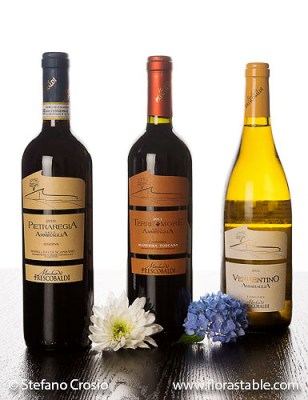
Marchesi de' Frescobaldi's "Ammiraglia" LineupAfter learning about the producer, Marchesi de’ Frescobaldithe estate “Tenuta dell’Ammiraglia and the “Ammiraglia” wine range in general on our previous post (should you have missed it, please refer to it before reading this one), let’s now focus on the actual contents of the three bottles that I got to taste and move forward with my tasting notes.

In an effort not to make this post too lengthy, if you are interested in some very cool facts about the various grape varieties from which the wines in the Ammiraglia lineup are made (i.e., VermentinoCabernet SauvignonCabernet FrancMerlotSyrahSangiovese and Ciliegiolo), by all means check them out on our Grape Variety Archive page. As always, such information is taken from the excellent guide Wine Grapes, by Robinson-Harding-Vouillamoz, Allen Lane 2012,

As usual, for my review I will use a simplified version of the ISA wine tasting protocol that we described in a previous post: should you have doubts as to any of the terms used below please refer to that post for a refresher.

1.  Marchesi de’ Frescobaldi, Vermentino “Ammiraglia” Toscana IGT 2012 ($18)

Marchesi de' Frescobaldi, Vermentino "Ammiraglia"The 2012 Vermentino Ammiraglia was 12.5% ABV and was made out of 100% Vermentino grapes harvested from just 5 HA of vineyards in the Tenuta dell’Ammiraglia estate, which achieve a good 5,500 vines/HA density.

After the grapes underwent a partial cryomaceration phase, the must fermented for 10 days at 68F/20C in stainless steel vessels, with no malolactic fermentation. After that, the wine rested for 4 months in steel vats, plus one additional month in bottle before becoming available for sale.

The fact that part of the grapes did cryomaceration and that the wine did not do any oak are both indications that the wine was made in such a way as to emphasize primary and secondary aromas and that it is intended for immediate consumption, not for cellaring. The Vermentino Ammiraglia retails in the US for about $18.

In the glass, the wine poured a light straw yellow and moderately thick when swirled.

On the nose, the bouquet was quite intensequite complex and fine, with aromas of grapefruit, citrus, honey, orange blossoms, with herbs and almond hints. One important factor to keep in mind to fully appreciate its aromas is service temperature: if you serve this wine too chilled, its bouquet will be restrained and will not do it justice. I noticed that a temperature of about 53-55F/12-13C is where the wine’s aromas peak, so bear that in mind if you buy a bottle.

In the mouth, the wine was dryquite warmsmoothfresh and tasty. It was balanced and medium-bodied, with intense and fine mouth flavors of citrus, almond, minerals and evident iodine notes. The finish was quite long (to reinforce the wine’s mineral and iodine flavors, the aftertaste leaves you a slight feeling almost of saltwater in your mouth!) and the evolutionary state was mature (meaning, drink it now, it will not benefit from cellaring).

Overall, I really enjoyed this Vermentino: ideally, I wish its aromas were a touch more intense, but its aromatic palette is quite complex (if tasted at the right temperature) and very enjoyable, as are its balance and tasty mouth flavors. And at a retail price of about $18, I think this wine delivers plenty of bang for the buck.

Rating: Good to Very Good and Recommended, given its great QPR Good to Very Good – $

(Explanation of our Rating and Pricing Systems)

2. Marchesi de’ Frescobaldi, “Terre More dell’Ammiraglia” Maremma Toscana DOC 2011 ($18)

Marchesi de' Frescobaldi "Terre More"The 2011 Terre More was a whopping 14.5% ABV Bordeaux-style blend of 70% Cabernet Sauvignon, 15% Cabernet Franc, 10% Merlot and 5% Syrah grown in 55 HA of vineyards in the estate with a good density of 5,500 vines/HA, on par with the Vermentino.

The must fermented for 10 days in stainless steel vats at 82F/28C and underwent 12 days of maceration as well as full malolactic fermentation. The wine finally aged for 12 months in second or third time used French oak barrique casks before becoming available for sale. The Terre More retails in the US for about $18.

In the glass, the wine poured ruby red with purple hints and unsurprisingly (given its ABV) thick when swirled.

On the nose, the bouquet was quite intensecomplex and fine, with aromas of wild cherry, plum, blackberry, leather, coffee, tobacco and black pepper, with the tertiary, spicy aromas given by the oak aging being a little dominant over the secondary, fruity aromas (despite the wise choice of second/third time used barriques).

In the mouth, the Terre More was drydefinitely warmquite smoothfreshtannicquite tasty. I have to say that the wine’s muscular ABV was very evident, and tended to tip the wine mouthfeel a little bit off balance. The tannins were firm but quite integrated, despite the wine’s young age. The wine was full-bodied and had intense and fine mouth flavors of plum, blackberry, coffee (quite evident) and black pepper. The finish was quite long and the evolutionary state ready, meaning you can drink it now but it will most likely benefit from a few years of additional in-bottle aging.

Overall, I ended up having mixed feelings about the Terre More: I quite liked its bouquet (despite the slight prevalence of oaky, tertiary aromas and it being not as intense as I would have hoped), but was not entirely convinced by its mouthfeel: despite its pleasant flavor profile, the heat of the wine’s ABV was in my view a little too evident. Truth be told, it is still a very young wine and a few years of cellaring would likely be beneficial. Having said that, with a retail price of $18, I think this wine is still a pretty good deal to pair with a juicy steak just off the grill.

Rating: Fairly Good Fairly Good – $

(Explanation of our Rating and Pricing Systems)

3. Marchesi de’ Frescobaldi, “Pietraregia dell’Ammiraglia” Morellino di Scansano Riserva DOCG 2010 ($25)
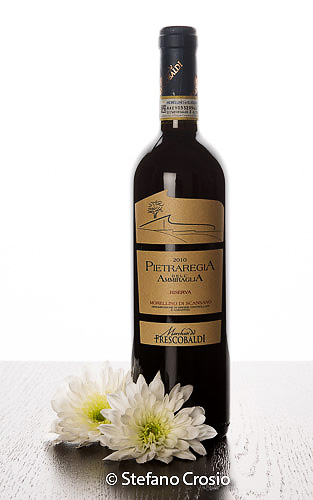
Marchesi de' Frescobaldi "Pietraregia"As mentioned on our previous post, the 2010 Pietraregia started off on the right foot by having a nice cork closure. 😉 Beside that, the wine was 14% ABV and was a blend of 85% Sangiovese, 10% Ciliegiolo and 5% Syrah.

The must fermented in stainless steel vats for 10 days at 86F/30C, underwent 20 days of maceration on the skins and did full malolactic fermentation, The wine aged for 24 months in French oak barrique casks and 2 additional months in bottle before becoming available for sale. The Pietraregia retails in the US for about $25.

In the glass, it poured dark ruby red and thick when swirled.

On the nose, its bouquet was quite intense and a bit narrow, with aromas of plum, blackberry, violet and black pepper, but certainly fine. It is interesting to note how few spicy tertiary aromas the wine picked up after spending 24 months in French oak barrique casks. Honestly, I would have hoped that the nose of this wine delivered a bit more than it did.

In the mouth, the Pietraregia was drywarmsmoothfreshtannictasty. It was a full-bodied wine with intense and fine mouth flavors of plum and dark chocolate. The finish was quite long and its evolutionary state was ready (you know what that means: fine to drink now, but if you cellar it for a few years it will likely improve over time).

Overall, I liked the Pietraregia: while I wish it had more to give in its bouquet, in my view the pleasant mouthfeel of this wine definitely made up for whatever it lacked in its aromatic palette. Once you sip this wine, it will make you happy, especially if you still remember that you paid some 25 bucks for it, which I think is more than adequate for what you get.

Rating: Good and Recommended Good – $$

(Explanation of our Rating and Pricing Systems)

So, to sum things up real quick:

1. I am generally pleased by the quality that the three wines of the Ammiraglia range that I got to taste delivered, of course given their price points.

2. Personally, I would definitely buy the Vermentino and the Pietraregia, which in my view are good value for money, while (once again, personally speaking) I think I would pass on the Terre More as, while it certainly is not a bad wine, it does not quite meet my own tastes.

And of course, many thanks to Marchesi de’ Frescobaldi’s US importer for providing the samples.

As always, if you get to taste any of these wines, please share your experience in the comment section!

Posted in Red Wines, White Wines, Wine, Wine Reviews | Tagged , , , , , , , , , , , , , | 19 Comments

Wine Review P1: Marchesi de’ Frescobaldi, “Tenuta dell’Ammiraglia” Range

Disclaimer: this review is of samples that I received from the producer’s US importer. My review of the wines has been conducted in compliance with my Samples Policy and the ISA wine tasting protocol and the opinions I am going to share on the wines are my own.

Marchesi de' Frescobaldi's "Ammiraglia" LineupThe US importer of the Italian winery Marchesi de’ Frescobaldi has been so nice as to mail me samples of a range of wines that are literally just being launched in the US market as we publish this post so I could try them out and see how I liked them… which I gladly did! Needless to say, the opinions in my review are my own and are untainted by the fact that the wines I reviewed were free samples (which is something that, however, I greatly appreciated as it gave me the opportunity to preview a range of wines that I was not familiar with!)

The wines that I am going to review are made by well-known Tuscan producer Marchesi de’ Frescobaldi and they are part of a line called “Ammiraglia”, after the name of the estate (Tenuta dell’Ammiraglia) where the grapes from which the wines are made come from.

In order not to make this post unbearably long, I am going to break it down into two parts: (i) this post will provide information about the producer, the estate and the Ammiraglia range in general, and (ii) the next post is going to focus on my tasting notes of the three wines in the Ammiraglia lineup that I had the opportunity to taste.

About the Producer

The Frescobaldi’s are an Italian (florentine) family of noble descent that, among other endeavors, have been in the wine business for quite a while. More specifically, the oldest documented reference to their wine production activities dates back to… the year 1300 (!) at the historic estate of Tenuta di Castiglioni in Val di Pesa, southwest of Florence.

According to the Frescobaldi’s records, their wine business took off pretty well pretty soon, as by the beginning of the 1400’s great Italian Renaissance artists such as Donatello and Michelozzo Michelozzi had become loyal clients. One century later, the Frescobaldi wines were served at the tables of the Papal Court and the Court of Henry the Eighth of England.

According to the Frescobaldi’s Web site, in the second half of the XIX century they were also at the forefront of wine making innovation in Italy, as in 1855, at their estates of Nipozzano and Pomino, they were the first in Tuscany to plant Cabernet Sauvignon, Merlot, Pinot Noir and Chardonnay, while in 1894 at Pomino they built the first Italian gravity-fed cellars.

About the Estate

Tenuta dell’Ammiraglia is the Frescobaldi’s latest project. This estate is situated in Magliano, near the town of Grosseto, in that beautiful, sunny and wild part of coastal Tuscany that is known as Maremma. Commercial production of the Ammiraglia wine range started recently, with the first vintage of two of the wines in the lineup being 2006, while the remaining two wines were introduced in 2009 and 2012 (see below for details). Even the state-of-the-art, environmentally conscious Ammiraglia estate winery was completed and became operational only in 2011.

About the Ammiraglia Range

The Ammiraglia lineup comprises four wines:

1. Vermentino Ammiraglia: the only white wine in the range and its newest addition (first vintage: 2012)
2. Terre More: a Bordeux-style blend (first vintage: 2009)
3. Pietraregia: a Sangiovese-based Morellino di Scansano Riserva (first vintage: 2006)
4. Ammiraglia: a varietal Syrah (first vintage: 2006)

However, currently only the first three wines in the Ammiraglia range have been imported into the US and therefore will be covered by my review. Word has it, though, that it will not be long before even the missing Syrah joins the other three wines on US wine store racks (probably, as early as next year).

Before we wrap this post up, here are three general observations on the wines that I have tasted – two good and one… not so good.  😉

– The good ones:

(A) The price: if these wines deliver in terms of quality (I don’t want to spoil the outcome of my reviews here, so stay tuned for the next post!) I think they are going to sell really well: two of the three have a suggested retail price of $18 and the third one (the Pietraregia) of $25: certainly appealing.

(B) The capsule: the three wines come with a nice tin capsule, which I like so much better than cheap feeling and cheap looking plastic capsules. Besides, tin foil is much easier to take off in the context of a proper wine opening procedure (yes, at some point I will write a post about what this entails exactly!)

– The not so good one (at least to me): only one of the three wines that I tasted (the more expensive Pietraregia) utilizes cork as a closure. The other two resort to a synthetic closure in a color that vaguely resembles cork.

Now, I realize that retailing at some $18 these two wines are not premium segment wines and using synthetic instead of cork helps keep the retail price down; I understand that they are not meant for long-term aging and this takes care of the question marks about the long-term effectiveness of synthetic closures; and I also appreciate that using synthetic avoids the dreaded TCA taint problem (AKA, the occasional corked bottle) altogether. I get all that, of course. Still, my personal reaction to a synthetic closure in a bottle of wine is not one of excitement: I don’t know, I may be old school and everything, but to me, it just makes the bottle feel cheap.

By the way, if you are interested in the whole wine closure debate, I have come across a pretty interesting article published by the American Society for Enology and Viticulture summarizing the outcome of research conducted in 2007 at Oregon State University’s Food Innovation Center regarding the “Effects of Wine Bottle Closure Type on Consumer Purchase Intent and Price Expectation” that essentially shows how consumer appreciation and price expectations of a bottle of wine (a Chardonnay and a Merlot) were affected by the use of a screw cap, a synthetic closure or a real cork (the article also cites the outcome of previous studies on this topic).

Anyway, forget about my prejudice about synthetic closures: this is the end of part 1 of this review. On the next post, we will get to my actual tasting notes of the three wines that I got to taste, so stay tuned for more! 🙂

Posted in Red Wines, White Wines, Wine, Wine Reviews | Tagged , , , , , , , , , , , , , , | 9 Comments

Roasted Stuffed Tomatoes

Tomatoes au GratinGood morning everyone (well, at least it is still morning in this part of the world)!  🙂

Usually I’m not that happy in the morning (quite the opposite!) but today is a special day.

For starters, school is finally over. It felt like it would never end this year with the extra days to make up for days lost due to hurricanes, snow storms, you name it. I felt like I was actually back in school myself! 🙂

Secondly, I’m off to Italy today to catch up with family, true friends and “so-called friends” (those seem to populate every country, and mine is not an exception unfortunately 😉 ) and to enjoy sun, beach, as well as Italy’s flavors and scents. I can’t wait to eat my favorite dishes!!! My mom’s refrigerator has my name written all over it. 🙂

I hope to recharge my batteries after the longest winter I remember, to get inspired by the colors and spirit of my traditions and to get back with new ideas and dishes to share. After all, life is a never ending learning process… thank goodness!

I promise I’ll try to keep up with all your blogs and posts, dear readers, but I would like to ask you for some lenience in case I miss one of your posts or it takes me longer to comment: most of the places I am going to go to unfortunately have painfully slow connection speeds and in some cases even sporadic access.

But before leaving, I thought I would share with you a dish that I grew up with when I was a kid and that is fairly common in the Italian cuisine: stuffed tomatoes. It is a very simple dish, super light and easy to make and it’s the perfect appetizer for any summer meal or party.

Tomatoes au Gratin
Ingredients:

6 plum tomatoes
2 white bread slices
3 oz, Jarlsberg cheese
10 to 15, basil leaves
1/2, garlic clover
8 Tbsp, extravirgin olive oil
salt
ground black pepper

Directions:

Cut the tomatoes in half lengthwise, remove all the seeds, put some salt inside the halves, flip over the halves on a plate and let them stay for at least 1 hour so that the tomatoes lose their water.

Wash the basil leaves, let them dry and chop them.

Shred the cheese and chop the garlic very finely.

Put the bread slices in a blender or a food processor and process them until you obtain fine crumbs.

In a bowl, mix the bread crumbs, the chopped basil, the chopped garlic, the shredded cheese, and salt and pepper (to taste). Add 3 Tbsp of olive oil and toss to coat very well.

Preheat the oven at 325F. In a casserole, place 2 Tbsp of olive oil.

Fill the tomato halves with the crumb mixture and put the rest of the olive oil on top of each half. Place the tomatoes in the casserole and roast for about 20/25 minutes.

Enjoy!

Posted in Recipes | Tagged , , , , , , , | 37 Comments

New Resource: The Grape Variety Archive

Wine Grapes, by Robinson-Harding-Vouillamoz, Allen Lane 2012

I would like to share with you all a pretty cool new wine-related resource that just recently went live on this blog and on Clicks & Corks: I am talking about a new page called Grape Variety Archive that combines alphabetically, in one centralized spot, all the information about the grape varieties of the wines that I have reviewed, so that such information may be easily referred to by readers.

What’s even better is that all of the grape variety information on the Grape Variety Archive has been taken from the wonderfully educational, gorgeously illustrated and scientifically researched volume “Wine Grapesauthored by Jancis Robinson, Julia Harding and Jose Vouillamoz, Allen Lane 2012. Wine Grapes is an impressive 1,242 page long collection of detailed and up to date information about 1,368 vine varieties from all over the world. Quoting directly from the Web site dedicated to the book:

Where do wine grapes come from and how are vine varieties related to each other? What is the historical background of each grape variety? Where are they grown? What sort of wines do they make? Using the most cutting-edge DNA analysis and detailing almost 1,400 distinct grape varieties, as well as myriad correct (and incorrect) synonyms, this particularly beautiful book examines viticulture, grapes and wine as never before. Here is a complete, alphabetically presented profile of all grape varieties relevant to today’s wine lover.

I don’t think I need to say much about the authors, as if you are into wine they are all very well known, but just in case: Jancis Robinson has been a wine writer since 1975 and the Financial Times’s wine correspondent since 1989. Her principal occupation now is taking care of her own Web site, JancisRobinson.com, which gets updated daily. Julia Harding is a linguist, an editor and a qualified Master of Wine. She is Jancis Robinson’s full-time assistant and “associate palate”. Dr José Vouillamoz is a Swiss botanist and grape geneticist of international repute. He was trained in grape DNA profiling and parentage analyses in the world-famous laboratory of Professor Carole Meredith at the University of California at Davis.

And speaking of the authors, I wish to take the opportunity to sincerely thank them for being so kind and generous as to grant me permission to pull together and publish the Grape Variety Archive page, which I think can become over time a great resource for gaining a quick snapshot of the various varieties that make up the wines that I review on this blog, beside giving readers an idea of the amazing wealth of information that can be found in Wine Grapes.

Wine Grapes, by Robinson-Harding-Vouillamoz, Allen Lane 2012

If you read this and are seriously into wine, I think you should definitely consider acquiring Wine Grapes as it will provide a ton of invaluable information about everything that you may want to know about grape varieties. Besides, let me tell you: Dr Vouillamoz’s DNA profiling work about all the grape varieties in the book is nothing short of unbelievable and well worth the price of the book in and of itself!

Please check our new page out and let me know what you think!

Posted in Wine, Wine Education | Tagged , , , , , , , , , | 8 Comments

Wine Review: Le Colture, Prosecco di Valdobbiadene Superiore di Cartizze Dry DOCG

Summer has finally made its way to us, with some delay. So, what is there more refreshing and satisfying than a chilled bottled of foamy bubbles?

Before we even continue, though, I feel I have a confession to make. While I love a glass of good sparkling wine, I am definitely partial to Champagne or anyway to quality Classic Method sparklers, such as a nice Franciacorta or Trento DOC. Instead, I am not a big fan of Prosecco, I have to admit, or more in general of sparkling wines made with the Charmat-Martinotti Method. I just prefer the greater structure, the more complex aromatic and flavor palette of the former over the latter. There, I said it.

This, however, is a question of personal taste and is not meant to say that there are no good Prosecco’s out there (although you definitely need to know which ones are the quality producers if you want to avoid disappointments) or that there is no place for a good bottle of a Charmat-Martinotti Method sparkler on your table! To prove this, today I am going to tell you about the one Charmat-Martinotti Method Prosecco that, to date, I like best among those that I have had an opportunity to taste so far: Le ColtureProsecco di Valdobbiadene Superiore di Cartizze Dry DOCG ($30).

The Bottom Line

OverallI really liked this premium Prosecco and all that it offers. My only gripe is about the price: 30 bucks is in my view in the high end of the range, even for a quality Prosecco. Personally, I think it should be in the $20 to 25 price band. Other than that, in my view, the perfect interplay between its off-dry taste (due to its higher residual sugars) and its refreshing acidity and minerality is what really makes this Prosecco. Certainly, Champagne (or even a Classic Method spumante) it ain’t, but nor does it claim to be. There is definitely a place for this Prosecco in my fridge (and I would think it would not be wasted in yours either!) to enjoy chilled with friends on one of those warm Summer nights!

Rating: Good to Very Good Good to Very Good – $$

(Explanation of our Rating and Pricing Systems)

About the Appellations

Prosecco wine is made prevalently or exclusively from partly-aromatic Glera (also known as Prosecco – see more about this below) white-berried grapes in two Italian DOCG appellations and in one more loosely regulated inter-regional DOC appellation, as follows:

  • Prosecco di Conegliano Valdobbiadene (or simply Prosecco di ValdobbiadeneDOCG in the Veneto region, near the town of Treviso;
  • Prosecco dei Colli Asolani DOCG in the Veneto region, near and including the town of Asolo;
  • Prosecco Spumante DOC, an appellation which covers a vast territory stretching between the regions of Veneto and Friuli.

The regulations of the two DOCG appellations require that their Prosecco wines be made 85% or more from Glera grapes, to which up to 15% of Verdiso, Bianchetta Trevigiana, Perera or Glera Lunga white-berried grapes may be blended. The regulations of the DOC appellation are similar but permit that a few additional grape varieties be blended to the Glera base grapes, as follows: Chardonnay, Pinot Bianco, Pinot Grigio or Pinot Noir.

Prosecco is one of the main examples of a sparkling wine made according to the so-called Charmat-Martinotti Method, although there are a few producers who also make some very good Classic Method Prosecco’s. Compared to the Classic Method, the Charmat-Martinotti Method is a quicker and cheaper production process for sparkling wine, which is known to maximize primary (or varietal) aromas although it generally sacrifices the wine structure and the finest perlage. For more detailed information, please refer to our post on the Charmat-Martinotti Method.

With regard to residual sugar levels, according to applicable regulations, Prosecco spumante wines may be produced in any of the following styles, and therefore except only in the Extra Brut (less than 6 gr/lt of residual sugar) or Sweet (more than 50 gr/lt of residual sugar) versions:

  • Brut (less than 15 gr/lt of residual sugar)
  • Extra Dry (12 to 20 gr/lt of residual sugar)
  • Dry (17 to 35 gr/lt of residual sugar – as in the case of the bottle that we are reviewing)
  • Demi-Sec (33 to 50 gr/lt of residual sugar, which would make it taste quite sweet).

About the Grape

Here things for Prosecco tend to complicate a bit…

Up until recently, Prosecco was the name for three things: the wine, its main grape variety and the homonymous village near the town of Trieste (in the Italian region of Friuli) that probably gave the wine and the grape their name. Relatively easy so far.

Then in 2009, with Prosecco’s popularity and sales soaring (in 2011 the overall production of Prosecco was about 265 million bottles, 55% of which were exported), the consortium of Prosecco producers obtained an official change in the name of the grape variety, from Prosecco to Glera, so that Prosecco would only be the name of the wine (and not of the grape variety too) and could therefore be reserved for its designation of origin, thus preventing other producers from other Italian regions or other countries from calling their sparkling wines Prosecco (in this regard, see our recent post about the dispute with Croatia to require that they rename their own Prosek wine).

At any rate, the main grape variety that is used in the production of the wine Prosecco was called Prosecco Tondo (now Glera) which DNA profiling has shown to be identical to a rare variety that is indigenous to the Istria region of Croatia named Teran Bijeli. This evidence supports the theory of an Istrian origin for the Prosecco/Glera grape variety.

Other grapes that may be used in the production of the wine Prosecco and that used to be considered clonal variations of Prosecco Tondo, but DNA analysis has proved to be distinct varieties, are Prosecco Lungo and Prosecco Nostrano (the latter, by the way, has been proven to be identical to Malvasia Bianca Lunga).

(Information on the grape varieties taken from Wine Grapes, by Robinson-Harding-Vouillamoz, Allen Lane 2012)

About the Estate

Le Colture estate is located in proximity to Santo Stefano di Valdobbiadene, in the heart of Veneto’s Prosecco district, and encompasses about 45 HA of vineyards. The bottle that we are about to review is made from 100% Glera grapes grown in Le Colture’s vineyards in the high quality, hilly subzone known as Superiore di Cartizze and located near the village of San Pietro di Barbozza (in the surroundings of the town of Valdobbiadene) within the broader territory of the Prosecco di Valdobbiadene DOCG appellation. The grapes are harvested between mid September and mid October and the wine is made, as is traditionally the case for Prosecco’s, through the refermentation of the must in pressurized autoclaves according to the Charmat-Martinotti Method. Please refer to our previous post about it for more information about this method, the main steps it entails and how it differs from the Classic Method that is utilized for making (among others) Champagne, Franciacorta and Trento DOC sparkling wines.

Our Detailed Review

Let’s now get to the actual review of Le ColtureProsecco di Valdobbiadene Superiore di Cartizze Dry DOCG, which retails in the US for about $30.

The wine is made from 100% Glera grapes, has 11% ABV and comes in the “Dry” variety, which means that it has fairly high residual sugar, in the amount of 23 gr/l. At 4.5 ATM, the pressure in the bottle is also gentler than that which you would generally expect in a Classic Method wine (about 6 ATM), except in a Franciacorta Saten variety.

As usual, for my review I will use a simplified version of the ISA wine tasting protocol that we described in a previous post: should you have doubts as to any of the terms used below please refer to that post for a refresher.

In the glass, the wine was brilliant with a pleasant straw yellow color. As to the all-important perlage, its bubbles were numerousaverage in size (not the finest, but certainly not coarse either) and the chains of bubbles were definitely long-lasting.

On the nose, its bouquet was moderately intensemoderately complex and fine, with Spring-y aromas of jasmine flowers, peach, citrus and apple: something capable in and of itself to put you in a good mood. 🙂

In the mouth, this Prosecco was off-dry, with low ABV and moderately smooth; it was acidic and tasty. It was light-bodied and pleasantly balanced, with its lively acidity and tasty minerals nicely counterbalancing its higher residual sugars any preventing any flatly sweet feeling. Its mouth flavors were intense and fine, showing a nice match with its aromatic palette, with refreshing notes of peach, citrus and apple. It had a medium finish and its evolutionary state was mature, meaning: do not cellar, drink it now and enjoy its freshness.

Posted in Sparkling Wines, White Wines, Wine, Wine Reviews | Tagged , , , , , , , , , , , , , , | 8 Comments